

Trump Declares Himself "Guardian of the Strait" — and Wall Street Isn't Sure What to Make of It
Markets across Asia swung wildly on Tuesday after President Trump said the U.S. would charge a 20% fee on all cargo passing through the Strait of Hormuz. Oil jumped to a one-month high, while South Korean chip giant SK Hynix careened between gains and losses following its rocky Nasdaq debut. A hawkish Federal Reserve official added to the unease.

.
A Blockade, a Toll, and a New Title
President Donald Trump gave himself a new title on Monday: "Guardian of the Strait of Hormuz." In a post on Truth Social, he announced that the U.S. Navy would reimpose its blockade of Iranian shipping and, in exchange for providing security, would collect a 20% fee on all cargo passing through the waterway.
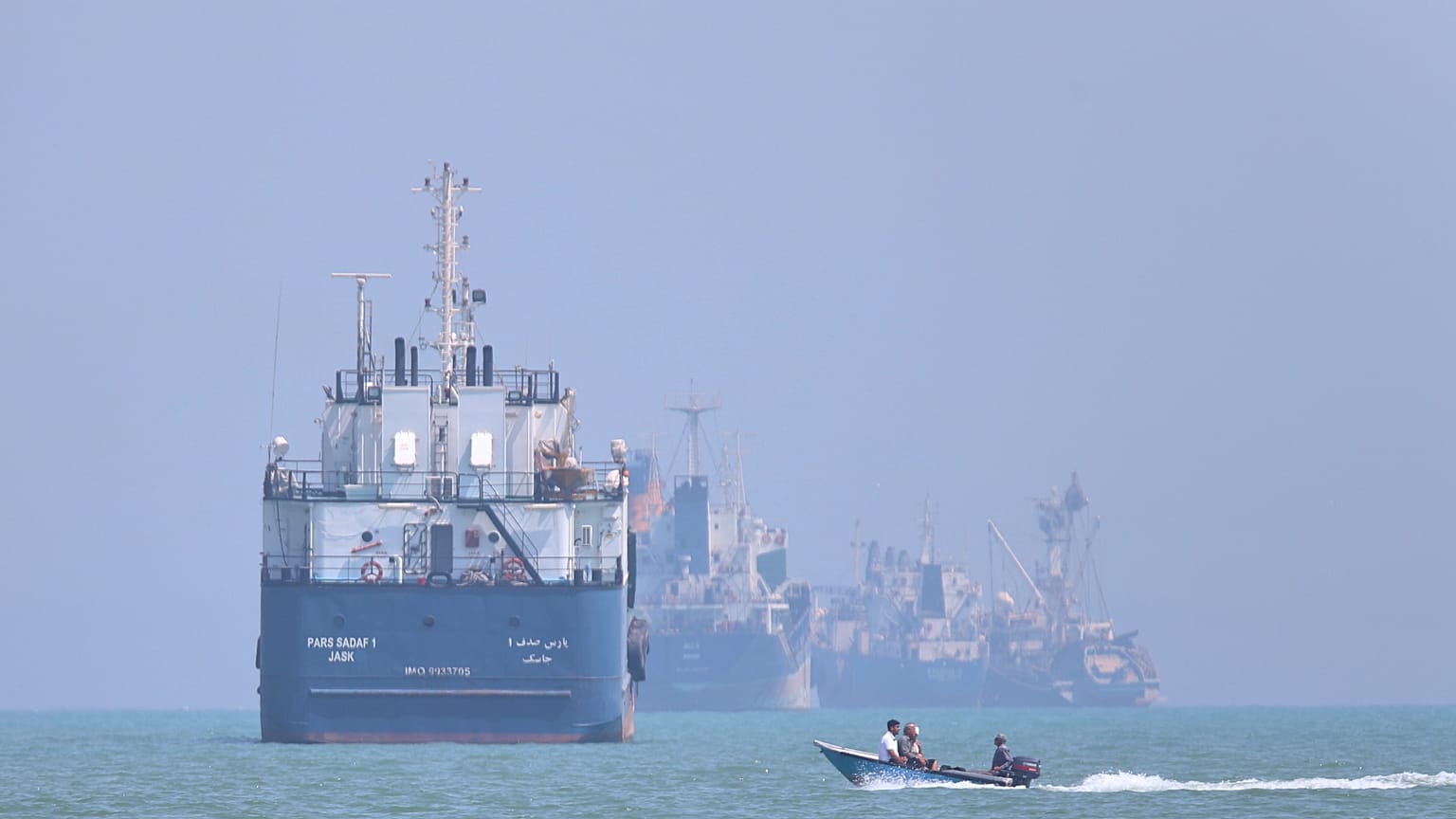
The strait is one of the world's most important oil corridors, carrying roughly a fifth of global crude shipments. Trump framed the move as a matter of fairness. He declared that the U.S. would be known as "The Guardian of the Hormuz Strait" and would be reimbursed at a rate of 20% on all cargo shipped, to cover the costs of providing safety and security to the region.
The announcement landed just as fighting between the U.S. and Iran flared up again. The two sides traded attacks of a scale not seen since a ceasefire earlier this year, with the U.S. military striking dozens of targets and Iran's Revolutionary Guard responding with strikes on Bahrain, Jordan, Kuwait, and Oman.
.
An Unlikely Response from Tehran
Iran's reaction added an ironic twist to the story. Foreign Minister Abbas Araghchi did not reject Trump's toll outright — he seemed almost to agree with the logic. Araghchi wrote that whoever provides secure passage through the strait deserves to be compensated for it, adding that Iran has always considered itself the guardian of the strait and intends to remain so.
The dispute over who controls — and who profits from — the Hormuz corridor has become central to the standoff. Legal experts note that Iran cannot unilaterally reroute shipping traffic through the strait under international maritime law, though the security situation has deteriorated sharply after Iranian attacks on commercial vessels last week. The U.S. Navy has meanwhile been escorting ships along a southern corridor near Oman's coast.
Not everyone is convinced the 20% toll will actually happen. Nordic American Tankers CEO Herbjorn Hansson called the proposed fee unrealistic, noting that Washington and Tehran would first need to agree on how the strait should even be administered.
.
Oil Jumps, Markets Wobble
Traders reacted immediately. Brent crude climbed above $85 a barrel in early Asian trading, its highest level in a month, as the prospect of a new toll — layered on top of an already fragile shipping route — rattled energy markets.
Stock markets could not decide which way to move. Japan's Nikkei ticked higher, South Korean shares swung between gains and losses, and U.S. futures dipped slightly. One Melbourne-based analyst summed up the mood bluntly: markets had been bracing for tension to build, but the latest headlines still hit hard, because tighter monetary policy layered on top of an energy shock rarely favors riskier investments.
.
SK Hynix's Wall Street Hangover
If one company captured the day's chaos, it was SK Hynix. The South Korean memory-chip maker had just pulled off one of the most celebrated Nasdaq debuts of the year, raising billions of dollars in its U.S. listing days earlier.
Then came the hangover. SK Hynix shares fell more than 15% in Seoul on Monday, their biggest one-day decline in nearly two decades, as investors cashed out following the stock's scorching rally. The sell-off was so severe it triggered a trading halt on South Korea's benchmark Kospi index.
Analysts say the swings reflect confusion rather than doubt about the underlying business. One strategist described the situation as a market struggling to work out how much AI-driven memory chip demand actually exists versus how much new supply is coming online. By Tuesday morning, the stock was gyrating again — down sharply, then up again within minutes.
.
A Hawkish Fed Adds to the Nerves
Geopolitics wasn't the only thing spooking traders. Federal Reserve Governor Christopher Waller warned on Monday that the central bank might need to raise interest rates soon if inflation data continues to run hot.
That comment shifted expectations quickly. Markets are now pricing in meaningfully higher odds of a rate hike at the Fed's next meeting later this month than they were just a few trading days ago.
.
What Comes Next
Two fresh data points are due Tuesday: U.S. inflation figures and testimony from Fed Chair Kevin Warsh before Congress. Both could move markets further, depending on how they line up with Waller's warning.
For now, the bigger question hangs over the Gulf. Whether Trump's 20% toll becomes a real policy, a fresh irritant on the way to nowhere, or the opening move in a stranger deal with Tehran is something even Washington itself, by most accounts, has not fully worked out yet.
.
Sources
- https://www.cnbc.com/2026/07/13/trump-iran-hormuz-strait-charge-reimburse.html
- https://www.euronews.com/2026/07/13/trump-reimposes-us-blockade-and-demands-20-hormuz-shipping-fee
- https://www.cbsnews.com/live-updates/us-iran-war-trump-ceasefire-attacks-strait-of-hormuz/
- https://www.cnbc.com/2026/07/13/imo-maritime-organization-strait-hormuz-tolls-trump-iran.html
- https://www.marketscreener.com/news/sk-hynix-plunges-after-nasdaq-debut-amid-diminishing-earnings-optimism-ce7f5edfdc8eff27
- https://www.cnn.com/2026/07/13/economy/trump-hormuz-fee
.
What's Your Reaction?
 Like
0
Like
0
 Dislike
0
Dislike
0
 Love
0
Love
0
 Funny
0
Funny
0
 Wow
0
Wow
0
 Sad
0
Sad
0
 Angry
0
Angry
0










Comments (0)