

Taiwan: Silicon Shield or Silicon Extortion?


.
Taiwan and the United States have agreed to a set of deals that will remove or reduce 99 percent of Taiwan’s tariffs on U.S. exports and facilitate up to $250 billion of Taiwanese investment in the United States. The deals have security implications due to their support for U.S. semiconductor reshoring, which erodes Taiwan’s “silicon shield” but will help protect these strategic assets from a Chinese invasion.
The deals took place in the run-up to a U.S.–China summit in April, which is an indication that the Trump administration is not backing down from U.S. national security interests to get a better trade deal with China. Other indicators, however, are still being watched. These include whether the United States completes a planned $11 billion arms sale to Taiwan, and further restricts Chinese routers and telecom company operations in the United States.
The Taiwan trade deal, however, is all good news. It will facilitate investment into the United States, including industrial parks and chip manufacturing, which will hopefully reshore and better protect the most important artificial intelligence chip production related to national security. To this end, the Taiwan Semiconductor Manufacturing Company (TSMC) plans to invest $165 billion. In exchange, TSMC will be allowed to export its chips to the United States with lower tariffs.
The other goal of the trade deal is to achieve reciprocal trade with Taiwan, America’s fourth-largest trade partner. In 2025, the United States had a trade deficit of more than $127 billion with Taiwan. When the United States has a trade deficit with Taiwan, it means that Taiwan exports more to the United States than it imports.
The total U.S. trade deficit has to be paid for, and is generally done through selling dollars, debt, or immovable assets like real estate. This has gradually internationalized the economic power structure in the United States and empowered some U.S. adversaries, most importantly the Chinese Communist Party (CCP). At the same time, China flooded the United States with cheap consumer goods and made China central to international trade. As long as international investors want U.S. currency, debt, and immovable assets, countries are willing to run trade surpluses.
Other disagreements between the United States and Taiwan have not been fully resolved. The United States wants Taiwan to end its alleged practice of backdoor currency manipulation, which has contributed to the undervaluation of the National Taiwan Dollar (NTD) by as much as 60 percent. Taiwan disputes this claim.
The deal is a win for Taiwan, and therefore for democracy. U.S. imports from Taiwan will generally be tariffed at the same preferential 15 percent rate enjoyed by Japan and South Korea. Previously, U.S. tariffs on Taiwan were 20 percent. The reduced tariff on Taiwan will apply to semiconductors, Taiwan’s largest export to the United States. In this way, the agreement supports Taiwan’s semiconductor industry even as it pushes Taiwan to invest more in U.S. semiconductor manufacturing.
.
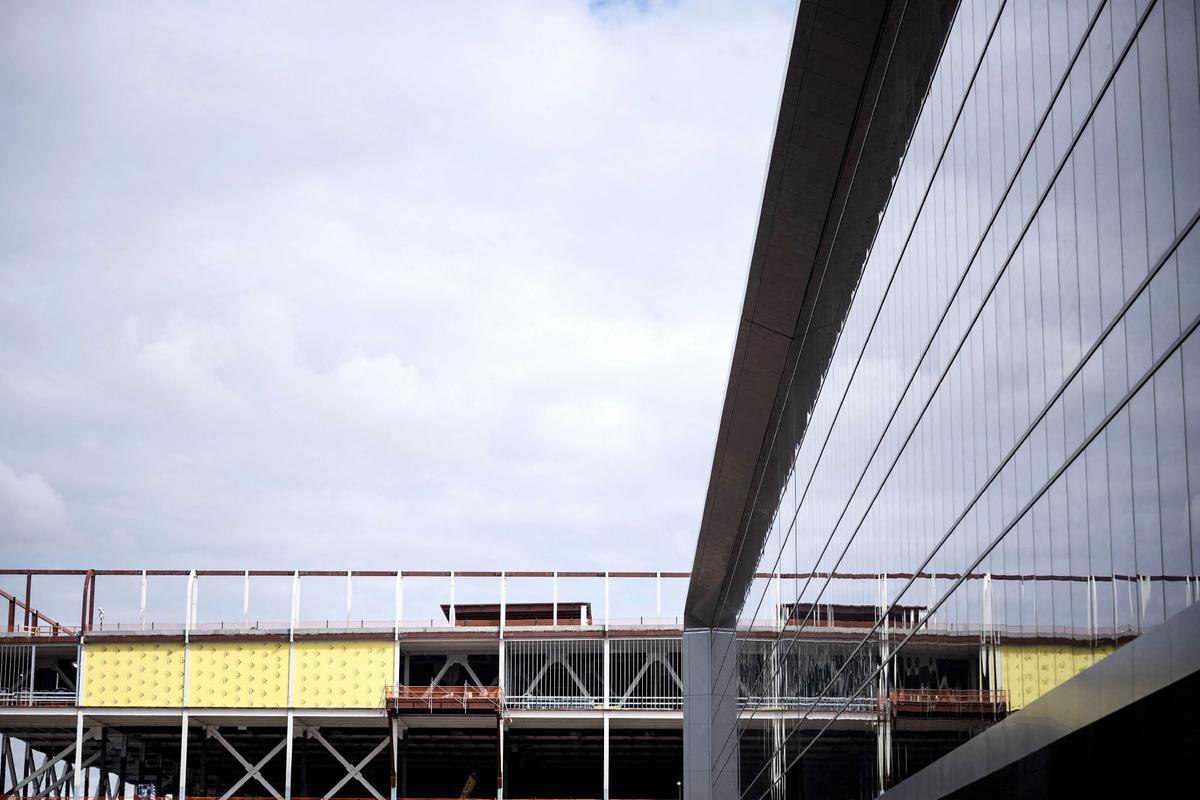
Reshoring Taiwan’s chip fabs to the United States helps Taiwan just as much as it helps the United States. In case of a People’s Liberation Army invasion of Taiwan, the chip fabs that Taiwan builds in the United States would still be protected. Taiwan sometimes argues that its chip fabs act as a “silicon shield” that forces the United States to protect it or lose access to powerful semiconductors. However, this is a bad strategy for Taiwan in the long term, as Washington will not want to let itself be leveraged in this way.
From the viewpoint of Washington, the “silicon shield” sounds more like “silicon extortion.” Democracies will have to move key assets, such as chip fabs, to the most protected locations, including in the United States, if they are to defend themselves long-term against autocracies.
The new trade agreement has symbolism as it is with Taiwan, an island democracy claimed by the Chinese Communist Party. Yet the CCP never ruled Taiwan. And the agreement comes two months before President Donald Trump’s planned visit to China. Brokering a major deal with Taiwan so near to the talks in China will likely improve Trump’s bargaining leverage.
There is more the United States can do to support democracy in Taiwan. After a record-breaking $11 billion deal that the Trump administration agreed to export U.S. arms to Taiwan, we could and should reconfirm that we will not discuss those or any other U.S. arms sales with Beijing. Our military exports to a fellow democracy like Taiwan should never be frittered away as a bargaining chip.
Regardless, the latest U.S.–Taiwan trade deal is great for both countries from both a commercial and security perspective. It will improve regional security in Asia, including through its support to Taiwan’s semiconductor manufacturing industry. Taiwan’s chip fabs will enjoy lower tariffs and incentives to reshore production to a safer locale such as the United States, thereby improving U.S. national security.
What's Your Reaction?
 Like
0
Like
0
 Dislike
0
Dislike
0
 Love
0
Love
0
 Funny
0
Funny
0
 Wow
0
Wow
0
 Sad
0
Sad
0
 Angry
0
Angry
0














Comments (0)