

China Evacuates Tourists From Fabled Jiuzhaigou Park as Typhoon Noul Unleashes Deadly Floods Nationwide
Mudslides have forced the evacuation of stranded visitors from Jiuzhaigou, one of China's most treasured natural landmarks, as the remnants of Typhoon Noul trigger the country's highest flood alert. The storm is the latest in a string of deadly summer disasters that have already killed dozens across several provinces, while questions persist over how transparently Chinese authorities report the toll.

.
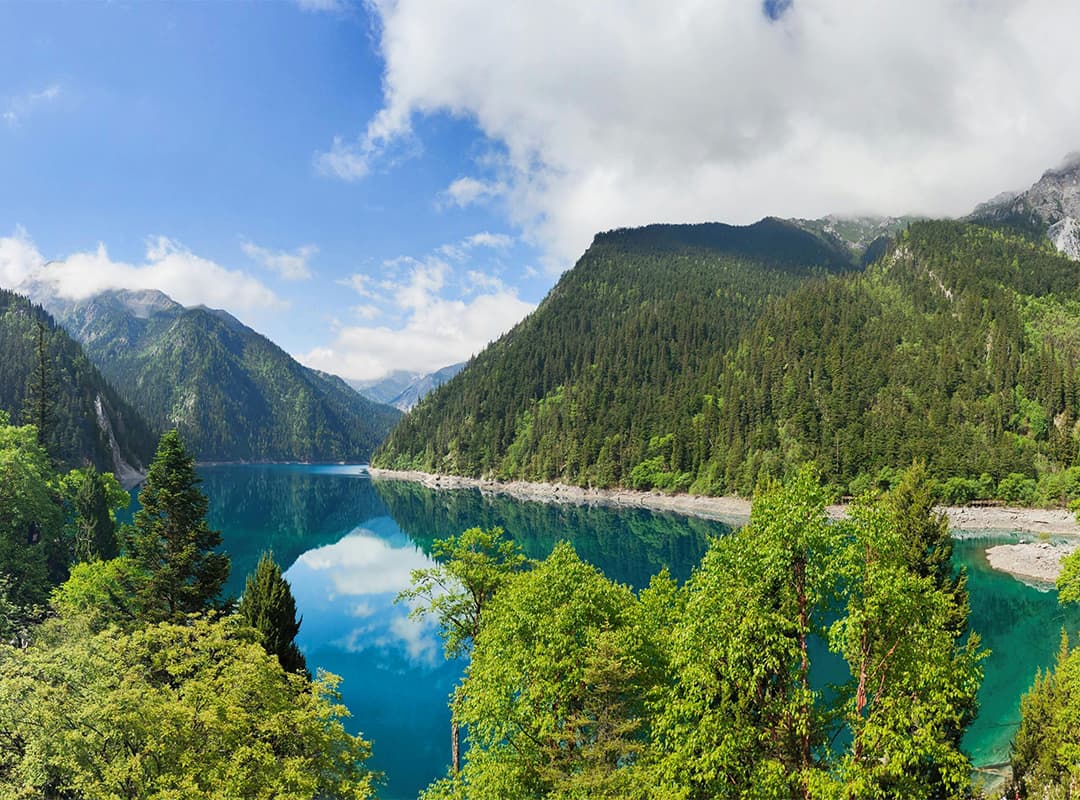
Paradise Under Water
Jiuzhaigou is famous worldwide for its turquoise lakes, snow-capped peaks and cascading waterfalls tucked into the mountains of Sichuan province. On Monday, that fairytale scenery turned dangerous. Heavy rain triggered mudslides that trapped tourists inside the UNESCO World Heritage site, forcing an emergency evacuation, according to a report by the Associated Press.
Local authorities shut down the area above Arrow Bamboo Lake in Rize Valley and the entire Zechawa Valley to visitors starting Monday, citing the mudslide risk. State broadcaster CCTV reported that stranded tourists were being moved to safety, though no injuries have so far been confirmed at the site itself.
The closures are a direct consequence of Typhoon Noul, described by Chinese meteorologists as the strongest storm to strike the country so far this year.
.
A Storm That Wouldn't Let Go
Noul made landfall in Guangdong province over the weekend before weakening into a tropical storm as it pushed inland. Chinese state media said Noul is the strongest typhoon to make landfall in China so far this year, and it was the third typhoon to hit the country within a single month, following Bavi and Maysak.
The scale of the precautionary evacuation was enormous. More than 801,000 people had been relocated for safety in Guangdong province alone, according to China's official Xinhua News Agency. In Hong Kong, the storm also caused major travel disruption. Around 350 flights were canceled and roughly 2,000 passengers were left stranded at the airport over the weekend, while at least 21 people were injured across the city.
Independent weather trackers had flagged the danger days in advance. Forecasters expected rainfall totals of 500 to 600 millimeters (20 to 24 inches) in parts of Guangdong and Fujian, an amount capable of triggering flash floods, landslides and debris flows, particularly in mountainous, densely populated river basins. Analysts also noted that much of southern China had already been soaked by repeated heavy rain through July, leaving soils saturated and rivers running high even before Noul arrived.
China's Ministry of Water Resources and the national weather agency jointly issued a red alert — the highest level in the country's four-tier warning system — covering Jiangxi, Hunan, Guangdong, Sichuan, Shaanxi, Gansu and southeastern Xinjiang from Sunday night through Monday night.
.
A Deadly Month
Jiuzhaigou's mudslides are only the latest entry in a grim tally. Separately, a flash flood tore through a scenic campsite in Gansu province's Weiyuan county, catching tourists by surprise. At least 10 people died and 23 were injured after sudden, heavy rainfall struck the area and trapped campers, according to a Xinhua report cited by the Associated Press.
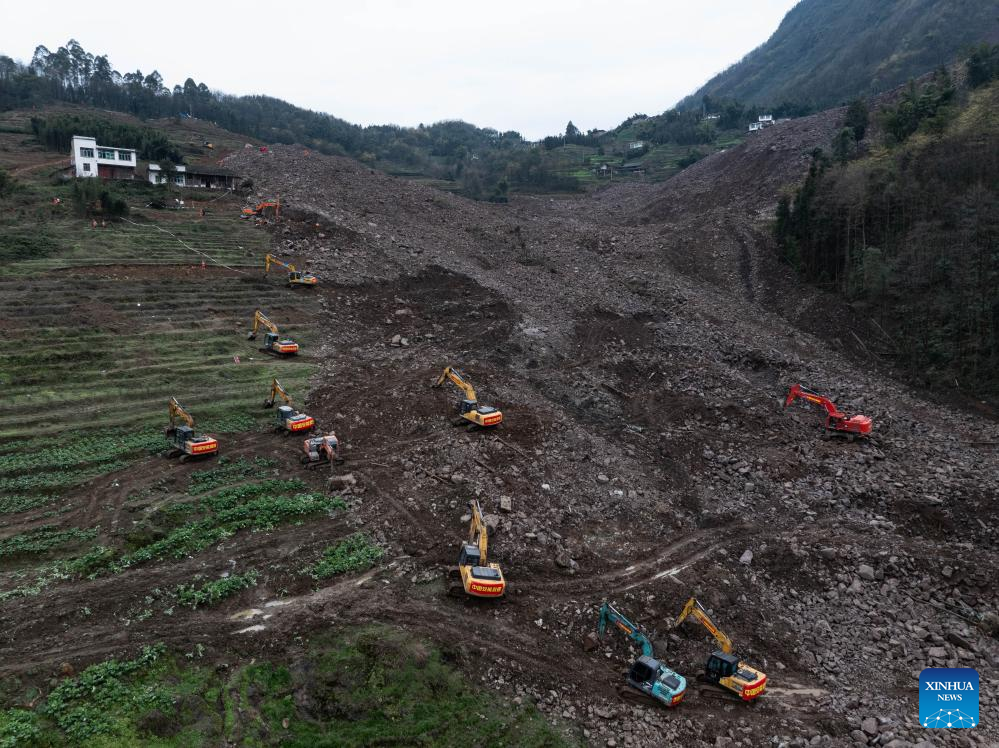
That tragedy came on top of several other fatal landslides already recorded this month. A massive landslide in Chongqing killed 11 people, with dozens more still unaccounted for. In Gansu's Tanchang county, a separate landslide killed at least 21 people. And in northern Shanxi province, a collapse of loose loess soil buried a house, killing five.
Weather officials warn the danger is far from over. China has just entered its "Qixia Bashang" period — the peak flood-control window running from mid-July to mid-August — with forecasters projecting that northern China could see 20 to 50 percent more rainfall than usual in the coming weeks.
.
The Question Beijing Doesn't Like
Behind the headline numbers lies a pattern that has repeated itself in China for decades: skepticism about whether official death tolls tell the full story. Earlier this month, after a reservoir dam collapsed amid flooding in Guangxi, survivors and online commentators disputed the government's version of events. Some accused officials of blocking footage of the flooding as it happened, only to fill the same platforms with rescue footage afterward.
Chinese censors have taken notice of that skepticism, too. Researchers monitoring Chinese social media documented censorship of posts about the Guangxi dam collapse throughout the month, especially posts pointing out failures in disaster prevention or complaining about biased or incomplete coverage of the human cost. Commentators noted this is a recurring dynamic: when a natural disaster overlaps with human error, local governments have a strong incentive to limit coverage and suppress public discussion, since scrutiny could expose a "man-made" disaster lurking behind the natural one.
This is not a new phenomenon. After a 1976 earthquake devastated Tangshan, killing hundreds of thousands, the Communist Party did not release an official death toll for three years, largely out of fear that the number would embarrass the government. While China's disaster reporting has become considerably more open since then — particularly following the SARS outbreak in 2003 — foreign observers have repeatedly noted that transparency tends to shrink whenever a disaster raises uncomfortable questions about infrastructure, planning failures, or local corruption rather than simply the weather itself.
For a country that promotes its national parks and disaster-response capabilities as a source of pride, the gap between the polished state-media narrative and the accounts emerging from ordinary citizens on the ground remains one of the most persistent tensions in how China's environmental disasters are understood by the rest of the world.
.
What Comes Next
For now, the priority in Jiuzhaigou is safety rather than sightseeing. Authorities have not said when the closed valleys might reopen, and officials are likely to keep monitoring slope stability before allowing tourists back into the affected zones.
More broadly, meteorologists caution that this is unlikely to be China's last major flood emergency this summer. With the flood-control season only halfway through and soils across large parts of the country already saturated, the risk of further mudslides, flash floods and infrastructure failures remains elevated well into August.
.
Sources
- Reuters — https://www.reuters.com/business/environment/stranded-tourists-evacuated-chinas-famed-jiuzhaigou-world-heritage-site-after-2026-07-27/
- Associated Press (via ABC News) — https://abcnews.com/International/wireStory/typhoon-noul-weakens-after-making-landfall-brings-heavy-135094999
- The Watchers (severe weather science service) — https://watchers.news/2026/07/25/over-20-000-evacuated-as-typhoon-noul-approaches-guangdong-up-to-600-mm-24-inches-of-rain-forecast-china/
- China Digital Times — https://chinadigitaltimes.net/2026/07/translations-on-foreign-and-domestic-media-and-man-made-problems-lurking-behind-natural-disasters/
- Vision Times — https://www.visiontimes.com/2026/07/17/guangxi-flood-survivors-call-dam-collapse-a-man-made-disaster-dispute-official-death-toll.html
.
What's Your Reaction?
 Like
0
Like
0
 Dislike
0
Dislike
0
 Love
0
Love
0
 Funny
0
Funny
0
 Wow
0
Wow
0
 Sad
0
Sad
0
 Angry
0
Angry
0












Comments (0)