

Not All Proteins Are Equal–How to Maximize Your Protein Quality


.
Sam was lifting weights five days a week. He was determined to build muscle strength and sculpt what he called his “Dad bod” as he approached his 50th birthday. However, the results of his efforts at the end of the first month left him frustrated despite all of his hard work.
A gym trainer asked him about his diet. Their conversation revealed that the missing detail was the right amount of protein for Sam’s age and goals. He was eating the same proteins he had as a younger man and expected the same muscle gains from them. The reality is that it is harder to build muscle as we age, and resistance training is only half of the equation.
The quality of protein in any food depends on two key factors: the ratio of all amino acids it contains and how well your body can break down and absorb them. Amino acids are the building blocks for everything biological—from cellular health and DNA function to brain, gut, and organ health. Of the 20 amino acids, nine are “essential,” meaning the body can not produce them and must acquire them from food. A high-quality protein source contains all nine in the right amounts, and is easy to absorb— something that depends partly on your digestive strength.
“It’s not just about how much protein is in your food, but how much of the essential amino acids your body can actually digest and absorb,” Hans Stein, professor of nutrition at the University of Illinois, told The Epoch Times. “Digestible amino acids are what truly determine the quality of a protein source.”
Changed Protein Quality Assessments
Protein quality refers to how well a protein source supplies the essential amino acids your body needs and how easily it can digest and absorb them.DIAAS is currently the most accurate method for assessing protein quality, as it measures the actual absorption of each amino acid at the end of the small intestine (ileum), providing a precise reflection of what the human body can utilize rather than what is lost through excretion through the bowels.
The higher the DIAAS score, the better the protein source is for supporting the multiple uses needed by your body.
Previous methods of evaluating protein quality relied on rodent animal models that were not truly representative of human digestion, leading to less accurate assessments. Recent advances have been fueled by extensive research into how our bodies actually digest and use amino acids. Central to this progress was a shift toward studying animals with digestive systems that closely resemble our own—most notably, pigs.
How to Make Better Dietary Choices
Understanding how protein quality is measured using DIAAS can directly influence the choices we make in our daily diets. By focusing on foods that score higher on the protein scale, we can more easily meet our daily amino acid needs.“Over the past 12 years, we’ve measured the digestibility of amino acids in about 150 foods, and our database now includes over 500 food items. This resource is being developed for clinicians to better guide dietary recommendations,” Stein said.
- DIAAS equal to or greater than 100 percent: The protein provides all essential amino acids in amounts equal to or greater than what the body needs. Examples include milk, eggs, meat, and whey protein.
- DIAAS less than 100 percent: The protein is missing or low in one or more essential amino acids, or is less digestible. Examples include many plant proteins, such as wheat, rice, and some legumes.
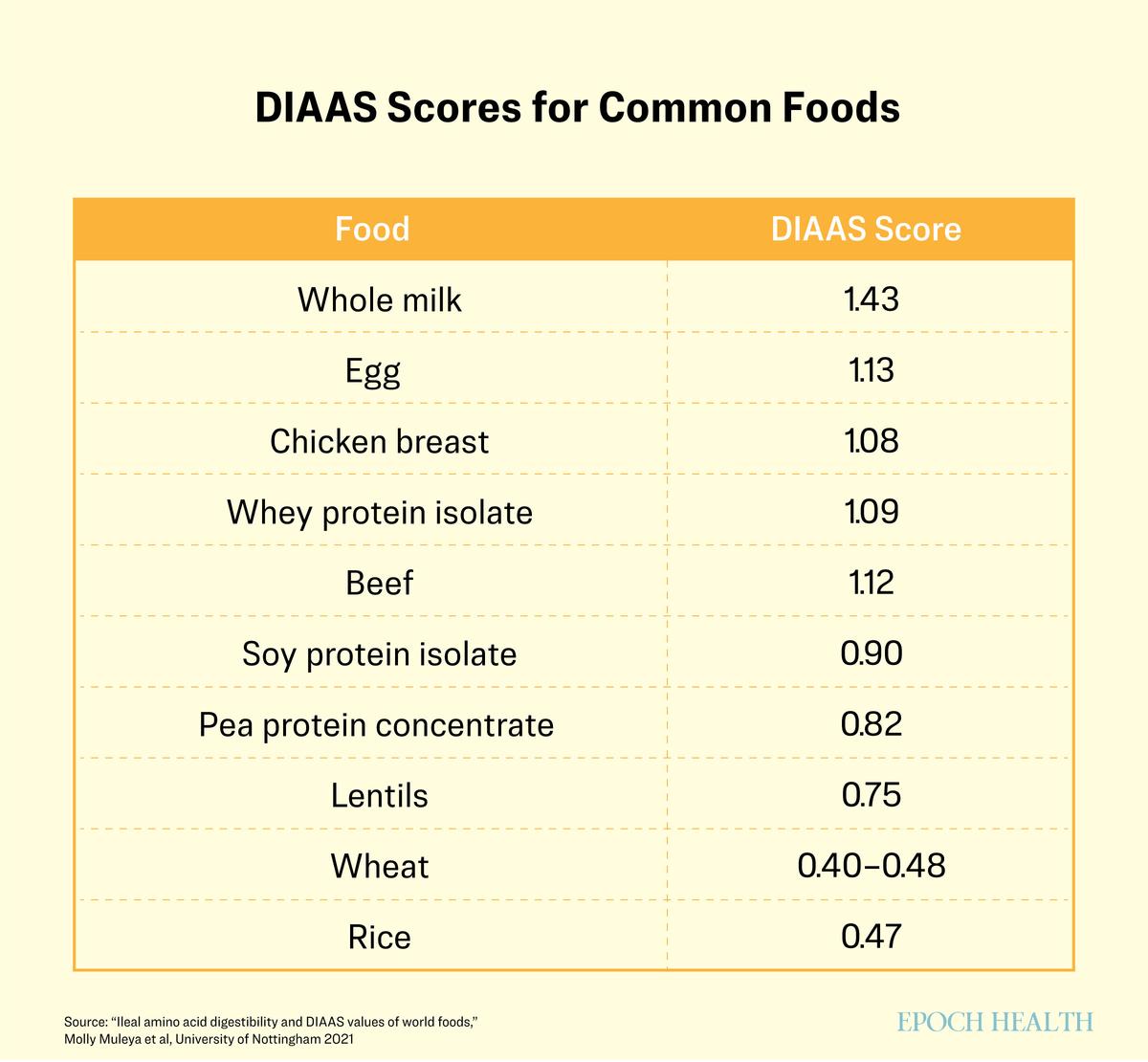
The change in protein values reflects a need for updated dietary guidelines and transparency in protein quality labeling.
“We’re advocating for regulatory bodies like the FDA to require companies making protein quality claims to provide digestibility values. This transparency will empower consumers to make better dietary choices,” Stein said.
It is expected that this research will influence broader public access to digestibility data within the next decade.
For health enthusiasts like Sam, there is already enough data online to calculate DIAAS from the most commonly eaten protein foods.
Sam started tracking his daily protein meals for a couple of days, using the DIAAS method. He realized the benefits of focusing on a varied combination every few days of eggs, beef, and chicken alongside his daily grass-fed whey protein concentrate drink with whole milk. He noticed he felt full for longer, craved less sugar, and was less bloated. Most remarkable to him and his wife was the muscle growth and the drop in body fat. With no changes to his workout, Sam and his wife were amazed to see noticeably more muscle and less body fat in the second month—clear proof that his new approach to protein quality made all the difference.
.
What's Your Reaction?
 Like
0
Like
0
 Dislike
0
Dislike
0
 Love
0
Love
0
 Funny
0
Funny
0
 Wow
0
Wow
0
 Sad
0
Sad
0
 Angry
0
Angry
0

















Comments (0)