

Is Fiber Wrecking Your Gut Health?

.
Research illustrates that not everyone benefits from fiber, and avoiding it could even be beneficial in healing.
Jennifer Scribner began a vegetarian lifestyle at age 16 after reading a book about how eating meat had detrimental impacts on the planet, as well as individual health.
She followed the restrictive diet for 18 years—during which she experienced increasingly painful inflammation and deteriorating health—until eventually, she learned to listen to what her body was asking for—meat.
“I really thought that (eating vegetarian) was a world-saving mission,” Ms. Scribner told The Epoch Times. “It didn’t work for my body, but I didn’t acknowledge that because nobody told me to listen to my body. They told me to listen to what experts were saying.”
For a number of Americans, it seems that heaping more fiber into their diets in the name of health is often the culprit for feeling miserable and might even contribute to disease.
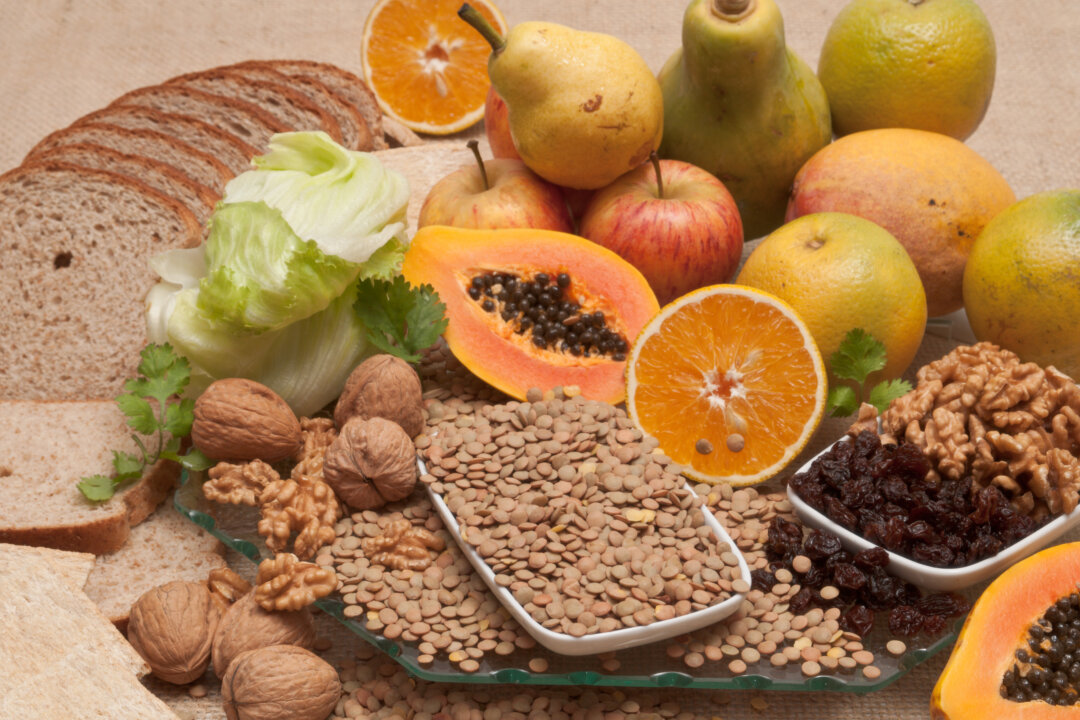
Fiber comes from plant-based foods like beans, grains, peas, lentils, fruit, and vegetables. Eating high-fiber foods is associated with better digestion, lowered risk of heart disease, less constipation, and generally improved health, according to Mount Sinai Medical.
.
Is Fiber a Food Bias?
From the U.S. Department of Agriculture’s MyPlate dietary guidelines that suggest more than half our diet should come from fruits, vegetables, and grains to the expert mantra to eat 30 or more plants each week for better gut health, there’s a loud-and-clear message shouting the need to eat more fiber.However, when Ms. Scribner lowered her dietary fiber by eating more meat, she noticed an immediate improvement in her energy and severe acne. For the first time in years, she felt fantastic. Now a functional therapy practitioner and GAPS (gut and psychology syndrome) practitioner, her experience was like onboarding for her business—aptly named Body Wisdom Nutrition.
Fiber, it seems, isn’t exactly as straightforward as we’re led to believe. The industrialization of food is linked to our body’s increased intolerance for it, all while efforts to get people to eat a plant-based diet are amping up.
Fiber’s Contribution to Health
There are two types of fiber: soluble and insoluble, depending on their biochemical makeup.Fiber is naturally found in a wide variety of foods, including seeds and nuts, but it’s also added to manufactured products. We need 25 to 35 grams of fiber daily, according to Harvard Medical, but we typically only consume 15 grams. Fiber plays a major role in regulating blood sugar and modulating appetite—important functions that can combat obesity.
Besides offering us better metabolic health, fiber has been linked to improved bowel movements, and a more robust gut microbiome. The latter is vital because our community of microbes includes the bacteria essential to digest fiber.
.
How Microbes Predict Our Fiber Response
In fact, the microbiome stands at the crux of the fiber debacle. Some of fiber’s biggest fans acknowledge that sometimes it simply doesn’t sit well for some people, and the reason comes down to our microscopic bugs, some of which make enzymes so we can break down carbohydrates.Dr. Will Bulsiewicz, gastroenterologist and author of bestselling book “Fiber Fueled,” explained on a YouTube, ZOE Shorts podcast called, “Fiber: Why it’s important and how to get more of it,” that people with digestive issues often have trouble processing fiber because it can cause gas, bloating, flatulence and abdominal comfort. ZOE is a personalized nutrition program.
“My message to these people, that I want you to know, is that you’re struggling with the digestion of fiber because your gut has been damaged. These microbes—they’re struggling to keep up with what you’re asking them to do,” Dr. Bulsiewicz said.
The problem is most people experience damage to their gut microbiome because of a long list of chemical and other exposures that come with living in an industrialized world. Among them are antibiotics and other medications, glyphosate, antimicrobial hygiene products, alcohol, smoking, lack of sleep and exercise, artificial sweeteners, various food additives and emulsifiers, and chronic stress.
Fiber’s Effect Remains Hard to Predict
A study published earlier this year noted what many have been experiencing—fiber plays a highly individualized role in the body. While fiber seems to be generally beneficial in a wide variety of disease states, it’s unpredictable even for individual diseases.Published in Microbiome, the study aimed to see how two forms of dietary fiber affect the microbiota of healthy subjects. It found that inflammation was dependent on the context, meaning the microbiota composition was the driver for inflammatory bowel disease (IBD).
Fiber is a double-edged sword, the authors of the study pointed out, that can either promote or denigrate health depending on both the type of fiber eaten and the individuals’ microbiota makeup.
The study findings suggest a personalized approach: “IBD patients hosting a fiber-resistant microbiota should not refrain from consuming various soluble fibers, while patients with a fiber-sensitive microbiota should carefully consider fiber intake and fiber source as a central actor for disease management.”
Ferments Over Fiber?
Another study compared fiber to fermented food in order to see which one was more beneficial for gut health, including improving microbial diversity and lowering inflammatory markers. Researchers anticipated that fiber would come out the winner, but that prediction was wrong.Published in Cell in 2021, the study noted that eating foods like yogurt, kefir, kimchi and other fermented vegetables, kombucha tea, and other ferments increased microbial diversity—an impact that grew proportionally with servings.
Inflammatory markers improved in that group but did not change in the high-fiber group that ate nuts, whole grains, seeds, legumes, fruits, and vegetables. They also experienced no change in microbial diversity.
It makes sense that plants would be beneficial from many perspectives,—including being able to bind to toxins like heavy metals in the body, Ms. Scribner said. She added that eating more fiber is usually an upgrade, compared to the industrial food model that many Americans follow.
.
Sounding the Fiber Alarm
However, Ms. Scribner will take all fiber out of her clients’ diets if they are willing to try it so they can heal from digestive woes. Her goal is to slowly add it back in using a more intuitive and ancestral dietary philosophy that involves soaking, sprouting, and pre-fermenting grains.Other times, she starts by removing grains only—depending on the client’s willingness and what dietary approaches they’ve already tried.
He wrote that “the highlighting of dietary fiber as a dietary component of public health concerns is warranted, even though fiber is not considered an essential nutrient.”
Ms. Scribner is not against eating fiber but suggested the source, preparation, and timing of eating fiber-based foods might be a better focus than a broad sweeping approach that hones in on daily recommendations. She noted that salads and raw plants we commonly feast on today weren’t a part of eating habits many generations ago.
“Historically people didn’t have as much fiber as we are encouraged to eat today,” she said. “What I tend to look at is what helps people thrive, what are humans meant to be eating? How did we eat before there were grocery stores? That’s when humans were thriving, and so that excites me a lot more.”
.
Adding Fiber Back to the Diet
That means when she helps clients add fiber back to their diet, they might eat locally grown, in-season plants—rather than relying on mass-produced crops treated with herbicides and pesticides and shipped all over the world. That kind of model keeps consumers reliant on chain grocers, big producers—and often pharmaceuticals—because eating that way still creates symptoms in many Americans, Ms. Scribner said.“I think where the carnivore crowd gets it wrong is they eliminate all these things forever,” she said. “That doesn’t necessarily improve the microbiome enough in order to bring plants and/or grains back in in a digestible way so they can still maintain good health and bowel habits.”
Dr. William Davis, a cardiologist and author of several books including “Super Gut,” agreed that restrictive diets are a big mistake in the long term.
“What you are doing is starving good microbes as well as bad,” he told The Epoch Times. “My way would be to restore the microbes that colonize the small intestine and produce bacteriocins, then reintroduce—after several weeks—those other foods. Almost always you say, ‘Wow! I can eat anything now, and I don’t have bloating, diarrhea, abdominal pain, anxiety, panic attacks, all that stuff.’”
Bacteriocins are synthesized metabolites that lower the population of opportunistic pathogens causing dysbiosis, usually in cases of small intestinal bacterial overgrowth or candida overgrowth. Allopathic and even some natural approaches might use antibiotics to wipe out the entire microbiome and start from scratch.
“It’s a modern situation,” Dr. Davis said of dysbiosis, “And unfortunately it gets treated in stupid ways—drugs, cleanses, food avoidance. Those are not solutions. Those are simply ways to reduce symptoms.”
Ms. Scribner pairs fiber elimination with homemade yogurt or kefir to facilitate an environment that will naturally starve out the bad bugs.
“We don’t want to go for killing anything until maybe it’s needed—after we’ve built up a really robust flora—because the body wants to be healed and in functional working order,” she said.
.
What's Your Reaction?
 Like
0
Like
0
 Dislike
0
Dislike
0
 Love
0
Love
0
 Funny
0
Funny
0
 Wow
0
Wow
0
 Sad
0
Sad
0
 Angry
0
Angry
0


















Comments (0)