

Congress Presses DHS to Crack Down on Forced-Labor Imports as Labubu Dolls Come Under Scrutiny
A bipartisan group of eight U.S. lawmakers has sent a formal letter to the Department of Homeland Security, demanding stronger enforcement of the law banning goods made with Uyghur forced labor. The push comes after reports that cotton used in the wildly popular "Labubu" dolls was traced back to China's Xinjiang region. The case highlights a growing bipartisan effort to hold the Chinese Communist Party accountable for human rights abuses while protecting American businesses from unfair competition.

.
A Bipartisan Push for Answers
Eight members of Congress — four Republicans and four Democrats — have signed a letter to Homeland Security Secretary Markwayne Mullin, requesting a briefing on how the agency is enforcing the Uyghur Forced Labor Prevention Act (UFLPA). The letter was led by Reps. Chris Smith (R-NJ) and John Moolenaar (R-MI), who chair the Congressional-Executive Commission on China and the House Select Committee on China, respectively.
The UFLPA, signed into law in 2021, bans the import of goods made wholly or partly with forced labor from China's Xinjiang Uyghur Autonomous Region (XUAR). Under the law, U.S. Customs and Border Protection (CBP) must presume that any goods from the region are made with forced labor unless a company can prove otherwise.
The lawmakers say enforcement has not kept pace with the scale of the problem. Their letter raises ten specific questions for DHS, including how the department decides which companies to add to its official "Entity List" — a blacklist of firms whose products are barred from entering the United States.
.
The Labubu Connection
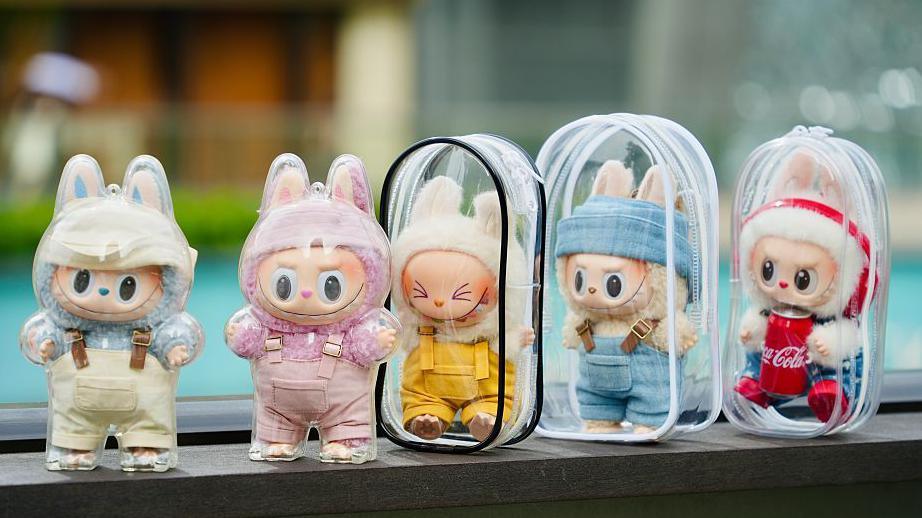
The letter draws particular attention to "Labubu," the wildly popular plush monster toy made by Chinese company Pop Mart. The line has become a global sensation, with fans lining up for hours and paying steep resale prices for rare editions.
That popularity took a hit earlier this year after an independent investigation found that many Labubu dolls contained cotton linked to Xinjiang. Testing on 20 dolls purchased from major retailers found that 16 contained cotton whose chemical signature matched farms in the region — cotton the U.S. presumes to be tainted by forced labor under the 2021 law.
Pop Mart has said it has stopped shipping cotton-containing products to the United States and is reviewing its supply chain. The company did not respond to a request for comment from the original report.
Rep. Ro Khanna (D-CA), the top Democrat on the House Select Committee on the Chinese Communist Party, said the Labubu case illustrates a much larger pattern.
"A lot of the textiles are coming, they come from China, are coming from Uyghurs," Khanna said. "It's one of the easiest places to force people into labor, and that's why we included it."
.
Why Lawmakers Say This Matters Beyond Human Rights
Khanna argued the issue goes beyond a single toy line. He said Chinese manufacturers using forced labor in steel, aluminum, and textile production are able to undercut American companies on price — creating an unfair playing field for U.S. manufacturers like U.S. Steel and Cleveland-Cliffs.
"How could U.S. Steel or Cleveland Cliffs or our aluminum manufacturers compete with slave labor? Of course we can't," Khanna said.
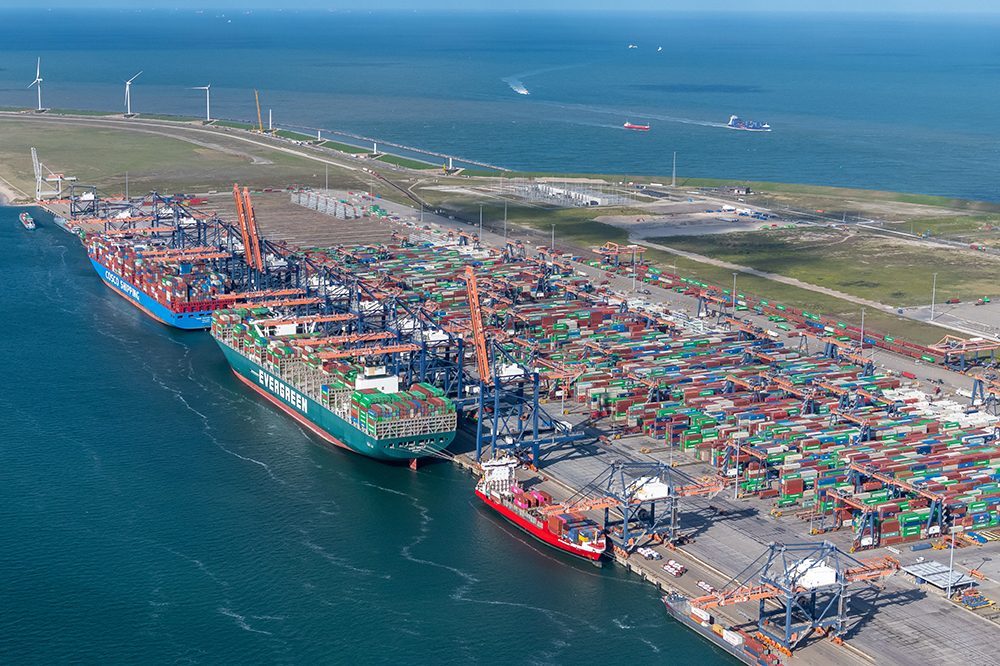
He also pointed to a common evasion tactic: Chinese firms routing production through countries like Malaysia or Vietnam to dodge tariffs and forced-labor restrictions. The lawmakers' letter calls on DHS to trace supply chains back to their true origin, regardless of where a product is finally assembled.
.
Some Progress, but Lawmakers Want More
DHS added 43 companies to the UFLPA Entity List in July, bringing the total to 44 blacklisted entities. Khanna credited the timing of the letter for prompting action, though he said it came after a year of limited enforcement.
"I think the administration may have gotten wind that we were doing this letter, and that precipitated action," Khanna said. "But hopefully, once the letter goes out, we'll see more action."
Separately, the heads of two China-focused advocacy groups — the Victims of Communism Memorial Foundation and State Armor — wrote directly to Secretary Mullin and Secretary of State Marco Rubio, urging an immediate halt to Labubu imports. They cited Chinese government data showing 3.36 million so-called "labor transfers" of Uyghur workers in 2025 alone — a system critics describe as forced state-directed labor migration.
.
Background: Xinjiang and the Global Cotton Supply
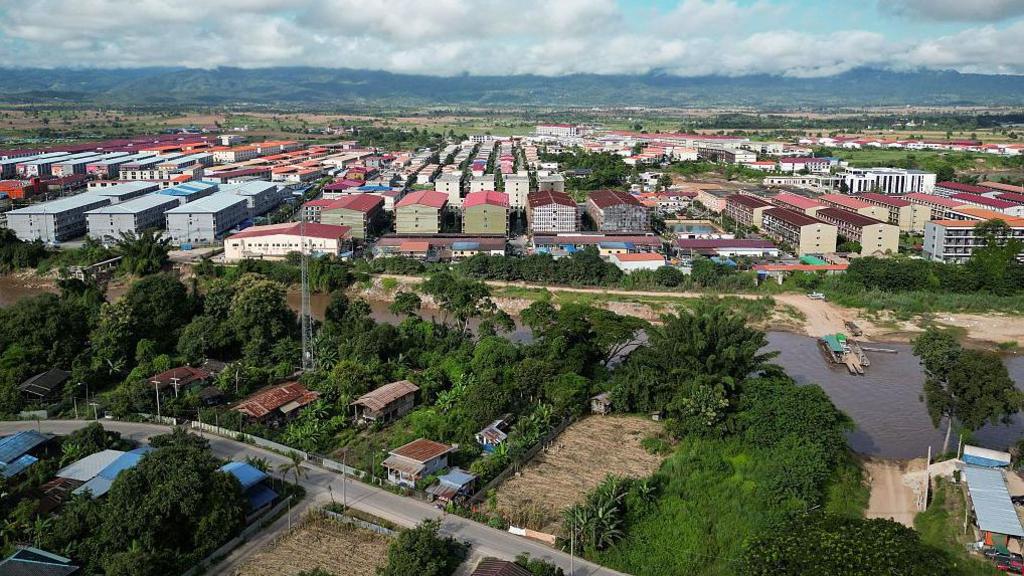
The Xinjiang region produces more than 90 percent of China's cotton and roughly a fifth of the world's total cotton supply, making it nearly impossible for global brands to fully avoid the region without strict supply-chain audits. Human rights researchers and Western governments have documented mass detention camps, forced labor programs, and cultural and religious suppression targeting Uyghurs and other Muslim minorities in the region — allegations Beijing has consistently and firmly denied.
The Chinese government describes its programs in Xinjiang as vocational training aimed at combating extremism and poverty, rejecting the term "forced labor" entirely.
.
Outlook
The letter adds to a wave of bipartisan congressional pressure on the Trump administration to tighten enforcement against Chinese forced-labor imports, an area where Republicans and Democrats have found rare common ground. With DHS having recently expanded its blacklist and lawmakers pushing for a formal briefing, further scrutiny of consumer products tied to Xinjiang cotton — including other toys, apparel, and electronics — appears likely in the coming months.
.
Sources
- House Select Committee on the Chinese Communist Party & Congressional-Executive Commission on China (official letter): https://chinaselectcommittee.house.gov/media/letters/select-committee-on-china-and-congressional-executive-commission-on-china-back-dhs-s-enforcement-of-uflpa
- Rep. Chris Smith official press release: https://chrissmith.house.gov/news/documentsingle.aspx?DocumentID=415823
- House Select Committee on China, statement on Labubu/Xinjiang cotton findings: https://chinaselectcommittee.house.gov/media/press-releases/moolenaar-parents-should-know-these-toys-are-being-made-by-people-forced-to-work-against-their-will
- AOL/New York Post report on advocacy groups' letter to Mullin and Rubio: https://www.aol.com/articles/dhs-urged-crack-down-labubus-172954231.html
.
What's Your Reaction?
 Like
0
Like
0
 Dislike
0
Dislike
0
 Love
0
Love
0
 Funny
0
Funny
0
 Wow
0
Wow
0
 Sad
0
Sad
0
 Angry
0
Angry
0
















Comments (0)