

China’s Trillions Are Getting Bigger


.
Commentary
China’s export economy, medical goods, and foreign investments did well in 2025. How well is uncertain because the regime’s numbers cannot be trusted. But the country’s reported exports and foreign direct investment are so eye-wateringly high that they raise concerns for the future of democracy.
China’s trade figures for 2025 showed a record $1.2 trillion surplus of exports over imports. As a proportion of the global economy, this is bigger than any country has achieved at any time in history.
Beijing is actively seeking independence from external producers, for example, with plans to make its semiconductor and energy sectors independent of the global economy. The Chinese Communist Party (CCP) is also attempting to reduce its reliance on food imports. China made no soybean purchases from the United States for an unprecedented fifth straight month in October.
Simultaneously, the CCP is attempting to control global economic chokepoints, such as rare-earth elements, in order to maximize its leverage through the weaponization of trade. Revenues from China’s medical goods, including pharmaceutical and medical devices, are expected to increase from $1.4 trillion in 2024 to $2.1 trillion in 2030. Were war to break out, the CCP could suddenly cease exports of medicine to the United States.
Some of its medical production is based on stolen U.S. technologies. China is estimated to steal up to $600 billion in intellectual property from the United States annually. Beijing owes $1 trillion to U.S. bondholders. But Washington does almost nothing about it, even though the government could theoretically bar China from U.S. capital markets. Or the United States could confiscate at least some of the regime’s assets to pay back U.S. investors. For example, the U.S. Treasury could selectively cancel its debt to China, or the U.S. Navy could capture or tax some of China’s vulnerable shipping lines as they transport exports internationally.
China’s trade surplus is typically used to purchase foreign debt and assets, and to build up foreign reserves. Some of the country’s 2025 haul went to Beijing’s Belt and Road Initiative. These foreign investment deals reached a record $213 billion in 2025. The focus was on creating energy alternatives to countries like Iran and Venezuela, which are vulnerable to U.S. maritime interdictions.
Starting in late 2025, the U.S. Coast Guard accelerated the interdiction of sanctioned oil tankers. Most were part of a vast global shadow fleet linked to U.S. adversaries like Russia, Iran, and, until recently, Venezuela. The shadow fleet transports sanctioned oil from these countries to China.
The United States used to be the center of global trade, and so it was in its interests to promote free trade. This dominant U.S. position gave the United States the ability to wield economic sanctions against countries to effect. But it was eroded by China’s entry into the World Trade Organization in 2001 and by the growth of Chinese manufacturing to the detriment of U.S. manufacturing.
.
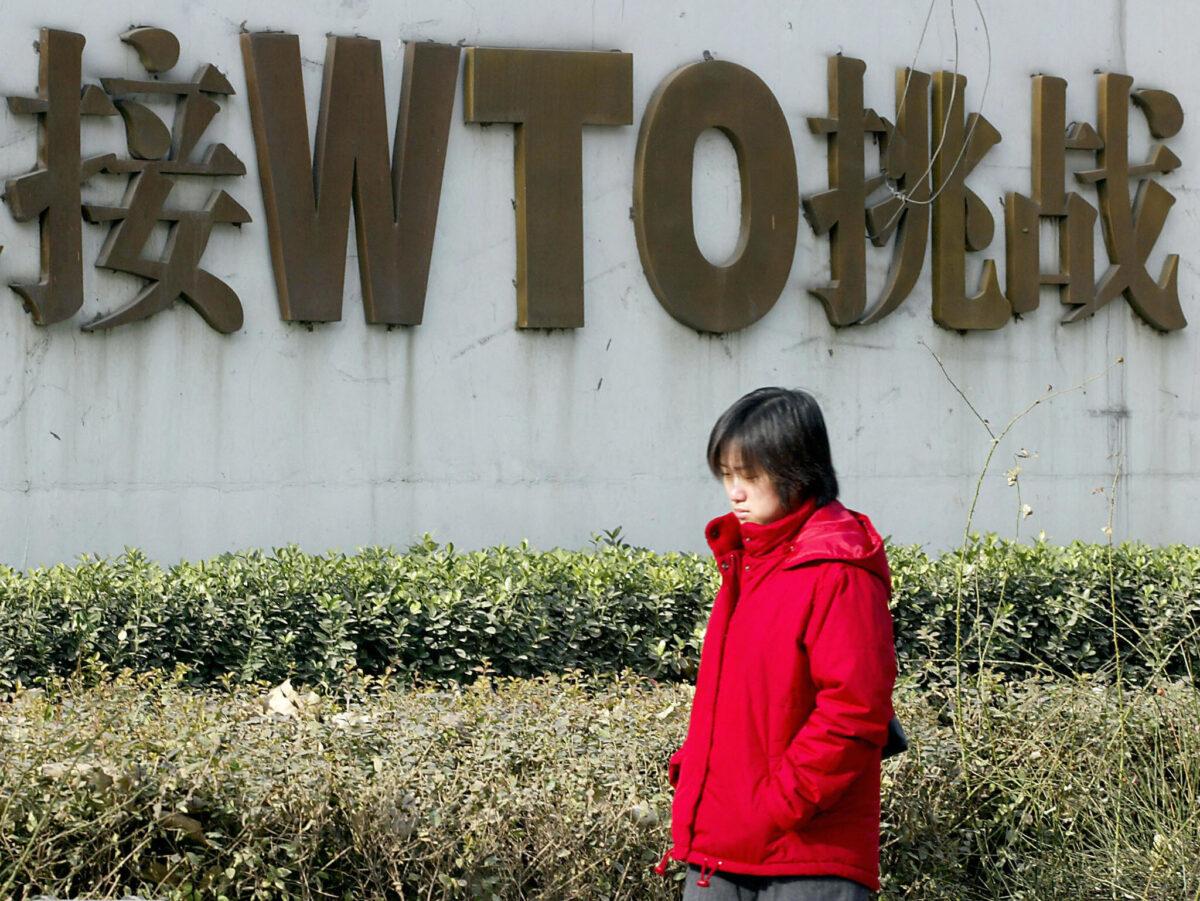
The remaining U.S. economic and technological leads could be further eroded if U.S. tariffs and sanctions are applied too narrowly. While U.S. tariffs have been a powerful tool in leveraging U.S. market power in unprecedented ways, they can also drive U.S. trade partners toward bilateral deals that cut out the United States. When they are on intermediate goods, such as foreign steel inputs into U.S.-built cars, they can make U.S. exports pricier and therefore less competitive.
So care must be taken that tariffs do more harm to U.S. adversaries than they do to the United States. Other options, such as subsidies or extraterritorial tariffs, should also be considered when protecting an industry for national security purposes.
On Jan. 16, Canada inked a trade deal with China that decreased tariffs on both sides, including for 49,000 Chinese electric vehicles annually. The move is a dangerous watershed for Ottawa, moving away from its U.S. trade and toward that of China. While most of Canada’s trade is still with the United States, it is concerning that a democratic ally like Canada would shift toward China, which is an authoritarian country. The fault is not only in Ottawa.
Mercosur, a group of Latin American countries, is also seeking free trade deals with China and Europe. Europe, Canada, and Mexico could do the same. Even the United States and China are planning summits in the near future that could include trade deals. If China’s economy is allowed to continue growing through global trade, and U.S. tariffs make U.S. exports uncompetitive, then the CCP could beat the United States in the current global competition.
There are other options, such as coordinated U.S. and European tariffs against China. But China could then seek to trade more with the world, or shift from its export economy toward its own consumers. This will continue to build China’s economy, which the CCP will use to build its military to threaten the United States and our allies.
Not all economic news from China is good news for the regime. The country’s population has dropped for four consecutive years due to record-low birth rates. China’s population is now 1.405 billion, down from 1.408 billion last year. But that may not matter to the CCP if it sees China’s massive population as a burden rather than an asset.
As China’s economy and military become more reliant on artificial intelligence and robots, the CCP will no longer need the Chinese population to reach its expansionist goals. Perhaps this is why it feels free to repress its own minorities to the point of genocide. The CCP is also arguably committing genocide against Americans via the illicit export of fentanyl precursors.
Potential U.S. responses include coordinating industrial policy with European countries to shut China out of more of global trade. But this would require ending distractions, such as in Greenland. We need to unify forces with other democracies if we hope to defeat the dictators, not fight among ourselves. China has so many other options that this tough, unified approach is necessary. This could include dual U.S.–E.U. semiconductor and oil export controls to starve China’s economy.
The toughest economic measures against the CCP can only be taken when China’s military is weak; otherwise, Beijing could respond to economic sanctions with military force. Sanctions, embargoes, territorial expansion, and the drive for trade independence are what drove Japan to attack Pearl Harbor in 1941. The longer the United States and Europe wait to economically contain the CCP, the more dangerous these options become.
As noted above, not all of China’s economic data are positive, and some cannot be believed. Most comes from the regime in Beijing, Chinese provincial or city governments, state-owned enterprises, and private Chinese companies. Most of these have an incentive to inflate their successes. However, the data cannot be completely ignored. China is undeniably the world’s top authoritarian economy, with more than eight times the GDP of Russia.
The CCP weaponizes its trade not only against the United States but also against democracies in Europe and Asia, which are U.S. allies. So the CCP poses an unparalleled and growing threat to the United States and ought to be defeated sooner rather than later. The longer we wait, the harder it will be.
What's Your Reaction?
 Like
0
Like
0
 Dislike
0
Dislike
0
 Love
0
Love
0
 Funny
0
Funny
0
 Wow
0
Wow
0
 Sad
0
Sad
0
 Angry
0
Angry
0














Comments (0)