

China's Top Court Sets New Rules on AI Deepfakes and Digital Impersonation
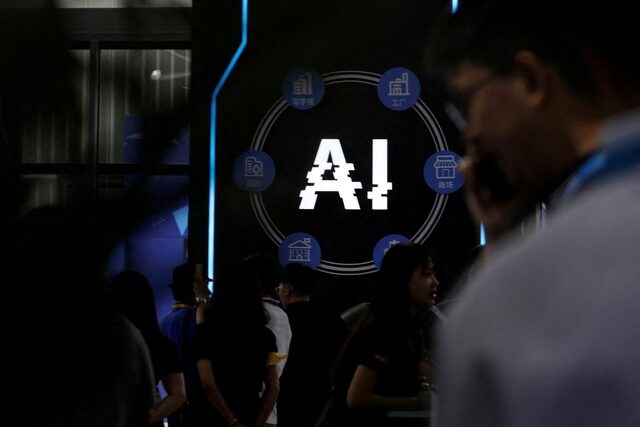
China's Supreme People's Court has issued its first nationwide judicial guidelines on artificial intelligence, targeting unauthorized deepfakes, cloned voices, and AI-driven price discrimination. The rules aim to give courts a clear legal framework as AI-generated impersonation becomes harder to detect. Critics note the guidelines say little about how citizens can challenge the state's own use of AI surveillance and information control.

.
China's Supreme People's Court (SPC) has published its first set of nationwide guidelines addressing legal disputes tied to artificial intelligence. The rules, released this week, specifically target unauthorized deepfakes, cloned voices, and other AI-driven harms that have become increasingly common as generative tools grow more convincing.
According to state broadcaster Xinhua, the guidelines state plainly that nobody may create or share a recognizable digital copy of another person's face or voice without that person's consent. Doing so without permission is now formally classified as a violation of personal rights under Chinese law.
.
What the Guidelines Cover
The rules address several distinct problem areas that have emerged alongside China's rapid AI expansion. Central among them is the unauthorized use of a person's likeness or voice, whether for entertainment, fraud, or reputational harm.
The court also singled out cases in which a person's digitally altered face is used to spread false or sexually defamatory claims. In such situations, victims may now request an emergency court injunction if waiting for a full legal process would cause damage that is difficult to reverse.
A second focus area is algorithmic price discrimination — the practice of charging different customers different prices for the same product, based on data the algorithm holds about them. Businesses that do this without a reasonable justification can now be held liable for consumer harm.
A third area covers AI "hallucinations": false or misleading information generated by AI systems and then circulated as fact.
.
Platforms Now Carry Legal Responsibility
Under the new framework, AI service providers are not just passive hosts of content. If a platform is notified that its system has produced material that violates someone's rights and fails to act quickly, it can be held legally responsible alongside the original user.
This shifts some of the enforcement burden onto the companies operating AI tools, rather than leaving victims to chase down individual bad actors — a model similar in spirit to notice-and-takedown systems used elsewhere in the world.
.
Officials Frame the Move as Balancing Innovation and Risk
SPC Vice President Tao Kaiyuan described the guidelines as an effort to "balance development and security," according to a transcript published by the court following a press briefing. She said the rules are meant to bring clarity to procedural questions in AI-related lawsuits, which have multiplied rapidly as courts across China encounter novel cases.
Notably, the court chose not to rule definitively on every contested issue. Tao acknowledged that some questions remain too unsettled for a firm legal standard, and said the guidelines "leave room for clarification" as courts gain more experience with future cases.
The announcement follows a warning from President Xi Jinping in July, when he urged officials to "strengthen risk-awareness" and ensure AI development remains "secure and controllable" — language that reflects Beijing's dual push to lead in AI while limiting its potential for social disruption.
.
Context: A Booming Industry, a Tightly Managed Legal System
China has invested enormously in domestic AI development as part of its broader technology competition with the United States, and the country is now home to thousands of AI companies. Courts had already handled scattered AI-related cases before this ruling — including a 2024 Beijing Internet Court decision that fined an app operator for allowing users to generate unauthorized face-swap content.
It's worth noting the limits of this move. China's courts operate under the direct authority of the Communist Party rather than as an independent branch of government, meaning these guidelines function more as top-down policy instruments than as products of adversarial judicial debate. Legal protections announced this way can be enforced selectively, and rules governing "AI-generated false information" in an authoritarian system also raise the question of who ultimately decides what counts as "false" — a concern rights advocates have flagged in China's broader track record of controlling information, including its treatment of groups such as Falun Gong practitioners, who have long faced state-led disinformation campaigns.
.
What Comes Next
The guidelines give Chinese courts a clearer legal basis for handling a wave of AI-related disputes, but key questions remain open by design. As deepfake technology grows more accessible, similar debates over consent, liability, and platform responsibility are playing out in the United States, the European Union, and elsewhere — making China's approach one data point in a much larger global effort to regulate synthetic media before it outpaces the law.
.
Sources:
- https://www.thestandard.com.hk/innovation/article/342091/Chinas-top-court-posts-guidelines-on-deepfakes-AI-disputes (AFP via The Standard)
- https://english.news.cn/20260907/acf67ea35acf4eb989d1a6701d696207/c.html (Xinhua)
- https://www.thestar.com.my/aseanplus/aseanplus-news/2026/09/07/fake-ai-generated-content-now-liable---china039s-top-court-sets-rules-for-ai-deepfakes-and-other-disputes (The Star, Malaysia)
.
What's Your Reaction?
 Like
0
Like
0
 Dislike
0
Dislike
0
 Love
0
Love
0
 Funny
0
Funny
0
 Wow
0
Wow
0
 Sad
0
Sad
0
 Angry
0
Angry
0














Comments (0)