

China’s Military Went on ‘Near-War’ Alert After Ouster of Top General, Insiders Say

.
The insiders spoke to The Epoch Times on condition of anonymity or with only their surnames published, citing safety concerns.
“The situation escalated extremely fast,” said one insider from the Chinese military on Jan. 30. “We didn’t know what had happened—only that an important announcement was coming from the defense ministry. But putting the system into ‘near-war’ status was still surprising, especially since the top leader was not traveling abroad.”
According to the insider, only after Zhang’s downfall was made public did many within the military begin to understand the purpose of the extraordinary security escalation.
“People later realized it was meant to prevent internal incidents,” the insider said. “There were concerns that something extraordinary could happen inside the military.”
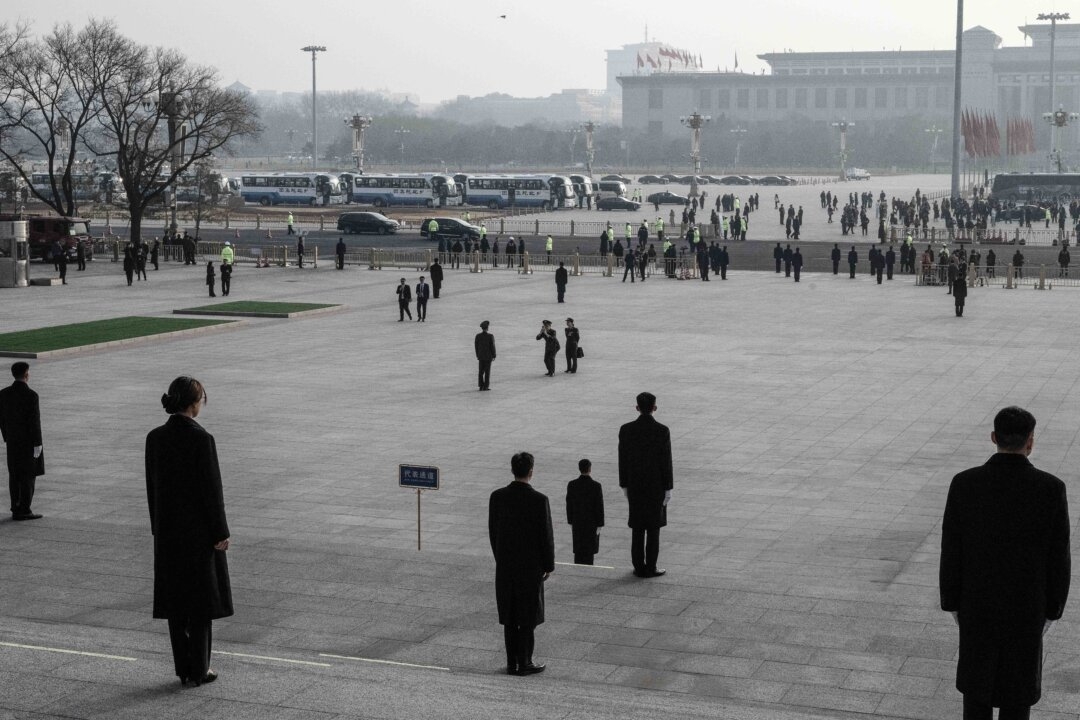
According to the insider, security around the CMC headquarters in Beijing was visibly tightened that day. Personnel from the Central Guard Bureau—an elite unit responsible for protecting China’s top leadership—were deployed in large numbers. Computers, documents, and boxed files were removed from offices, and the atmosphere inside the compound became tense and unusually guarded.
A China-based military analyst told The Epoch Times that the term “near-war status” has a specific meaning within the Chinese Communist Party (CCP) that is often misunderstood by outside observers.
“In the CCP’s governance framework, ‘near-war’ does not necessarily mean preparing for external combat,” the analyst said. “It is a high-alert operational mode centered on political security.”
Such measures are typically activated, the analyst explained, when Chinese leader Xi Jinping travels abroad or during sensitive political moments, with the primary goal of ensuring command stability and absolute obedience—not responding to foreign military threats.
Lu, a retired Chinese military veteran identified only by his surname, echoed that assessment. He told The Epoch Times that within the military, these measures have historically been linked to leadership security and internal control during politically sensitive periods.
Uncertain Time for China’s Military
Following the public announcement of Zhang’s removal, analysts have described China’s defense system as entering one of its most vulnerable phases in recent years.There were no significant changes in the Taiwan Strait, the South China Sea, or along China’s land borders that could explain the heightened alert. Instead, multiple indicators suggest the tension stemmed from internal power realignments at the very top of the CCP—particularly within the CMC, which controls the armed forces.
The military analyst said the PLA’s stability does not rest on institutional checks and balances, but on personal authority and loyalty.
Hollowed Out Command Structure
Military insiders say the rapid reduction in the number of CMC members has narrowed the number of people who could actually command troops, increasing uncertainty within the ranks.While Xi holds the title of CMC chairman, he does not personally command forces in the field. Zhang Shengmin, a newly elevated CMC member, has spent most of his career in political and disciplinary roles rather than operational command. Compared with Zhang Youxia, who exercised direct control over combat forces, Zhang Shengmin is seen as relatively weak in terms of real military authority.
Under these conditions, a military insider told The Epoch Times that concerns have emerged about whether officers in the theater commands would unquestioningly carry out orders from anyone other than Zhang Youxia.
Some analysts argue that the current atmosphere indicates deeper unease at the top of the CCP about the reliability of its armed forces.
History suggests, they note, that when a regime increasingly relies on the military to guard against instability within its own system, its overall security and stability may be entering a fragile phase.
What's Your Reaction?
 Like
0
Like
0
 Dislike
0
Dislike
0
 Love
0
Love
0
 Funny
0
Funny
0
 Wow
0
Wow
0
 Sad
0
Sad
0
 Angry
0
Angry
0







Comments (0)