

China's Coal Heartland Bets Big on Solar and Wind — But Refuses to Let Go of Coal
Inner Mongolia, China's largest coal-producing region, is also becoming its biggest hub for solar and wind power. But instead of replacing coal, the renewable boom is happening alongside continued coal expansion — a pattern experts call China's central energy paradox.

.
A Desert Landscape of Contradictions
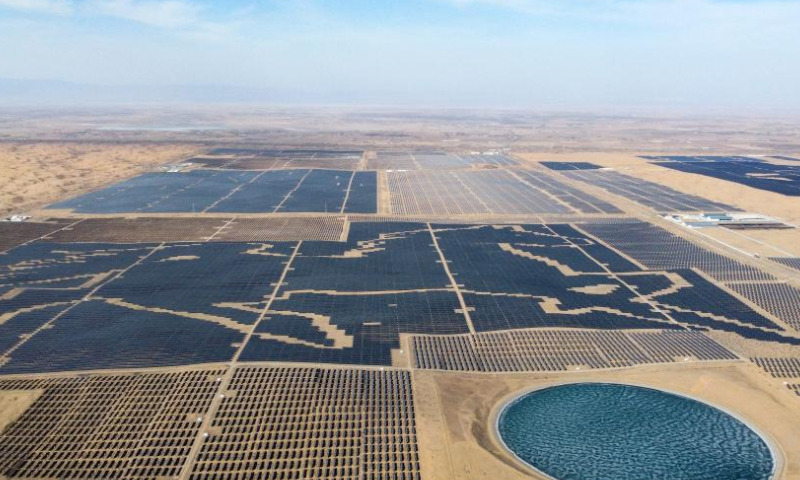
In the Kubuqi Desert of northern China, more than three million solar panels are arranged in the shape of a galloping horse — a nod to Inner Mongolia's nomadic heritage. Just a short drive away sits one of the region's coal-fired power plants, sending electricity 700 kilometers to Beijing.
This image captures a strategy officials openly describe as "all of the above." Inner Mongolia has become China's largest base for both renewable energy and coal production at the same time — not one replacing the other, but both growing in parallel.
.
Renewables Are Surging — So Is Coal
Nationally, China has installed wind and solar capacity faster than any other country on Earth. Yet coal still generated roughly 51 percent of the country's electricity in 2025.
In Inner Mongolia, the pattern is even starker. By March 2026, the region's installed renewable capacity had reached 174.1 gigawatts — more than triple what it was five years earlier, and now accounting for over half of the region's total power capacity. New wind and solar installations have technically overtaken coal-fired capacity in raw numbers.
But raw generation tells a different story. In 2025, coal plants in Inner Mongolia produced around 590 billion kilowatt-hours of electricity, more than double the roughly 277 billion kilowatt-hours generated by wind and solar combined. Coal, in other words, still does the heavy lifting.
"While China as a whole is transitioning away from coal, Inner Mongolia is the most paradoxical part of the story," said David Fishman, an energy consultant at The Lantau Group who has toured the region's power plants. "More renewables often means more coal capacity as well."
.
Why the Communist Party Won't Quit Coal
Regional officials frame this as pragmatism. Gu Qing, an Inner Mongolia energy administration official, said coal-fired power will keep growing "although the pace will gradually slow," since wind and solar output drops when the weather doesn't cooperate.
But independent energy analysts point to something deeper than weather: political and economic incentives baked into China's state-controlled system. Long-term power purchase contracts, largely dictated by provincial and central authorities, lock in demand for coal and make it harder for grid operators to prioritize cheaper renewable power. Interprovincial electricity trading rules — also state-managed — add further friction.
Beijing has ordered coal plants to run more flexibly, ramping output down when solar and wind are abundant. Inner Mongolia's vice governor, Huang Zhiqiang, claims plants have been refitted to operate at just 15 percent capacity when needed. Analysts are skeptical this is happening in practice. "Just because a plant can operate flexibly doesn't mean it is operating flexibly," said Anika Patel of Carbon Brief.
The result is a system where the same authorities that champion renewable energy targets also keep approving new coal mines and coal-to-chemical projects — a contradiction that critics say reflects the Chinese Communist Party's priority of centralized industrial control over genuine decarbonization.
.
Fueling AI, EVs — and Beijing's Energy Independence
Inner Mongolia mines around 1.2 billion tons of coal a year, about a quarter of China's national output, and ships more than 60 percent of it to other provinces. The region is also a major hub for coal-to-oil and coal-to-gas chemical production — processes that emit more carbon dioxide than simply burning coal for electricity.
Officials have been explicit about the strategic logic. Huang pointed to the 2025 disruption of the Strait of Hormuz during the Iran conflict as proof that countries dependent on imported oil and gas are vulnerable. Expanding coal-based fuel production, he said, helps China "offset and ease its reliance on imported oil and gas."
That logic echoes a broader global shift toward energy self-sufficiency also championed by the Trump administration in the United States, which has pushed to expand domestic oil, gas and coal production rather than rely on foreign energy or aggressive emissions mandates. China's approach shows that even a government publicly committed to renewable targets is unwilling to sacrifice energy security or industrial control for climate goals alone.
At the same time, new demand from AI data centers, electric vehicle charging and manufacturing is straining Inner Mongolia's grid, pushing authorities to invest heavily in transmission lines and battery storage — over 7 million kilowatts of new storage capacity is planned for 2026 alone, part of a 324-billion-yuan (roughly $47 billion) regional energy investment package.
.
What Comes Next
Energy Foundation China estimates Inner Mongolia won't reach peak carbon emissions until sometime between 2026 and 2030 — later than most other Chinese provinces. The region's own environmental authorities have set an even more distant target: 2035.
For a region that mines a quarter of the nation's coal and hosts some of its largest solar farms, the future looks less like a clean break from fossil fuels and more like a prolonged balancing act — one where coal keeps the lights on while renewables get the headlines.
.
Sources
- Associated Press: "China's Inner Mongolia bets on solar and wind but coal stays close" — https://apnews.com/article/china-coal-renewables-inner-mongolia-9867147f572583e20788e4b4fdf63ce0
- South China Morning Post: "China's green energy leader Inner Mongolia starts work on new 'flexible' power plants" — https://www.scmp.com/news/china/science/article/3343739/chinas-green-energy-leader-inner-mongolia-starts-work-new-flexible-power-plants
- Dialogue Earth (China Dialogue): "Can Inner Mongolia reach peak carbon this decade?" — https://dialogue.earth/en/energy/can-inner-mongolia-reach-peak-carbon-this-decade/
- Inner Mongolia Autonomous Region Government / China Daily: "Inner Mongolia outlines energy strategy to boost supply, accelerate green transition" — http://www.goinnermongolia.com.cn/2026-03/20/c_1170232.htm
.
What's Your Reaction?
 Like
0
Like
0
 Dislike
0
Dislike
0
 Love
0
Love
0
 Funny
0
Funny
0
 Wow
0
Wow
0
 Sad
0
Sad
0
 Angry
0
Angry
0













Comments (0)