

South Korea's Pension Fund Just Bankrolled a Company the Pentagon Calls a Chinese Military Asset
South Korea's National Pension Service quietly became a cornerstone investor in the Hong Kong stock listing of Zhongji Innolight, a Chinese optical-tech firm the U.S. Department of Defense had already flagged as a "Chinese Military Company" weeks earlier. The timing has triggered uncomfortable questions in Seoul and Washington about whether one of America's closest Asian allies is drifting toward Beijing just as the Trump administration tightens the screws on China's military-linked economy.

.
A Retirement Fund Bets on a Blacklisted Company
South Korea's National Pension Service (NPS) manages retirement savings for tens of millions of Korean workers. On July 20, 2026, it joined a group of global investors — including funds tied to BlackRock — in a cornerstone investment agreement worth roughly $250 million for the Hong Kong initial public offering of Zhongji Innolight, a Chinese manufacturer of optical transceivers used inside AI data centers.
Ten days later, on July 30, the company debuted on the Hong Kong Stock Exchange in what became the city's largest listing in seven years, raising close to $7 billion. Its major clients include leading technology companies such as Nvidia and Alphabet, and roughly 61.7 percent of its revenue comes from the United States.
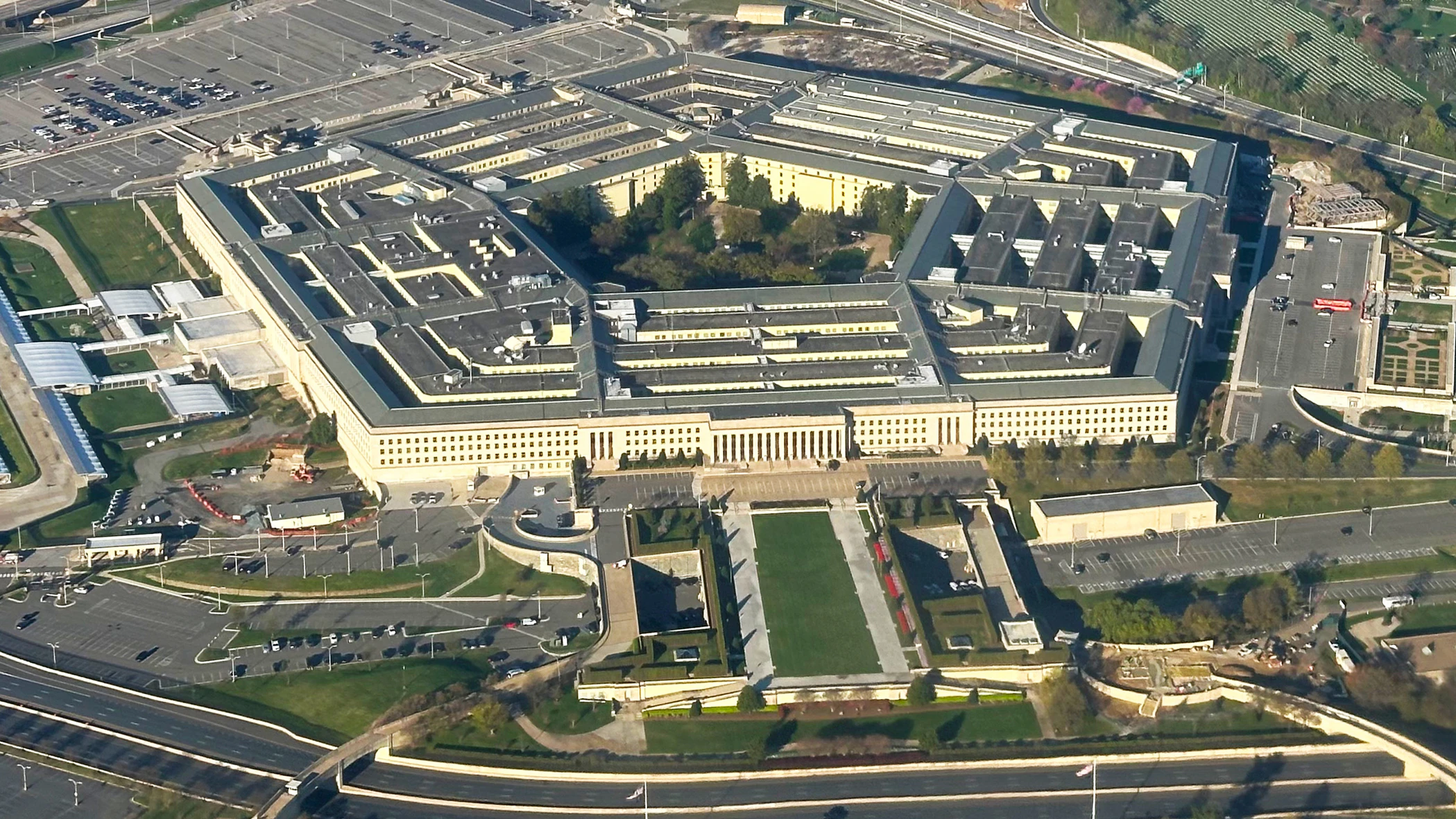
There is just one problem: Zhongji Innolight had already been named a Chinese military-linked company by the Pentagon — six weeks before the NPS signed on.
.
The Timeline Washington Can't Ignore
On June 8, 2026, the U.S. Department of Defense published an expanded version of its Section 1260H list, which identifies Chinese companies believed to be tied to Beijing's military-industrial complex. The additions reach further across China's economy than prior iterations of the list, capturing major Chinese technology companies, electric vehicle and battery manufacturers, solar manufacturers, and display and optical-component manufacturers including Innolight. The Pentagon's official notice states plainly that Innolight is indirectly owned by China's state asset regulator SASAC and directly affiliated with the Ministry of Industry and Information Technology.
The update expanded the list from roughly 130 to 188 Chinese companies, with direct Defense Department contracting bans starting that same month and broader purchasing restrictions arriving in 2027. In other words, this was not a symbolic gesture. It came with teeth.
Six weeks after that designation, Korean public pension money flowed into the company anyway — through a share offering that, according to Korean financial-industry sources, locks investors in until late January 2027. That means the fund cannot simply sell its stake if Washington's restrictions on Chinese AI hardware escalate further, which multiple reports suggest is exactly the direction U.S. policy is heading.
.
An Ally at a Strategic Crossroads
South Korea is not a neutral bystander in the U.S.-China rivalry. It hosts roughly 28,500 American troops and remains bound to Washington through one of the United States' oldest treaty alliances. It also sits at the center of the global semiconductor and battery supply chains that Washington is racing to secure against Chinese dependence.
That is what makes this investment more than an ordinary financial story. When Washington is trying to choke off capital and components flowing to Chinese military-linked firms, a public institution in an allied country stepping in as a cornerstone investor sends a signal — intentional or not — that runs directly against that effort.
Korean financial journalists have raised the same concern. An editorial in Money Today, one of South Korea's leading financial outlets, noted that U.S. congressional investigators had already scrutinized asset managers like BlackRock over Chinese blacklist investments back in 2023, and that several U.S. states have since pushed public pension funds to pull money out of China entirely. Against that backdrop, the NPS's decision to move toward Beijing rather than away from it stood out as a "risky investment," in the paper's own words.
.
Silence From the Fund Itself
Korean reporters asked the NPS directly whether it had known about the Pentagon designation before committing capital, and whether geopolitical risk had factored into its review. According to Korean financial-industry reporting, the fund declined to disclose details of the individual investment.
That silence matters because this is not private capital making a private bet. It is the retirement savings of the Korean public, managed by a state institution, flowing into a company Washington considers a national-security concern. One Korean academic quoted in the coverage offered a more sympathetic reading — arguing that some exposure to China's growth story may be worth the risk, and that the current U.S. restrictions could eventually ease. Whether Korean pensioners agree that their retirement funds should be the ones taking that bet is another matter entirely.
.
Where Washington's China Strategy Is Headed
None of this happens in a vacuum. The Trump administration has spent 2026 steadily tightening restrictions on Chinese firms with military or state ties — expanding the Pentagon's blacklist, pursuing new limits on Chinese-made components inside American data centers, and pushing back against Beijing's access to sensitive U.S.-linked technology and data. Regulators are also reportedly examining tighter rules on imported Chinese optical transceivers, the very product category that made Zhongji Innolight one of the hottest stocks in Asia this year.
At the same time, Washington has kept diplomatic channels with Beijing open, including a recent meeting between President Trump and Chinese leader Xi Jinping aimed at stabilizing trade relations. That combination — firm on security, open to negotiation — reflects an administration trying to compete with Beijing without shutting the door entirely.
The contrast with South Korea's pension fund is what makes this story worth watching. As American capital retreats from Chinese military-linked companies, Korean public money is moving the other way, and at a moment that leaves little room to argue it happened by accident.
.
What Comes Next
A single investment does not prove that Seoul has chosen Beijing over Washington. But it does raise a legitimate question that deserves scrutiny from journalists and policymakers on both sides of the Pacific: as U.S.-China competition intensifies, are South Korea's public institutions still moving in step with their most important ally — or increasingly out of step with it?
The National Pension Service will likely be locked into its Zhongji Innolight stake through early 2027, regardless of how much further Washington's restrictions on Chinese AI hardware go. Whether that turns out to be a shrewd bet on China's tech ambitions or a costly misjudgment of where the alliance is heading may not be clear for some time — but the questions it has already raised in Seoul and Washington are not going away.
.
Sources
- U.S. Department of Defense, Federal Register — Notice of Availability of Designation of Chinese Military Companies (June 8/10, 2026): https://www.federalregister.gov/documents/2026/06/10/2026-11571/notice-of-availability-of-designation-of-chinese-military-companies
- WilmerHale — "Pentagon Adds 65 New Entities to the 1260H List of Chinese Military Companies": https://www.wilmerhale.com/en/insights/client-alerts/20260611-pentagon-adds-65-new-entities-to-the-1260h-list-of-chinese-military-companies
- China Daily Hong Kong — "Zhongji Innolight debuts as Hong Kong's largest IPO in seven years": https://www.chinadailyhk.com/hk/article/637153
- South China Morning Post — "Zhongji Innolight already has 30 cornerstone investors for US$8b IPO": https://www.scmp.com/business/companies/article/3361377/zhongji-innolight-aims-hong-kongs-biggest-ipo-7-years-us8b-sale
- Money Today (Korea) — "[단독] 국민연금, '美 전쟁부 블랙리스트' 中 AI장비기업 IPO 투자": https://www.mt.co.kr/stock/2026/08/12/2026081116030752297
- Money Today (Korea), Editorial — "국민연금, 지정학 리스크 살펴 투자해야": https://www.mt.co.kr/opinion/2026/08/13/2026081216512821080
- BigGo Finance — "South Korea's NPS Makes First-Ever Investment in IPO of Chinese AI Firm on Pentagon Blacklist": https://finance.biggo.com/news/198e496a-8ebb-4430-b6f3-e70314fd7077
.
What's Your Reaction?
 Like
0
Like
0
 Dislike
0
Dislike
0
 Love
0
Love
0
 Funny
0
Funny
0
 Wow
0
Wow
0
 Sad
0
Sad
0
 Angry
0
Angry
0















Comments (0)