

China's Billion-Dollar Formula: How Mobile Micro-Dramas Are Rewriting Hollywood's Playbook
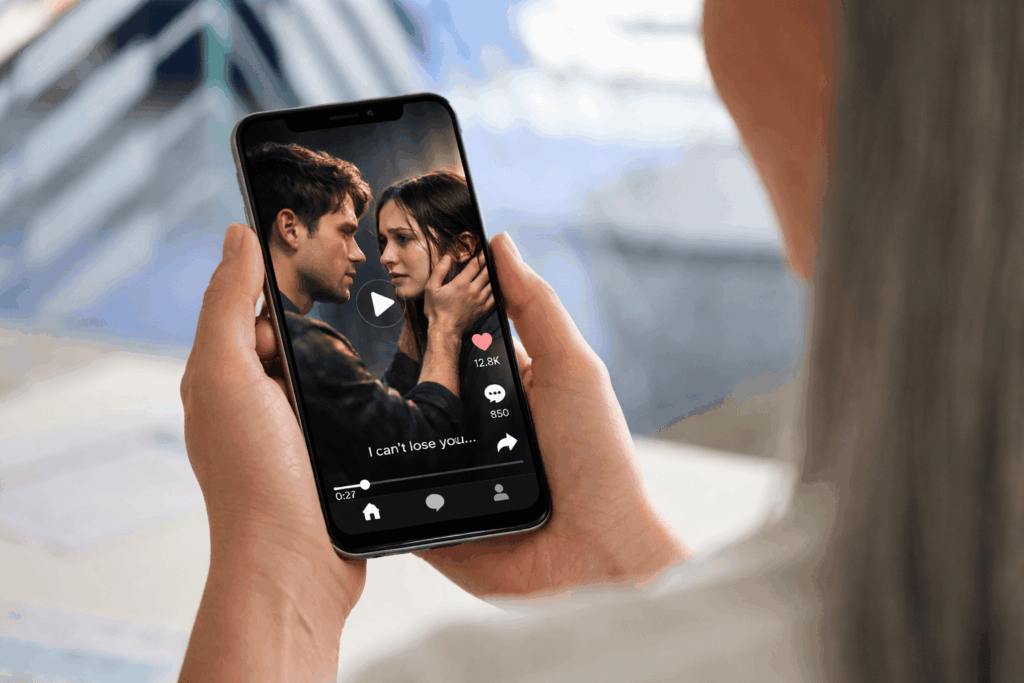
What started as a quirky pandemic trend in China has grown into one of the most disruptive forces in global entertainment. Micro-dramas — bite-sized, smartphone-first soap operas — are pulling in billions of dollars and turning the heads of Hollywood's biggest names. The format is reshaping how stories are told, funded and consumed worldwide.

.
Two-Minute Episodes, Billion-Dollar Revenues
The premise sounds almost too simple: short vertical videos, one to three minutes each, packed with romance, betrayal and revenge. The first few episodes are free. Want to find out if the billionaire CEO marries the secretary? Pay up.
Yet this formula, born in China during the COVID-19 pandemic, has quietly become a global entertainment powerhouse. Chinese micro-drama revenues climbed from just $500 million in 2021 to $7 billion in 2024 — and in 2025, the market crossed a symbolic milestone: it surpassed China's entire domestic cinema box office, reaching an estimated $9.4 billion, according to research firm Media Partners Asia.
More than 830 million people in China now consume micro-dramas regularly. Nearly 60 percent of that audience pays for content or makes in-app purchases. Three platforms dominate the landscape — ByteDance's Red Fruit, Tencent's WeChat Video Accounts and Kuaishou's Xi Fan — each deeply integrated with social media and mobile payment systems.
Hollywood Takes Notice — This Time for Real
The U.S. entertainment industry has tried the short-form mobile video experiment before — and failed spectacularly. In 2020, Jeffrey Katzenberg launched Quibi with $1.75 billion in funding and A-list collaborators including Steven Spielberg and Guillermo del Toro. It shut down within six months, having attracted fewer than a million subscribers against a target of seven million.
This time, however, Hollywood's approach is different. Rather than building from scratch with massive budgets, studios are plugging into a format that already has a proven, paying audience.
Peacock has launched a dedicated micro-drama hub. Fox Entertainment invested in micro-drama producer Holywater and committed to producing hundreds of vertical titles. TelevisaUnivision is developing serialized short-form content for its ViX platform. Kevin Hart's HartBeat production company has expanded into vertical comedy, and Kim Kardashian has backed mobile-first scripted content through micro-drama platform ReelShort, which generated roughly $400 million in revenue in 2024 alone.
Issa Rae and the Appeal of Cutting Out the Gatekeepers
Among the most prominent early movers is Emmy-nominated actor and producer Issa Rae. Her company, Hoorae Media, spent more than two years studying the format before releasing the thriller "Screen Time" in May — one of the first studio-quality micro-drama productions from an established Hollywood company. The TikTok-backed series drew nearly 75 million views in its first week.
For Rae, the appeal goes beyond the numbers. The format costs significantly less than traditional TV or film, which allows creators to take creative risks that larger productions rarely permit. The turnaround time is also dramatically shorter, making it possible to respond to current events and cultural moments while they are still relevant.
Hoorae's head of digital, Dzifa Yador, points to another key advantage: distribution. Instead of waiting years for a studio to greenlight a project, creators can publish directly to audiences and retain ownership of their work.
"You definitely get rid of the gatekeepers," Yador said. "You can greenlight your own show."
Independent Creators Were First — And They Stayed
Before the studios arrived, independent creators were already building massive audiences. Georgia-based comedian Kountry Wayne transitioned from sketch comedy to a sprawling universe of interconnected relationship dramas after observing they had far longer staying power. He now releases around 50 episodes a day and recently reported over 1.4 billion views on Facebook and 100 million on YouTube in a single month.
Wayne turned down eight-figure acquisition deals as Hollywood's interest grew, choosing to keep ownership of his content rather than hand it to companies that, in his view, would seek to control it.
AI Is Reshaping Production — Especially in China
While Hollywood navigates the format's creative potential, China's micro-drama industry is moving into its next phase. Artificial intelligence is now deeply embedded in the production process, used for personalized content discovery, faster creative iteration, genre testing and branching storylines.
In January 2026, AI-generated micro-drama titles accounted for 38 percent of China's top 100 chart — up from just 7 percent a year earlier. Leading production companies are cutting production costs to roughly one-fifth of traditional shoots and compressing timelines from months to weeks, according to industry tracking firm DataEye.
A New Proving Ground — Even for Festival Cinema
The format is also opening doors for a new generation of independent filmmakers. The American Black Film Festival launched its first micro-drama showcase this year, selecting eight finalists from hundreds of submissions. Festival programmer Bobbi Broome said several of the participating filmmakers saw the format as a proof-of-concept for larger projects, including feature films.
"The industry is changing day in and day out," Broome said.
The Numbers Keep Growing
Globally, the micro-drama market outside China generated $1.4 billion in 2024 and is projected to reach $9.5 billion by 2030 — a compound annual growth rate of more than 28 percent. The U.S. leads international markets, with revenues forecast to climb from $819 million in 2024 to $3.8 billion by the end of the decade. The total global market — including China — is heading toward $26 billion by 2030.
The audience is also broader than the format's soap-opera reputation might suggest. In China, users aged 50 and above account for nearly 30 percent of all micro-drama viewers. In the U.S., the typical paying viewer is an affluent, urban woman between 30 and 60, drawn to romance, CEO storylines and revenge narratives.
Whether Hollywood's late arrival can secure a meaningful share of a market China essentially built from the ground up remains to be seen. But with studios, celebrities and independent creators all competing for the same smartphone screens, one thing is clear: the two-minute episode is no longer a novelty. It is an industry.
.
Sources:
- Associated Press – Hollywood gets into the microdrama race: https://apnews.com/article/microdrama-issa-rae-kevin-hart-hollywood-087b042a6eac08e159410e29689606b9
- Variety / Media Partners Asia – Microdramas Emerge as Multi-Billion Dollar Global Phenomenon (September 2025): https://variety.com/2025/tv/news/microdramas-global-entertainment-billions-1236521194/
- Variety – Inside the $26 Billion Global Microdrama Boom (November 2025): https://variety.com/2025/tv/news/global-microdrama-boom-1236560947/
- The Next Web – China's micro-drama industry and AI integration (May 2026): https://thenextweb.com/news/china-micro-drama-ai-state-funding
- People's Daily – Chinese micro-dramas gain global momentum (March 2026): https://en.people.cn/n3/2026/0311/c90000-20434640.html
.
What's Your Reaction?
 Like
0
Like
0
 Dislike
0
Dislike
0
 Love
0
Love
0
 Funny
0
Funny
0
 Wow
0
Wow
0
 Sad
0
Sad
0
 Angry
0
Angry
0
















Comments (0)