

China Reveals Its Hand in Trade War, Risking Greater Isolation

.
The U.S.–China trade war has unfolded like a boxing match. Both sides were trading blows, and suddenly, China threw a haymaker.
That’s the analogy William Lee, chief economist of the Milken Institute, used to describe the latest development in the economic confrontation between the two countries.
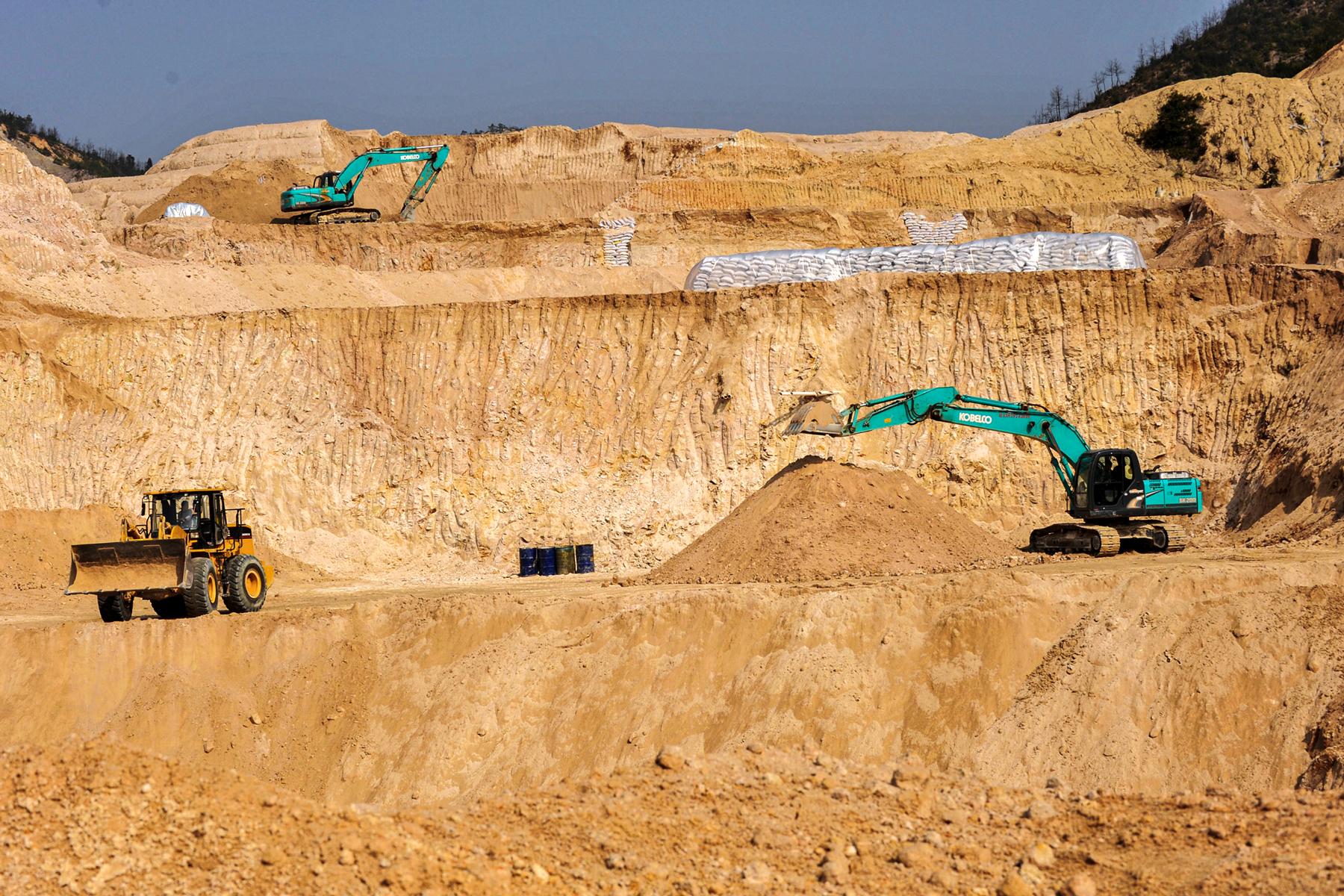
Although China has been slowwalking its supply of rare earths to the rest of the world since April, the new measures expand its restrictions to any products that contain 0.1 percent of Chinese rare earth content or Chinese technology is used in the process.
U.S. President Donald Trump responded on Oct. 10, saying the regime is “becoming very hostile.”
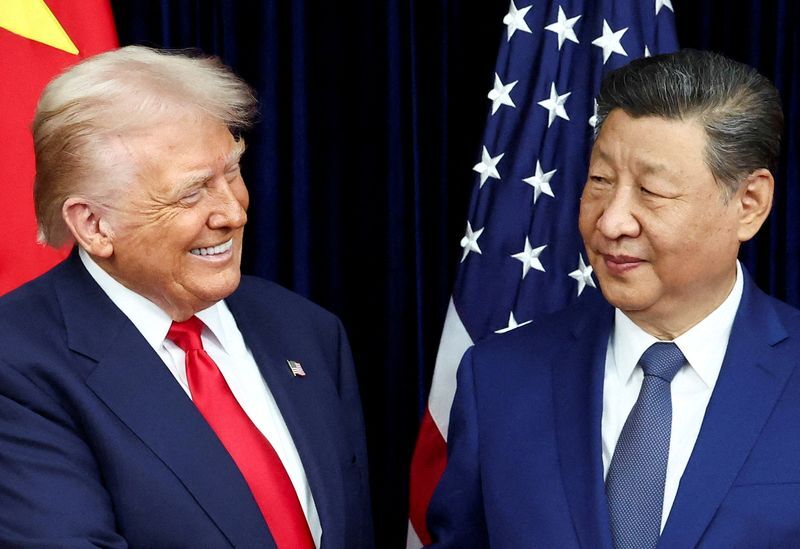
He then said there is now “no reason” to go ahead with an upcoming meeting with Chinese Communist Party (CCP) leader Xi Jinping planned for the sidelines of the Asia-Pacific Economic Cooperation summit in South Korea.
On Oct. 12, the Chinese Ministry of Commerce called for “addressing concerns through dialogue” and stated that it will retaliate if Trump follows through on his promise.
Alexander Liao, who grew up in China’s military system and later became a seasoned journalist and Hong Kong bureau chief, told The Epoch Times that the regime’s latest move is calculated.
He said the CCP is attempting to take advantage of what it perceives as a U.S. vulnerability associated with the government shutdown, but the move hasn’t improved Beijing’s position in trade negotiations. Instead, Liao said, it will deepen China’s isolation by strengthening the West’s resolve to achieve rare earth independence and facilitate a world trade alliance without China.
Mike Sun, a U.S.-based businessman with decades of experience advising foreign investors and traders doing business in China, concurs that the regime is trying to take advantage of the shutdown. He uses an alias to protect himself from reprisals from the regime.
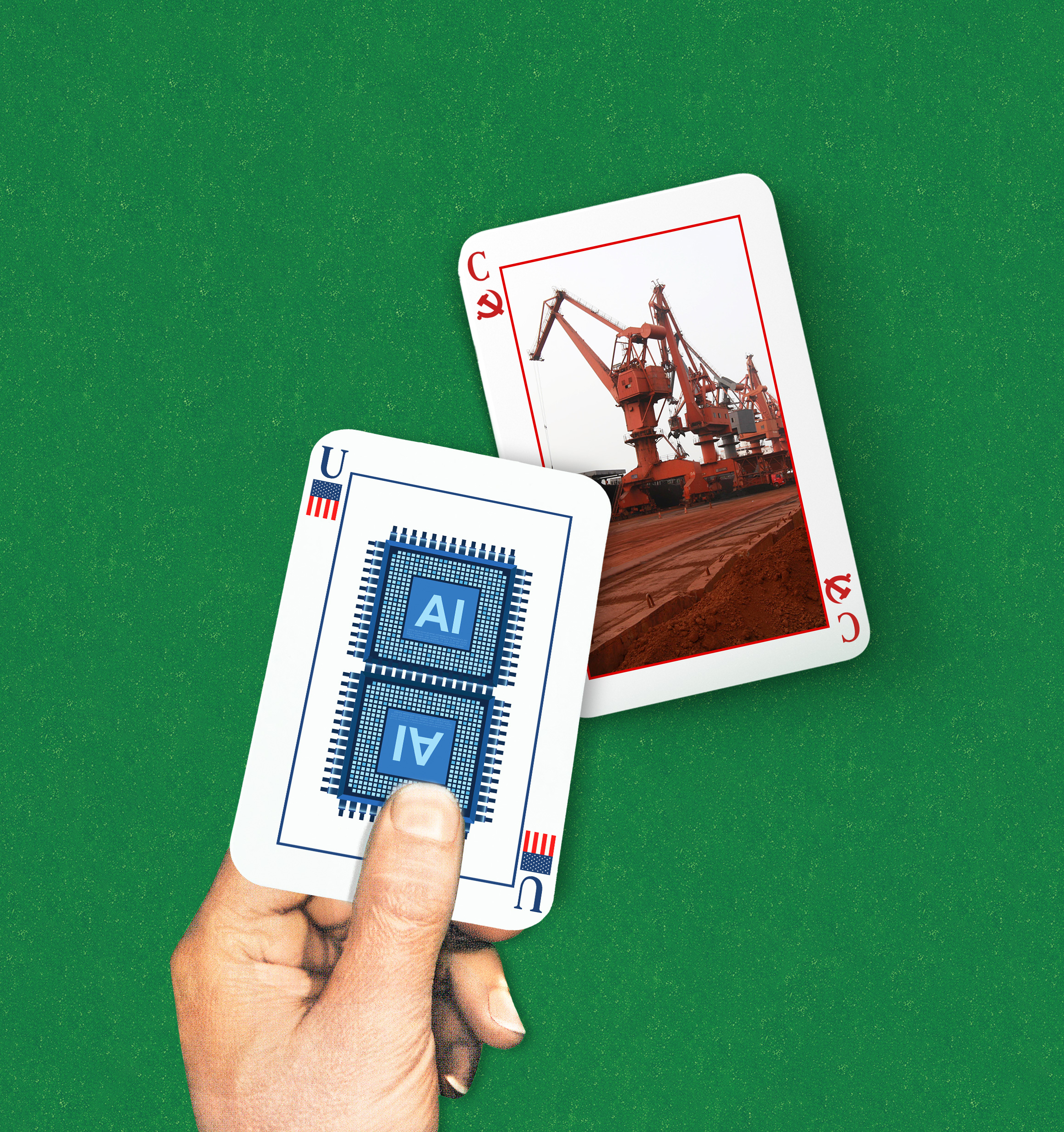
Sun told The Epoch Times that the aces both sides hold—rare earths from China and artificial intelligence chips from the United States—will eventually expire because each country is moving to become self-sufficient.
.
The United States leads the world in AI chip technology, with U.S. companies such as Nvidia and AMD designing most of the advanced AI processors. During the trade talks, China has repeatedly sought greater access to such technologies, which are seen as essential for the regime to achieve its goal for global dominance in advanced manufacturing.
Sun expects Beijing’s latest rare earth move to usher in an escalated round of negotiations as the United States and China accelerate the process of reducing their codependency.
All the experts interviewed by The Epoch Times said the conflicts between the United States and China have reached new heights and will only escalate from here. Both sides are inflicting pain on their opponent and on themselves, they added, with it being only a matter of who can hold out longer.
Why Now?
Liao said China’s export controls on rare earths are not, in practical terms, a significant change from before, considering the new 0.1 percent measures are very difficult to enforce. He believes that the difference now is that Beijing is being very loud about its export controls.China, he said, has had this plan all along and was waiting for the moment to inflict maximum damage on the United States.
“In the ‘Art of War,’ the famous Chinese military strategist Sun Tzu advised not to fight a war on your enemy’s terms,” Liao said at the time. “The timing of a war, the location of the war, and the style of the war are all critical factors to seize the initiative.”
He said the regime is doing exactly that because it believes that the United States is in a vulnerable position due to the government shutdown and wants to add insult to injury.
Amid the current federal government shutdown, about 750,000 federal workers have been furloughed and will not be paid until it reopens. The essential workers—about 2 million civilians and 1.3 million military personnel—may also miss their paycheck on Oct. 15 if the shutdown continues, although Trump has instructed the Pentagon to ensure that military pay is disbursed.
.

The shutdown can be seen as an external reason that the regime made its move on Oct. 9, Sun said. Internally, Xi needs to appear strong to reinforce his authority within the CCP; the stagnant Chinese economy is putting him under pressure.
The recent tariff tit-for-tat occurred days before an annual plenary session by central committee members of the CCP. Hundreds of members will set the next five-year plan for China from Oct. 20 to Oct. 23.
The new five-year plan, covering 2026 to 2030, will be of utmost importance, Sun said, because Beijing is facing many challenges amid its economic woes and a strained international geopolitical environment.
China's Exports to US, 2025
Lee said China’s domestic demand is still “very weak,” citing lackluster data from retail sales, private investment, and the property market—metrics that, in his view, are not under the direct control of the regime.
“It’s a time of getting desperate because economic measures are not working, and they have to show a very strong foreign policy line,” Lee, who also leads the consultancy Global Economic Advisors, told The Epoch Times.
US Impact
China has been relying heavily on its rare earth card in the U.S.–China trade talks for half a year now.The card works because a shortage of these critical minerals affects U.S. consumers in almost all products that contain electronics. It’s also because the current bout of U.S. economic growth is heavily dependent on AI.
“All the growth in the stock market has pretty much been dependent upon the AI trade, and rare earth is the key linchpin,” Lee said.
The U.S. stock market fell on Oct. 10 over concerns that Chinese rare earth controls would affect AI companies’ growth. Both the S&P 500 and the Dow Jones Industrial Average dropped by 3 percent.
.

The stock price of Nvidia, which uses rare earths for its most advanced chips, dropped by 6 percent. Nvidia’s spokesperson declined to comment on the impact of China’s latest export controls on its business.
Trump’s vulnerability is in the U.S. market, Lee said.
“Using the tariffs strategy may work again, but this time, he cannot chicken out. This time, he cannot hold back on the tariffs just because of a promise,” he said.
The promise Lee referred to was China’s agreement at a June meeting in London to provide rare earths to the United States, following a reversal of the same agreement reached in May.
Sun said U.S. export controls on advanced AI chips and high tariffs on China still work in the short term. But in the long term, the United States has to build its own independent supply chain in critical sectors.
Sun’s analysis is that Washington and Beijing have entered another round of trade negotiations with higher baseline hostility, with the tug of war still revolving around rare earths versus AI chips.
What’s Next?
Since the COVID-19 pandemic, China’s economy has become increasingly isolated.As Western countries imposed tariffs on Chinese goods to curb Beijing from flooding their markets with cheap products, the Chinese regime has to focus on solving the issues with its slumping property market and heavy local government debt. Yet domestic demand isn’t enough to absorb the goods made for export businesses that are no longer viable.
.

China’s tightened export controls on rare earths affect the entire world, not just the United States.
Sun says he believes that the world is again evolving into two opposing camps—like in the 1950s during the Cold War—except that this time, Russia is China’s junior partner.
Liao expects the direction of the Chinese regime’s policy will become clearer after the plenum in late October, and that subsequent U.S. policy will also become clearer.
“If the current trajectory continues, the alliance of the U.S., Europe, and Japan will be inevitable,” he said. “And that means more isolation for China.”
.
What's Your Reaction?
 Like
0
Like
0
 Dislike
0
Dislike
0
 Love
0
Love
0
 Funny
0
Funny
0
 Wow
0
Wow
0
 Sad
0
Sad
0
 Angry
0
Angry
0
















Comments (0)