

China Investigates Its Former Top Censor as Xi's Purge Reaches Deeper Into the Propaganda System
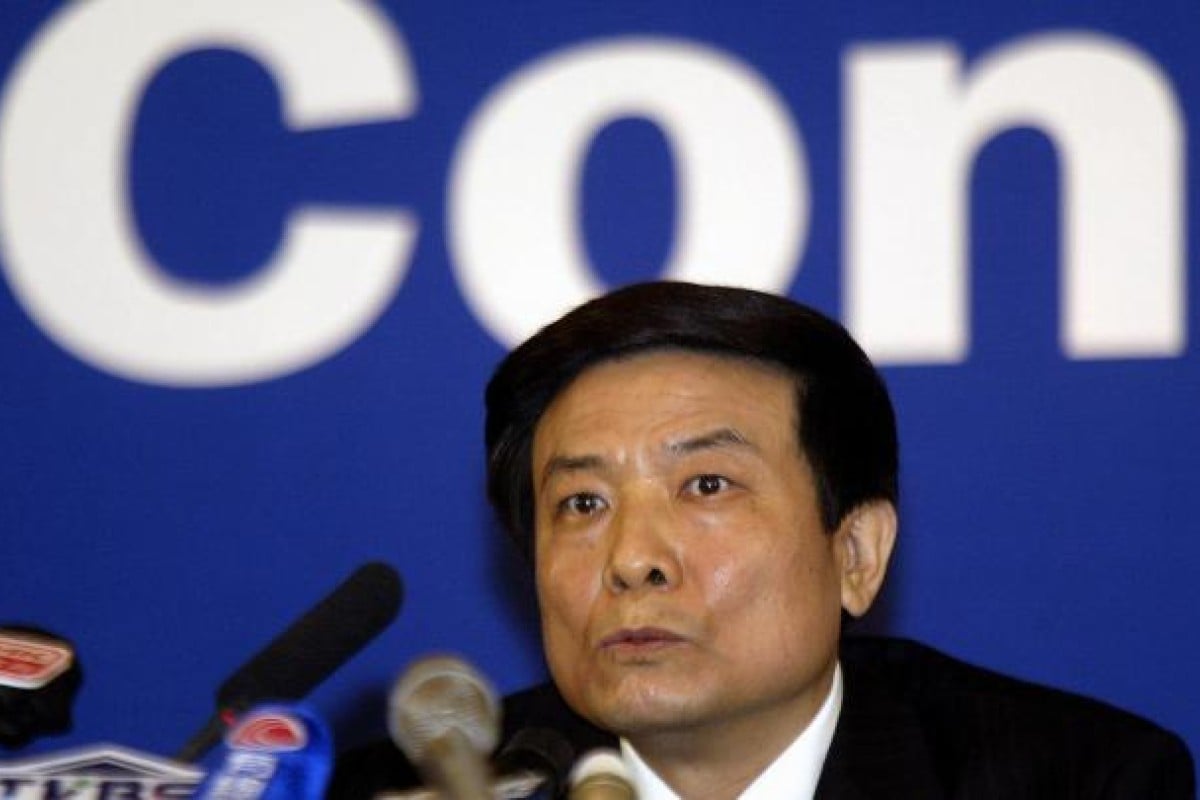
China's anti-corruption watchdog has opened an investigation into Cai Fuchao, the retired official who once controlled the country's entire media and censorship apparatus. His case follows the expulsion of a sitting Politburo member just one day earlier, underlining how Xi Jinping's decade-long anti-graft campaign continues to reach the highest levels of the Communist Party.

.
The Man Who Decided What China Could Watch, Read, and Hear
For years, Cai Fuchao held one of the most powerful — and least visible — jobs in China. As head of the State Administration of Press, Publication, Radio, Film and Television, he decided what television shows aired, which films reached cinemas, and how the internet was policed nationwide. He also ran the country's state broadcasters and served as deputy head of the Communist Party's Propaganda Department, according to an official statement confirming his investigation for suspected severe violations of Party discipline and law.
Now 75 and retired since 2018, Cai is under disciplinary review and supervisory investigation by China's top anti-corruption body — a step that, in China's political system, almost always leads to expulsion from public life and criminal prosecution.
.
A Career Built on Ideological Control
Cai's rise was a case study in how closely China ties media oversight to Communist Party loyalty. Born in Beijing in April 1951, he began his career as a journalist at Beijing Daily before moving into propaganda work, eventually becoming Beijing's propaganda chief and later the city's vice mayor. In 2011 he was promoted to Beijing's national stage, taking over the country's broadcasting regulator.
His outlook on culture was famously blunt. He once dismissed large parts of China's television and film output as low-quality, arguing publicly that networks should abandon shallow entertainment in favor of content reinforcing "correct" social values — a remark that captured his broader approach to enforcing ideological discipline across the media landscape.
For readers unfamiliar with China's system, it's worth noting what this kind of censorship apparatus actually controls in practice: everything from news coverage to entertainment, and — historically — the suppression of information about politically sensitive groups, including reporting on the persecution of Falun Gong practitioners, which rights groups say has continued for over two decades under strict state media control.
.
Part of a Much Bigger Pattern
Cai is not an isolated case. He becomes the latest senior figure to fall under Xi Jinping's sweeping anti-corruption campaign, which has investigated millions of officials across China's bureaucracy since 2012 and has already claimed dozens of ministerial-level officials in 2026 alone.
His investigation comes just one day after China confirmed the expulsion of Ma Xingrui, a former member of the Communist Party's elite 24-seat Politburo and ex-party secretary of Xinjiang. Ma — a former aerospace executive who once ran China's main missile and spacecraft manufacturer — was accused of a wide range of offenses, including corruption, abuse of power, and trading political favors for sex. His expulsion made him the third sitting Politburo member purged since 2025, and analysts say a decision of that magnitude requires direct backing from Xi Jinping himself.
The propaganda system in particular has faced repeated scrutiny. Two of Cai's former deputy-level colleagues in the Propaganda Department have already been convicted: Zhang Jianchun was sentenced to 14 years in prison for corruption, and Lu Wei — once China's internet czar — received the same sentence for graft.
.
What It Signals
Analysts see the campaign as more than a simple crackdown on bribery. Neil Thomas, an expert on Chinese politics at the Asia Society Policy Institute, said Xi's ability to expel a sitting Politburo member underscores his continued dominance ahead of next year's 21st Party Congress. The steady stream of purges — reaching from provincial governors to the very officials who once controlled what the Chinese public was allowed to see — suggests the campaign remains a central tool for enforcing loyalty within the Party, even a decade after it began.
Whether Cai's case ends the way Zhang's and Lu's did remains to be seen. But for a man who spent his career deciding what counted as acceptable content in China, the irony of becoming the subject of a story the state itself cannot control will not be lost on observers.
.
Sources
- Reuters — "China investigates retired top media censor," July 15, 2026: https://www.reuters.com/world/china/china-investigates-retired-top-media-censor-2026-07-15/
- Xinhua — "Former senior CPC publicity official under probe": https://english.news.cn/20260715/6695d4bbd47648b5a1ecba2756fb32f7/c.html
- Reuters — "China purges third Politburo member in deepening anti-graft drive," July 14, 2026: https://www.reuters.com/world/china/china-purges-third-politburo-member-deepening-anti-graft-drive-2026-07-14/
- The Washington Post — "China expels Politburo member Ma Xingrui in Xi's anti-corruption campaign," July 14, 2026: https://www.washingtonpost.com/world/2026/07/14/china-ma-xingrui-politburo-xinjiang-corruption/1797a0e0-7f5d-11f1-8a16-393bd03340b0_story.html
- Wikipedia — "Anti-corruption campaign under Xi Jinping" (Hintergrund/Kontext, akademisch belegt): https://en.wikipedia.org/wiki/Anti-corruption_campaign_under_Xi_Jinping
.
What's Your Reaction?
 Like
0
Like
0
 Dislike
0
Dislike
0
 Love
0
Love
0
 Funny
0
Funny
0
 Wow
0
Wow
0
 Sad
0
Sad
0
 Angry
0
Angry
0















Comments (0)