

Bessent Urges IMF, World Bank to Take Tougher Stance on China as Trade War Escalates


.
As trade tensions escalate between the United States and China, U.S. Treasury Secretary Scott Bessent has called on the International Monetary Fund (IMF) and the World Bank to take a tougher stance on China’s practice, while China has responded with accusations and threats to take more actions at the World Trade Organization (WTO).
Analysts said the U.S. call may generate public opinion and technical pressure but is unlikely to lead to structural changes in the international organizations, and the two countries are moving to a protracted standoff over rules and supply chains.
He called on the World Bank to prioritize implementing the “graduation” policy, supporting countries to become self-reliant and focusing the bank’s resources on “poorer, less creditworthy countries where its support is most needed and most impactful.”
“This must include ending support for China and shifting staff and administrative resources to countries where development needs are most acute,” said Bessent, calling out China in the statement.
The Treasury secretary also addressed China’s procurement activities in the World Bank’s projects without directly naming it, as he urged the bank to “curb anti-competitive procurement practices by state-owned enterprises” and ban those that “do not operate on a commercial basis.”
Beijing’s Strategic Positioning
Although China is already the world’s second-largest economy, it continues to apply for low-interest or policy-based loans from the World Bank as a “developing country” and a “climate-transitioning economy,” U.S.-based independent economist Davy J. Wong noted.“This positioning allows Beijing to nominally be put alongside less developed nations, while in reality gaining access to resources and influence far beyond the developing country’s standards,” Wong told the Epoch Times on Oct. 18.
China falls into the category of upper-middle-income borrowers of the International Bank for Reconstruction and Development (IBRD) of the World Bank, which provides loans and financing, Sun Kuo-hsiang, a professor of international affairs and business at Nanhua University in Taiwan, told The Epoch Times on Oct. 19.
“Therefore, IBRD’s loans are project-based financing tools with close to market interest rates, rather than aid,” he said.
Beijing strategically repackages its financing needs as projects related to “climate governance,” “green transformation,” or “public health improvements,” thereby formally meeting the World Bank’s approval criteria, Wong explained.
“For example, projects such as electric vehicle subsidies, renewable energy, and urban sewage systems have all been incorporated into the ‘climate-friendly’ lending framework.”
But China’s energy mix still relies on coal and highly polluting thermal power—electric vehicles simply divert exhaust gas to the smokestacks of power plants, he pointed out. “Ultimately, carbon emissions haven’t truly decreased.”
Because the World Bank’s decision-making generally tends to support “climate investment” and “sustainable growth,” it often lacks political risk assessment for China’s applications, Wong said. “This ‘benevolent institutional inertia’ actually gives Beijing room to continue borrowing.”
.
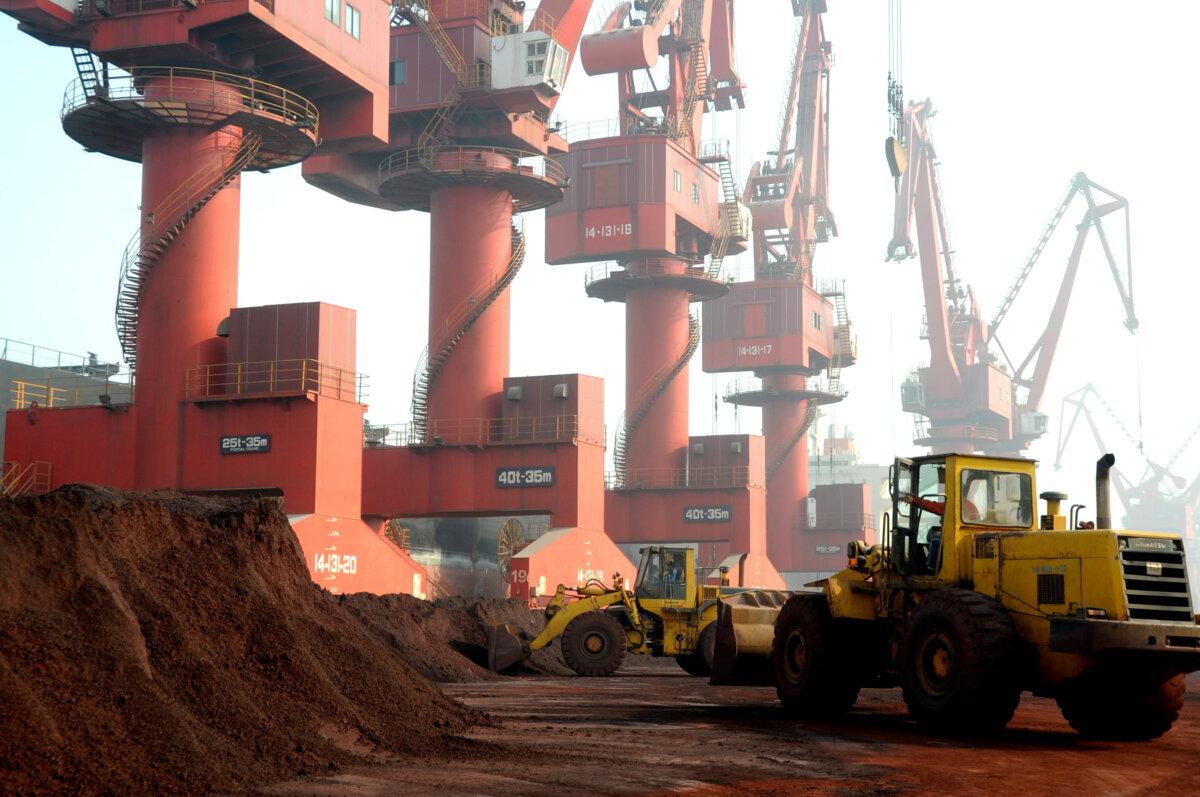
Beijing controls key upstream raw materials in the green industry chain (rare earths, lithium, nickel, graphite, gallium, and germanium), strengthening its bargaining power through export controls and quotas.
“When Europe and the United States attempt decoupling, Beijing can use these raw materials as leverage for strategic countermeasures,” Wong said.
Bessent called on the World Bank to increase financing and diversify the supply chain in this area.
“We welcome the steps the Bank is taking to devise a critical minerals strategy, and expect it to emphasize investments and technical assistance to promote diversified and resilient supply chains,” he said.
IMF
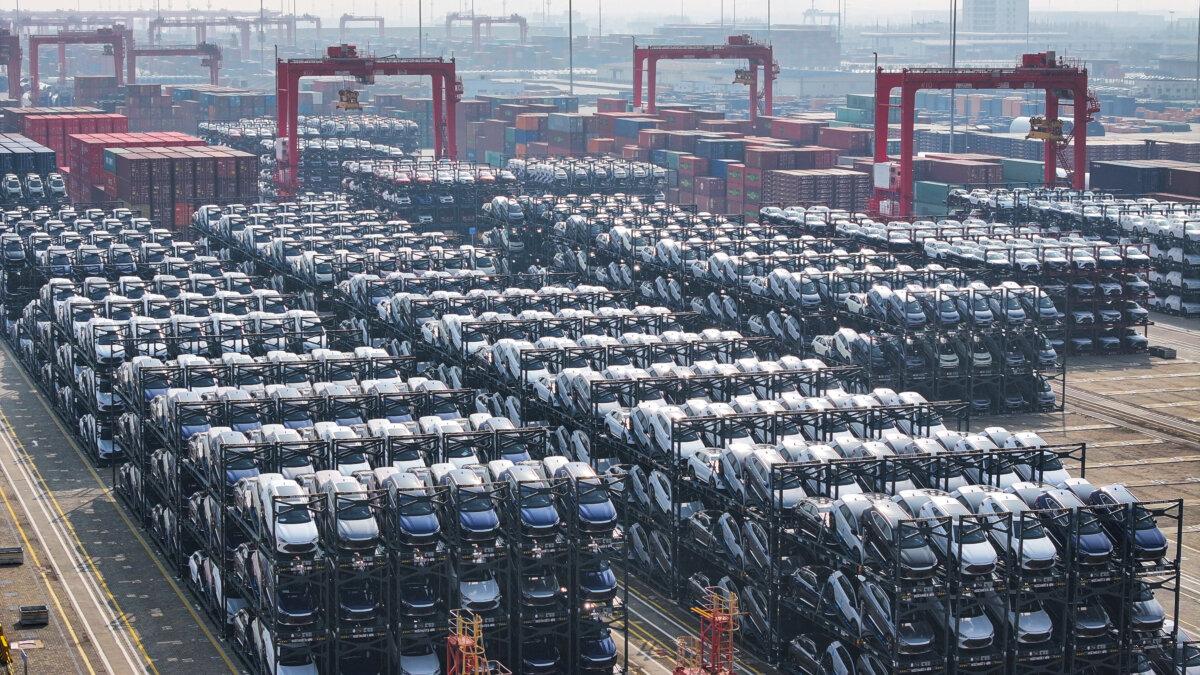
The United States and European Union have been criticizing the Chinese communist regime’s state-controlled industrial policies for leading to production overcapacity. Not only that it has exacerbated domestic deflation and price wars in China, but the country’s export-oriented growth model has also led to cheap goods flooding the world, worsening trade imbalances.Bessent called on the IMF to fulfill its mission, focusing on macroeconomic and financial policies and stability, “rather than other areas beyond the IMF’s expertise, like climate and gender.”
“The IMF should not shy away from asking difficult questions, more clearly highlighting internal and external imbalances, deepening its understanding of how industrial policies in large economies such as China contribute to those imbalances, explaining their potential harmful spillovers, and recommending appropriate corrective actions,” he said.
.
Bessent asked the IMF to strengthen its oversight of imbalances, including China, in its upcoming Comprehensive Surveillance Review, which was last updated in 2021.
IMF 2024 has already released a framework document incorporating industrial policy into its surveillance, which means Bessent’s request has an institutional basis, Sun said.
Effectiveness of the US Call
Although China’s influence in these international organizations is increasing, the United States’ influence is “significantly larger and has veto power in the IMF,” according to Sun.The United States’ 16.5 percent share of voting power gives it a de facto veto power in the IMF, since major decisions need 85 percent approval.
The United States has the veto power in the IMF, but not the power to “reset” its policies, Wong noted.
The Treasury Secretary’s call is primarily “a symbolic political gesture, intended to shape international public opinion and urge the IMF to be more transparent and symmetrical in its oversight of major economies. However, it lacks the power to actually overturn the existing operating mechanism,” Wong said.
.
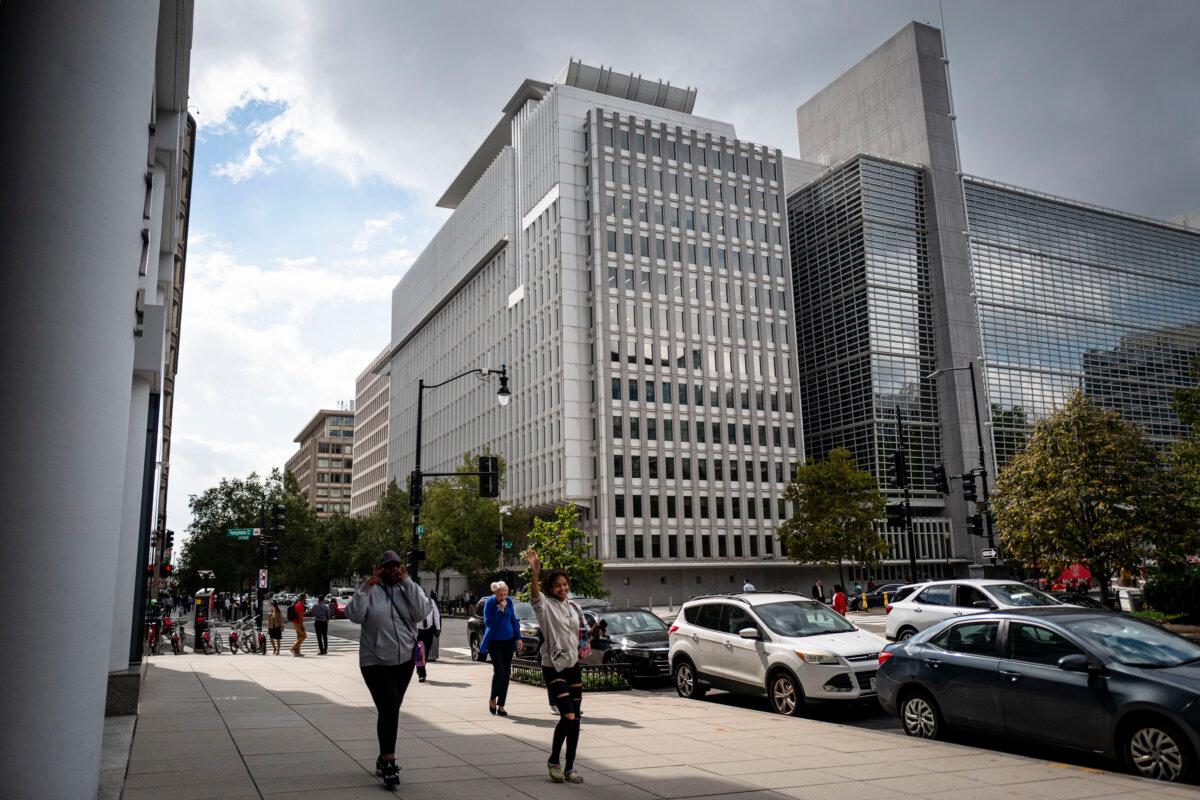
It’s because the United States is up against multiple factors at work in the IMF, Wong said, including “the European countries’ divergence from the United States on key policies, which is becoming increasingly apparent, the voting bloc of the Global South that side with China, and Beijing’s economic infiltration.”
All these have locked the IMF’s operating logic into a structural framework that focuses on political correctness centered around “balanced development, climate sustainability, and social justice.”
China’s voting power in the IMF and World Bank remains smaller than that of the United States, “but its influence can be amplified by leveraging the Global South and its agenda,” Wong said.
“The United States and China are poised to move from a tariff war to a protracted standoff over rules and supply chains.”
What's Your Reaction?
 Like
0
Like
0
 Dislike
0
Dislike
0
 Love
0
Love
0
 Funny
0
Funny
0
 Wow
0
Wow
0
 Sad
0
Sad
0
 Angry
0
Angry
0














Comments (0)