

Beijing's Chess Move: Why Xi Invited Taiwan's Opposition Leader Just Weeks Before the Trump Summit
A carefully timed invitation to the KMT's new chairwoman is not about peace — it's about leverage, narrative control, and shaping the agenda before Trump arrives in Beijing. On March 30, 2026, Chinese President Xi Jinping extended a formal invitation to Kuomintang (KMT) Chairwoman Cheng Li-wun to visit China from April 7 to 12. The delegation will travel to Jiangsu, Shanghai, and Beijing. Cheng accepted without hesitation.


.
A carefully timed invitation to the KMT's new chairwoman is not about peace — it's about leverage, narrative control, and shaping the agenda before Trump arrives in Beijing.
.
The Invitation That Shook Taipei
.
On March 30, 2026, Chinese President Xi Jinping extended a formal invitation to Kuomintang (KMT) Chairwoman Cheng Li-wun to visit China from April 7 to 12. The delegation will travel to Jiangsu, Shanghai, and Beijing. Cheng accepted without hesitation.
The visit comes roughly one month before U.S. President Donald Trump's planned trip to Beijing — currently scheduled for May 14–15 — making the timing anything but coincidental.
It will be the first visit to China by a sitting KMT chairperson since November 2016, when then-party leader Hung Hsiu-chu met with Xi in Beijing. A decade-long silence between the two parties is now officially broken — but the question of who benefits most deserves a closer look.
Who Is Cheng Li-wun — And Why Does Beijing Want Her Now?
.
The KMT is Taiwan's main opposition party. Historically, it governed both mainland China and later Taiwan after the Communist Revolution of 1949. Today, the party takes a pragmatic, dialogue-oriented stance toward Beijing — a sharp contrast to the ruling Democratic Progressive Party (DPP), which openly asserts Taiwan's sovereignty.
Cheng Li-wun, who took up her role as KMT chairwoman in November 2025, has insisted on meeting Xi before making an official trip to the United States — a sequencing that has drawn criticism from inside and outside her party, with some accusing her of being too pro-China.
Cheng confirmed her intention to visit, stating that any dialogue must rest on acceptance of the "1992 consensus" — a tacit understanding between the KMT and Beijing that there is "one China," with each side free to define what that means. The DPP has never accepted this framework.
Since Cheng took over the KMT leadership, her political messaging has focused more on Beijing than on Washington — raising expectations in China that the CCP–KMT dialogue platform could be meaningfully revived.
Beijing's Three Strategic Goals
.
This invitation is not a goodwill gesture. It serves at least three distinct strategic purposes for Beijing.
1. Showcasing a "Friendlier Taiwan" Before Trump Arrives
By bringing the KMT leader to Beijing ahead of the summit, Xi gains an opportunity to showcase an alternative Taiwanese political voice — one far more amenable to cross-strait dialogue than President Lai Ching-te's DPP government.
The message to Washington is implicit but powerful: Taiwan is not monolithic. There are Taiwanese leaders who want to talk with us. Factor this into your calculations.
2. Framing the Narrative on Taiwan's Defense Spending
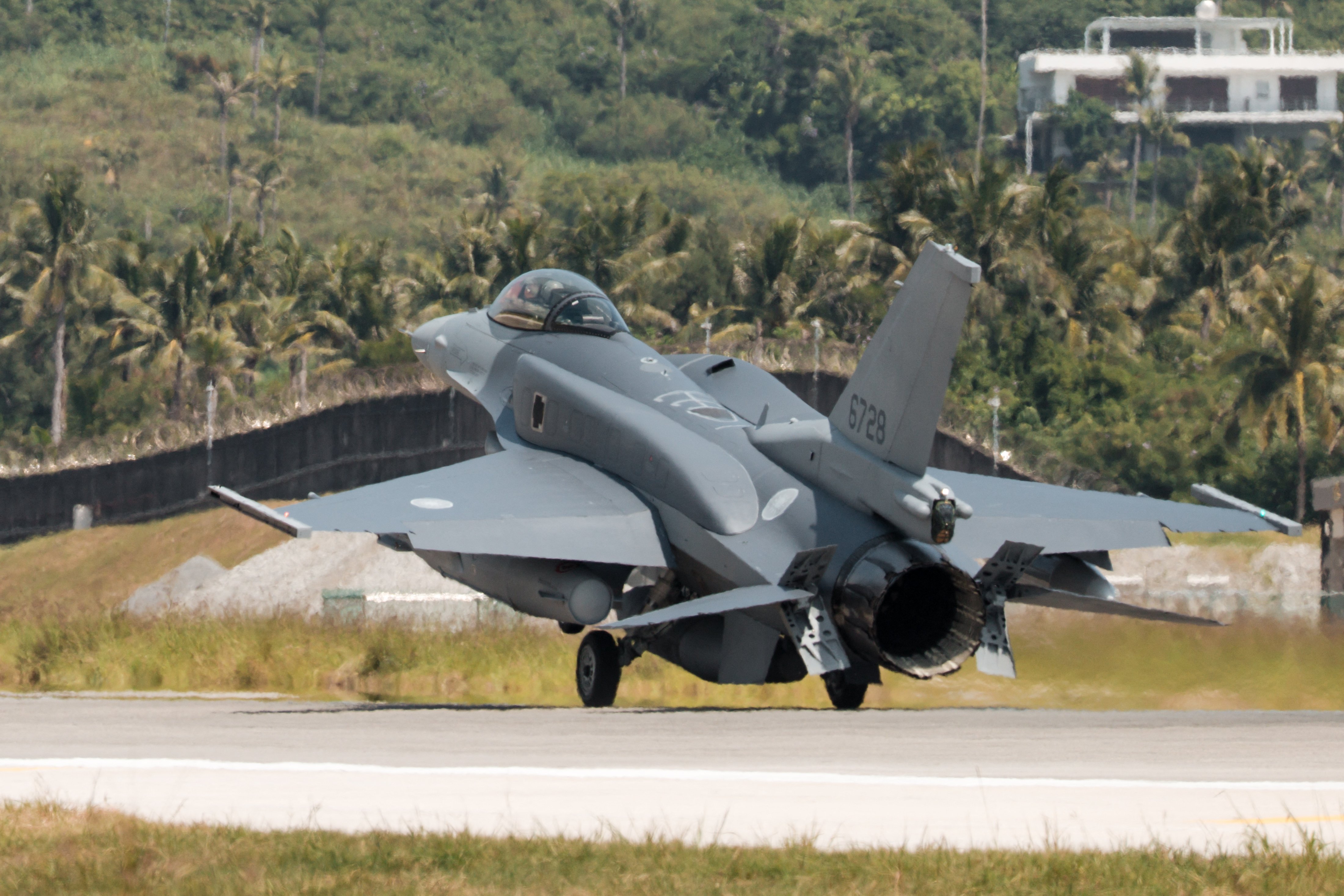
The Taiwan question is China's top priority for the Trump summit. In December 2025, Trump announced an arms sale package worth $11.1 billion to Taiwan — a move that alarmed and infuriated Beijing. China will push Washington to commit to greater restraint on future arms sales and on the handling of U.S.-Taiwan relations.
Here, the KMT visit plays a direct supporting role. Taiwan's Mainland Affairs Council (MAC) has warned that Beijing may be arranging Cheng's visit while cross-strait defense budget talks remain stalled — raising concerns that the meeting is effectively a trade-off: bloc the arms budget in the legislature, get the Xi meeting in return.
Taiwan's DPP government has proposed NT$1.25 trillion (approximately US$39 billion) in special defense spending. The KMT has countered with NT$380 billion as a starting point — a fraction of what Taipei and Washington consider necessary.
3. Signaling That the CCP "Has Secured the KMT"
Taiwan government sources have indicated that by arranging Cheng's visit before Xi meets Trump, Beijing is signaling that "the CCP has already secured the KMT" — and may attempt to use the visit to shape the narrative heading into the Trump-Xi summit.
This is a classic application of what Chinese strategists call "united front" tactics (统一战线) — the use of friendly political actors to divide adversary societies from within.
Taiwan's Ruling Party Fires Back
.
The reaction in Taipei was swift and pointed.
Taiwan's Mainland Affairs Council urged Cheng not to cater to Beijing's political agenda, warning that the CCP's ambition to eliminate the Republic of China and annex Taiwan "will not change simply because they engage in exchanges with any political party or individual."
Premier Cho Jung-tai warned Cheng directly against engaging in any talks involving government authority during her trip to China, stressing that no individual or group is authorized to negotiate on behalf of the Taiwanese government.
The DPP framed the visit in stark terms. The ruling party stated that Beijing is trying to draw Taiwan's opposition parties toward a "common political foundation" — with the clear intent of dividing Taiwan internally and undermining unity among its people.
Even within the KMT itself, not everyone is comfortable. There are concerns within the party that a Cheng-Xi meeting could trigger voter backlash ahead of Taiwan's district elections later in 2026.
Washington Watches — With Mixed Signals
.
The diplomatic choreography in Washington this week has been remarkable. On the same day that Beijing announced Cheng's invitation, a bipartisan delegation of U.S. senators arrived in Taiwan.
The delegation, led by Senators Jeanne Shaheen and John Curtis, is aimed at reinforcing U.S. alliances in Asia ahead of Trump's Beijing summit. Analysts believe Xi may use that summit to push Trump to soften American support for Taiwan.
Senator Curtis told reporters in Taipei that stronger U.S.-China ties should not necessarily be seen as threatening to Taiwan. "If we have a strong relationship — if our presidents have open lines of communication — that increases the likelihood that there will not be aggression from China," he said.
Senator Shaheen took a more nuanced line on the KMT visit, saying that dialogue is welcome — but that if China is going to talk with one Taiwanese party, it should be talking with all parties.
Meanwhile, Brookings Institution analysts note that the May summit represents the first genuine opportunity for in-depth U.S.-China talks since the two sides remain divided on technology, trade, and — above all — Taiwan. Trump's trip to Beijing could serve as a political win at home while delivering economic deals, but Beijing sees it as a major diplomatic effort that must yield substantive results.
The Bigger Picture: Control, Not Compromise
.
The CCP-KMT rapprochement is not a peace process. It is a pressure operation — carefully timed, precisely staged, and aimed at a specific audience: Donald Trump.
As Atlantic Council analysts have observed, Chinese leaders are strategic and their diplomats are strong. They know exactly what they want heading into these 2026 summits, and exactly where their red lines are. The key question is whether Washington has developed the same strategic clarity.
By hosting Cheng Li-wun in April, Xi sends Trump to Beijing in May with a preloaded message: There is a path forward on Taiwan that does not require confrontation — as long as America steps back. Whether the Trump administration recognizes that framing — and resists it — will define not just this summit, but the trajectory of cross-strait stability for years to come.
Taiwan's democracy is not a bargaining chip. But in Beijing's playbook, it is always on the table.
.
Sources
- Bloomberg — Xi Invites Taiwan Opposition Leader to China Before Trump Summit (March 30, 2026): https://www.bloomberg.com/news/articles/2026-03-30/xi-invites-taiwan-s-opposition-leader-to-first-visit-in-decade
- Focus Taiwan (CNA) — KMT chair 'gladly accepts' Xi's invitation to visit China (March 30, 2026): https://focustaiwan.tw/cross-strait/202603300010
- Focus Taiwan (CNA) — MAC urges KMT chair not to echo Beijing agenda (March 30, 2026): https://focustaiwan.tw/cross-strait/202603300020
- Focus Taiwan (CNA) — Trump-Xi talks could make Taiwan safer: Visiting U.S. senators (March 31, 2026): https://focustaiwan.tw/cross-strait/202603310026
- Taipei Times — MAC tells KMT chair to take CCP threats seriously (March 31, 2026): https://www.taipeitimes.com/News/taiwan/archives/2026/03/31/2003854761
- South China Morning Post — No deals on mainland China visit, Taiwan's Premier warns KMT chairwoman (March 31, 2026): https://www.scmp.com/news/china/politics/article/3348556/no-deals-mainland-china-visit-taiwans-premier-cho-jung-tai-warns-kmt-chairwoman
- Brookings Institution — Beyond trade: Issues in a Trump-Xi summit (March 28, 2026): https://www.brookings.edu/articles/beyond-trade-issues-in-a-trump-xi-summit/
- Atlantic Council — Experts react: What does the Trump-Xi meeting mean? (October 30, 2025): https://www.atlanticcouncil.org/blogs/new-atlanticist/experts-react/experts-react-what-does-the-trump-xi-meeting-mean-for-trade-technology-security-and-beyond/
- CommonWealth Magazine (English) — Xi–Trump and CCP–KMT Meetings: What Is China Up To? (January 14, 2026): https://english.cw.com.tw/article/article.action?id=4560
- ABC News / AP — US lawmakers say they'll visit Taiwan before Trump's summit (March 28, 2026): https://abcnews.com/US/wireStory/us-lawmakers-visit-taiwan-trumps-summit-chinas-xi-131498747
.
What's Your Reaction?
 Like
1
Like
1
 Dislike
0
Dislike
0
 Love
1
Love
1
 Funny
0
Funny
0
 Wow
1
Wow
1
 Sad
0
Sad
0
 Angry
0
Angry
0












Comments (0)