

Bai Zhaodong: Detained Chinese Journalist Faces Deportation as Beijing Pressures Thailand
Chinese authorities have formally asked Thailand to hand over investigative journalist Bai Zhaodong, who has been held in a Bangkok detention center since January. Rights groups warn that returning him to China would expose him to torture and political persecution for his reporting on corruption inside the Chinese Communist Party. The case has drawn renewed attention as Thailand's prime minister visits Beijing this week.

.
A Journalist Under Threat
Bai Zhaodong, a 56-year-old former investigative reporter, spent more than 25 years exposing corruption in China, most notably during his time at Caixin, one of the country's most respected media outlets. His work uncovered a wide-ranging corruption and financial fraud network that implicated local officials as well as senior figures within the Chinese Communist Party (CCP, the sole ruling party in China).
That reporting came at a cost. Bai fled China in late 2023 after facing what rights groups describe as escalating surveillance, interrogation, and criminal charges. In 2024, police in the Chinese city of Yulin issued an arrest warrant against him on extortion allegations.
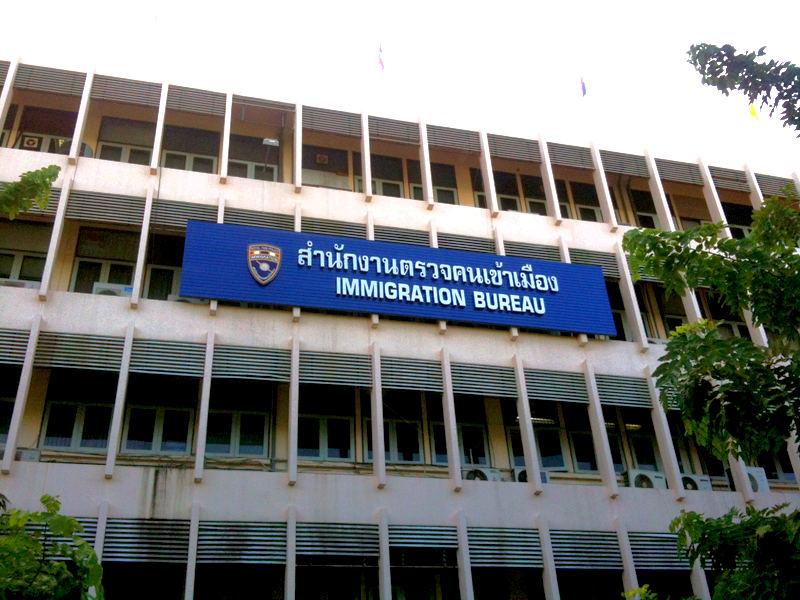
He has since been held at Thailand's Suan Phlu Immigration Detention Center in Bangkok since January, barred from leaving the country while his case is decided.
Beijing Formally Requests Extradition
China's Foreign Ministry confirmed it has submitted a formal extradition request to Thai authorities, seeking what it called the "prompt return" of Bai. Beijing accuses him of extortion and bribery, and defended its record on press freedom, saying it protects citizens' free speech "according to law."
Human rights organizations dispute that characterization sharply. Reporters Without Borders (RSF) and the Spain-based Safeguard Defenders jointly urged Thailand not to comply, warning that Bai faces a "foreseeable, present, personal and real risk" of persecution, arbitrary detention, enforced disappearance, and torture if deported.
"Should Bai be forcibly returned to China, he would face not only persecution but also grave risks to his personal safety," said Aleksandra Bielakowska, RSF's advocacy manager for the Asia-Pacific region.
Not the Only Case
Bai is not alone. Human Rights Watch has identified at least four Chinese dissidents at the same Bangkok facility who face possible deportation. Among them is Zhang Xinyan, a practitioner of Falun Gong — a spiritual practice that has faced a sustained, well-documented persecution campaign by the CCP since 1999. Zhang fled China in 2014 and was later targeted with a bounty by Hong Kong police under the territory's national security law.
Also detained are Tan Yixiang, a Catholic activist who has campaigned for Tibetan and Uyghur rights, and Zhou Junyi, linked to a banned political movement. All four have been formally recognized as refugees by the UN refugee agency, UNHCR — a status that, under international law, is meant to shield them from forced return to a country where they face persecution.
Sunai Phasuk, senior Thailand adviser at Human Rights Watch, said Thai governments have repeatedly struggled to resist pressure from Beijing. He pointed to Thailand's history on this issue: in July 2015, more than 100 Uyghur men were forcibly sent back to China, and in February 2025, Thailand deported 40 more Uyghur men whose fate remains unknown.
Political Timing
The renewed pressure on Bangkok coincides with a visit by Thai Prime Minister Anutin Charnvirakul to China, running through July 20, during which he is expected to meet President Xi Jinping. Rights groups say the timing raises concerns that the detainees' fate could become entangled in broader diplomatic and economic negotiations between the two countries.
Thailand is a party to the UN Convention Against Torture and passed its own domestic anti-torture law in 2023, both of which prohibit returning individuals to a country where they face a genuine risk of torture or persecution — a principle known as non-refoulement. Thailand's Foreign Ministry had not responded to requests for comment at the time of reporting.
What Comes Next
Rights organizations are calling on Thailand to allow Bai and the other detainees safe passage to third countries rather than comply with Beijing's extradition request. A similar case was resolved this month when Hong Kong activist Zhang was nearly deported before Canadian diplomatic intervention secured her passage to Vancouver — though Thai authorities initially blocked that departure under reported Chinese pressure.
Whether Bai receives a similar reprieve remains uncertain. For now, his case stands as a test of how far Thailand is willing to bend to Beijing's demands — and of the risks faced by journalists who report on corruption within the Chinese Communist Party, wherever they try to seek safety.
.
Sources
- Reuters (Mei Mei Chu): https://www.reuters.com/world/china/rights-groups-urge-thailand-not-deport-chinese-journalist-china-2026-07-16/
- Human Rights Watch: https://www.hrw.org/news/2026/07/14/thailand-dont-forcibly-return-chinese-dissidents
- Reporters Without Borders (RSF): https://rsf.org/en/rsf-safeguard-defenders-urge-thailand-halt-forcible-return-chinese-journalist-bai-zhaodong-china
- Safeguard Defenders: https://safeguarddefenders.com/en/blog/rsf-and-safeguard-defenders-urge-thailand-halt-forcible-return-chinese-journalist-bai-zhaodong
- Bangkok Post: https://www.bangkokpost.com/thailand/general/3284062/thai-authorities-detain-canadabound-hong-kong-activist
.
What's Your Reaction?
 Like
0
Like
0
 Dislike
0
Dislike
0
 Love
0
Love
0
 Funny
0
Funny
0
 Wow
0
Wow
0
 Sad
0
Sad
0
 Angry
0
Angry
0












Comments (0)