

Why Gallium Matters: Inside the $3 Billion US–Australia Bid to Outpace China


.
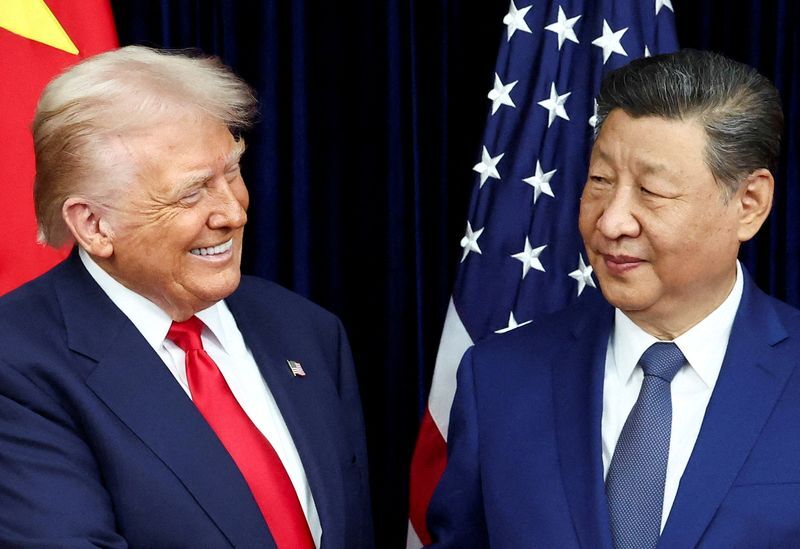
The announcement by President Donald Trump and Prime Minister Anthony Albanese that the United States and Australia would embark on a number of joint investments totalling more than $4.6 billion (US$3 billion) is aimed at breaking Beijing’s strangehold on the world’s production of rare earth elements.
In particular, gallium is deemed a strategic risk—identified decades ago but is only now being addressed.
The U.S. Department of War is joining with the Australian government to invest in a gallium refinery capable of producing 100 metric tons a year, which will be co-located at Alcoa’s Wagerup alumina refinery in Western Australia.
Meanwhile, Albanese also announced his government will invest up to US$100 million into Arafura’s Nolans Rare Earths Project in the Northern Territory.
The total value of recoverable resources in both projects is estimated to be $81.3 billion.
Gallium is essential in a range of everyday technology as well as military end uses, but its production has been taken over by Beijing, which in 2022 produced 98 percent of the world’s supply, posing a strategic vulnerability to America and its allies.
While the metal is crucial to advanced defence systems, it can also be found in the Wi-Fi and Bluetooth devices inside laptops, cell phones, and tablets, which use gallium arsenide (GaAs) semiconductors in radio frequency integrated circuits.
In recent years, chargers for mobile devices have become much smaller while also providing more power and faster charging cycles because they use gallium nitride (GaN) power semiconductor chips.
Supply Disruption Could Cause Billion-Dollar Economic Decline
A 2022 analysis by the U.S. Geological Survey (USGS) found that a 30 percent supply disruption of gallium could cause a $602 billion decline in America’s economic output, equivalent to 2.1 percent of gross domestic product (GDP). In its most recent review, it ranked gallium number one of 50 in terms of supply risks.In 2020 the Trump administration declared America’s dependency on critical minerals (including gallium) a national emergency. A year later, the Biden administration published a review warning that America’s reliance on Beijing for gallium could have “far-reaching impacts on semiconductor production.”
A 2023 draft critical mineral assessment report released by the U.S. Department of Energy labelled continued access to the metal (and five others) as “critical.”
Crucial to Defence Manufacturing
As predicted, supply chain disruption occurred in 2023 when Beijing implemented export restrictions on gallium and germanium, citing national security, and then, in late 2024, imposed a ban specifically targeting exports to the United States.How Beijing Tightened its Grip
Gallium differs from some other key rare earth minerals such as lithium, nickel, and cobalt in that it is not mined directly. Instead, it is mostly a by-product of processing bauxite, the primary ore for aluminium.China’s rapid expansion of its cities and infrastructure drove extensive growth in its aluminum industry. Boosted by generous government subsidies and tax incentives, the country achieved a 10-fold increase in aluminium production (from 4.2 to 40.2 million tons) between 2000 and 2022. Today it supplies around 59 percent of the world’s aluminium.
Alongside this, Beijing implemented strategic policies to boost gallium production, including requiring the country’s aluminium producers to create the capacity to extract the rare earth element.
As a result, from 2005 to 2015 China’s production of low-purity gallium went from 22 metric tons to 444 metric tons.
That created oversupply in the global market, collapsing prices throughout much of the 2010s.
As a result, suppliers in the United Kingdom, Germany, Hungary, and Kazakhstan were forced to shut down their production.
A US-Australian-Japanese Alternative
The new Australian refinery will be co-located at Alcoa’s Wagerup alumina refinery in Western Australia.The company announced back in August that it would be developed with Japan Australia Gallium Associates (JAGA), which is a joint venture between the Japanese government and Sojitz Corporation, but on Oct. 21 said it expects the U.S. and Australian governments to form a special purpose vehicle (SPV) to participate in the joint venture.
The parties are targeting 2026 for final investment decision and production.
.
What's Your Reaction?
 Like
0
Like
0
 Dislike
0
Dislike
0
 Love
0
Love
0
 Funny
0
Funny
0
 Wow
0
Wow
0
 Sad
0
Sad
0
 Angry
0
Angry
0













Comments (0)