

Washington to Beijing: Talk to All of Taiwan — Not Just the Opposition
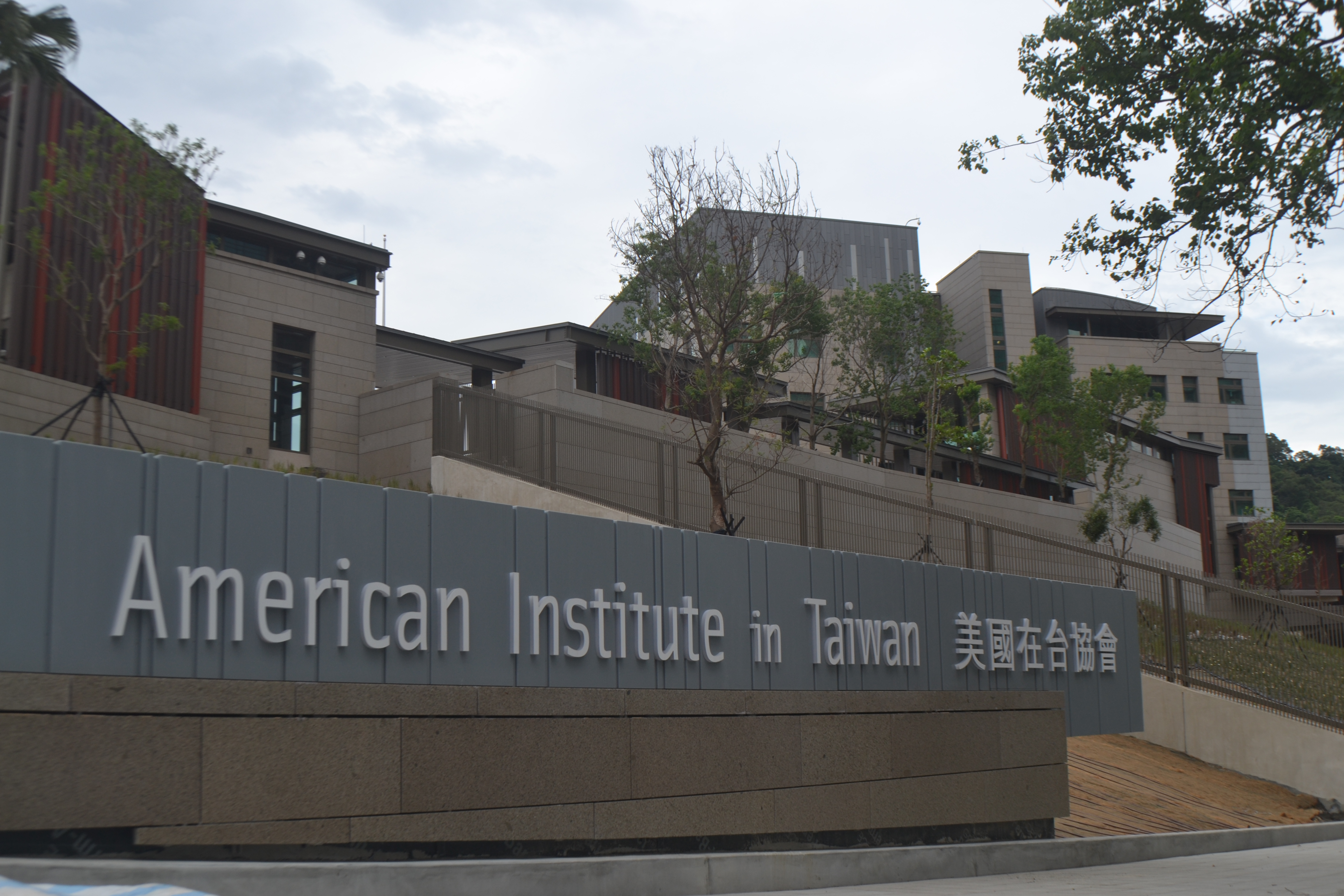
While Taiwan's opposition leader was still in Beijing wrapping up her six-day "journey of peace," the top American diplomat in Taiwan stepped in front of a camera and delivered a pointed message — not to Taipei, but to Beijing. Raymond Greene, head of the American Institute in Taiwan (AIT), the de facto U.S. embassy on the island, spoke on a Taiwanese political talk show on Saturday. His words were measured, but the meaning was unmistakable.

.
U.S. diplomat Raymond Greene delivers a clear message as China's military keeps encircling Taiwan
April 12, 2026
.
The Message Washington Sent on Saturday
While Taiwan's opposition leader was still in Beijing wrapping up her six-day "journey of peace," the top American diplomat in Taiwan stepped in front of a camera and delivered a pointed message — not to Taipei, but to Beijing.
Raymond Greene, head of the American Institute in Taiwan (AIT), the de facto U.S. embassy on the island, spoke on a Taiwanese political talk show on Saturday. His words were measured, but the meaning was unmistakable.
Washington, he said, supports dialogue across the Taiwan Strait. But China must keep communication channels open with all of Taiwan's political parties — and especially with the leaders that Taiwanese voters have elected.
.
"Abandon Threats" — An Unusually Blunt Demand
Greene went further than diplomatic niceties. He called on Beijing to give up its military pressure against Taiwan entirely.
"We further expect China to abandon threats against Taiwan or military pressure," he said in Mandarin. He added that doing so would help ease tensions in the strait — a body of water that separates two of Asia's most consequential political systems.
The statement is significant. Senior U.S. officials rarely use language this direct when discussing China's military posture toward Taiwan. The choice to say it on a Taiwanese talk show — in Mandarin — signals that the message was aimed as much at Taiwanese viewers as at Beijing.
.
Beijing's Selective Diplomacy: A Problem Washington Isn't Ignoring
Greene's remarks come in the immediate aftermath of Chinese President Xi Jinping's meeting with Cheng Li-wun, chairwoman of Taiwan's main opposition party, the Kuomintang (KMT), on Friday. That meeting — the first between KMT and Communist Party leaders in a decade — drew significant international attention.
But Beijing has a problem with its own logic. While it welcomed Cheng as a partner in dialogue, it continues to refuse any contact with Taiwan's elected president, Lai Ching-te, whom it labels a "separatist." Greene addressed this directly: the U.S. expects China to communicate with all parties, not just the ones it finds politically convenient.
The contrast is hard to ignore. Beijing claims it wants peace and dialogue — yet it freezes out the head of state chosen by 23.5 million Taiwanese voters, while holding summits with opposition figures it finds more compliant.
.
Warships Don't Stop for Peace Talks
The gap between Beijing's rhetoric and its actions is visible in the Taiwan Strait itself. Chinese military activity around Taiwan has not slowed during Cheng's visit. The People's Liberation Army maintains what analysts describe as near-daily operations in and around the strait — a pattern that has become routine since President Lai took office in May 2024.
For Washington, that operational tempo is not a background detail. It is the context in which every diplomatic gesture from Beijing must be evaluated.
Greene acknowledged that the U.S. supports dialogue, but was explicit that engagement cannot substitute for deterrence. "I don't think there is a conflict here," he said, "because if there is sufficient deterrence capability, it will lead to a more equal dialogue."
He then laid out what he sees as the three possible paths forward: dialogue, coercion, or war. His conclusion was straightforward — a Taiwan with strong enough defensive capabilities can take war off the table. That makes real dialogue possible. Without it, only coercion remains.
.
The $40 Billion Question in Taipei
Greene's remarks also touch on a sensitive domestic issue in Taiwan. The island's opposition-controlled parliament has repeatedly blocked a proposed $40 billion special defense budget — a package that includes funds to purchase American weapons. Washington has backed the budget. The KMT has not.
That creates an awkward dynamic. Cheng visits Beijing on a mission of peace, while her party back home is blocking the very defense spending that the U.S. says is essential to deterrence. Washington's message — that dialogue and deterrence are not in conflict — appears to be directed at the KMT legislature as much as at Beijing.
.
Three Paths, One Red Line
The framework Greene articulated — dialogue, coercion, or war — is not new to strategists who study the Taiwan Strait. But hearing it stated so plainly by the senior American official on the island carries weight.
It reflects a view that has been consistent across both the Biden and Trump administrations: the United States will support engagement across the strait, but only if it happens on Taiwan's own terms, with Taiwan's elected representatives at the table, and without the shadow of military intimidation.
Beijing has so far shown little interest in meeting those conditions. It continues to encircle Taiwan with warships, refuse contact with its democratically elected president, and use opposition visits for political optics rather than genuine compromise.
The AIT director's remarks make clear that Washington sees through the performance — and isn't buying it.
.
Sources
- Reuters – "China should abandon threats against Taiwan, US diplomat says" (April 12, 2026): https://www.reuters.com/world/china/china-should-abandon-threats-against-taiwan-us-diplomat-says-2026-04-12/
- American Institute in Taiwan – AIT Director Greene's Official Remarks on Security and Taiwan Deterrence: https://www.ait.org.tw/remarks-by-ait-director-greene-on-security-preserving-peace-in-the-indo-pacific/
- American Institute in Taiwan – Greene's Remarks at AmCham 2026 Hsieh Nien Fan (defense budget context): https://www.ait.org.tw/ait-director-raymond-greenes-remarks-at-the-amcham-2026-hsieh-nien-fan/
- Brookings Institution – "America's narrative on Taiwan needs an update" (March 2026): https://www.brookings.edu/articles/americas-narrative-on-taiwan-needs-an-update/
- AEI / Institute for the Study of War – China & Taiwan Update, March 2026 (PLA military activity data): https://www.aei.org/articles/china-taiwan-update-march-13-2026/
- Taipei Times – AIT Director Greene meets KMT lawmakers on defense cooperation: https://www.taipeitimes.com/News/taiwan/archives/2025/08/27/2003842743
.
What's Your Reaction?
 Like
0
Like
0
 Dislike
0
Dislike
0
 Love
0
Love
0
 Funny
0
Funny
0
 Wow
0
Wow
0
 Sad
0
Sad
0
 Angry
0
Angry
0











Comments (0)