

Trump and Xi in Washington: Pageantry, Yes – But Not the Empty Show Critics Describe
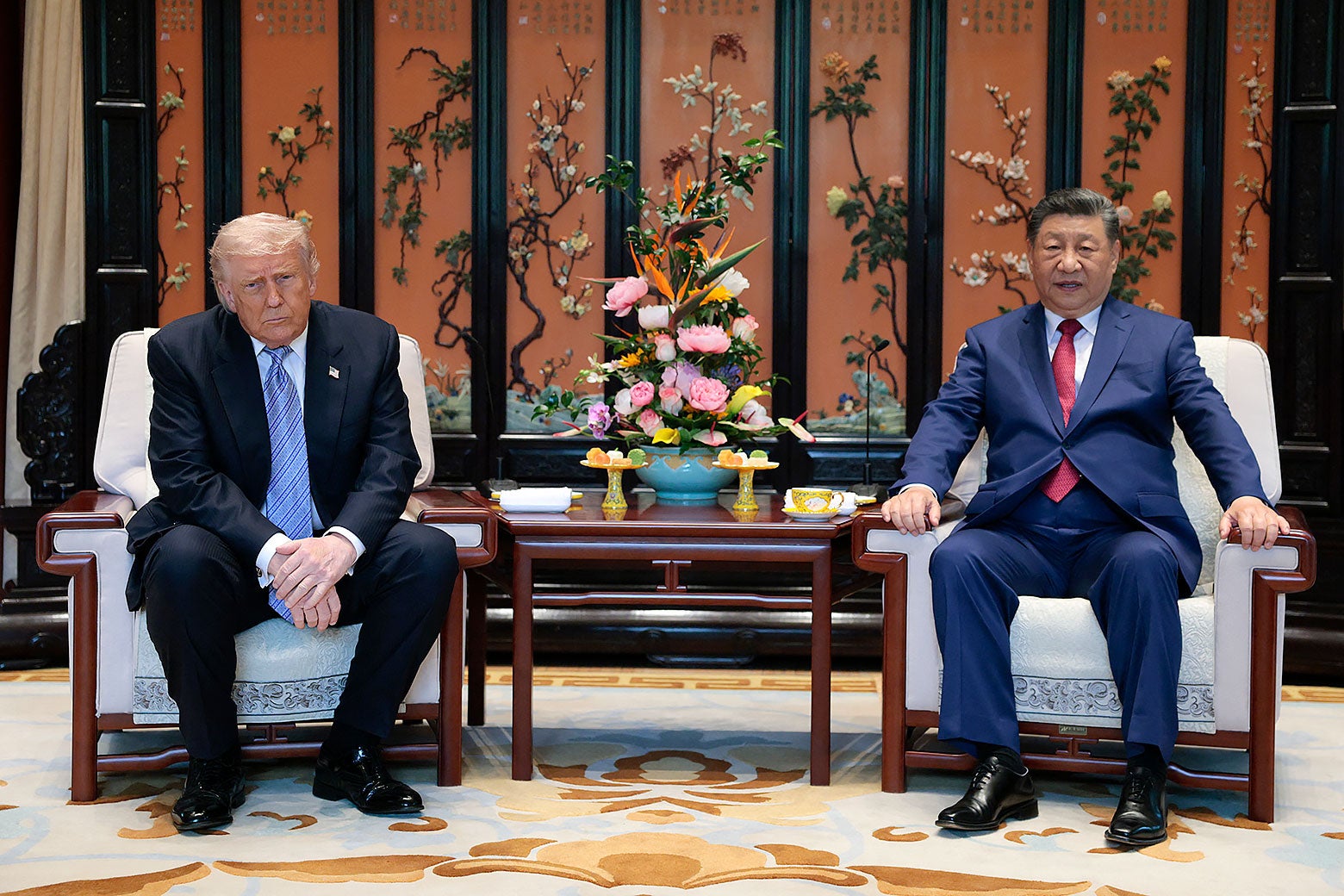
Xi Jinping's three-day state visit to Washington has been widely described as a "stalemate" and a public-relations win for Beijing. The picture is more mixed. The White House lists a series of concrete results, from tariff cuts on $30 billion of goods each way to coal purchases and new communication channels. Critics rightly note that key details are still missing, that China keeps its leverage over rare earths, and that Taiwan was left in the background. Both sides now claim success.


.
A Summit Full of Symbols
President Donald Trump rolled out the red carpet for Xi from the first minute. He greeted the Chinese leader in person at the airport, a gesture Reuters says no US president had made for a world leader in 11 years. A lavish state dinner, a White House tea and a tour of the National Archives followed.
Xi came without the usual delegation of Chinese business leaders. That fuelled the criticism that little of economic substance was ready to be signed. Several analysts, including experts at think tanks in Washington and Singapore, said the visit created a friendly atmosphere but did little to narrow real differences.
Beijing also has reason to be pleased. A Chinese foreign ministry adviser told CNN that Xi's team had worried that parts of Trump's staff are less positive about China than the president himself. The most conspicuous result, in other words, was a warm tone.
What Was Actually Agreed
The headline critique tends to overlook the official list of results. According to the White House fact sheet, the new US–China Board of Trade (a joint body that manages trade in non-sensitive goods) reached consensus on more favourable tariff treatment for $30 billion of goods in each direction.
On the American side, that covers farm products, seafood, wood products, cosmetics and medical devices. On the Chinese side, it covers consumer goods such as small appliances, toys, holiday decorations and children's car seats. A working group will also tackle barriers to US farm exports.
There is more. China is to import at least 10 million metric tons of American coal in both 2027 and 2028. A Board of Investment was set up to handle investment disputes. Both sides agreed that Iran must never obtain a nuclear weapon and that no country may charge tolls on international waterways.
The leaders also created a new dialogue on advanced AI, with the next round due by November, plus a channel for reporting AI incidents. The Hill reports that the two militaries planned to sign a memorandum aimed at preventing armed confrontations.
On drugs, Washington points to China's new export controls on two fentanyl-related chemicals and the arrest of 21 suspects in August. These are official US claims, and their real effect will only show over time.
Not the Loser: Trump's Side of the Ledger
This visit was one step in a sequence, not a single event. Trump and Xi met in South Korea in October 2025 and again in Beijing in May 2026. Two more meetings are planned before the year ends, at the APEC forum in China and the G20 in Miami.
The Beijing summit had already produced a pledge of at least $17 billion in yearly Chinese purchases of US farm goods through 2028, on top of earlier soybean commitments. CNN calculated that the two together would be worth roughly $27 billion a year, compared with $24.4 billion of American farm exports to China in 2024. For US farmers, an important part of Trump's voter base ahead of the November midterms, that is a tangible prospect.
Reuters points out that soybeans are missing from China's newly proposed tariff-cut list. That is true, but they are covered by the earlier commitment. Trump has said American farmers "will be very happy" with the outcome.
It also matters where the show took place. Xi travelled to Washington and accepted an American stage. His own foreign minister said the trip helped keep relations stable, while Xi called it very successful. Neither side walks away claiming defeat.
The Fine Print: Where Critics Have a Point
Caution is still justified. Neither government has said how far tariffs will fall or when the changes take effect. Reuters reports that a deadline for a broader trade agreement was pushed into next year, and the trade truce was extended only by a few months.
Implementation is also uneven. CNBC reports that soybean purchases, Boeing orders and rare-earth shipments are moving at very different speeds. US soybeans made up about 23 percent of China's soybean imports in the first five months of 2026, down from around 40 percent before the 2018 tariff war.
China keeps a strong card in its dominance of rare earths, minerals essential for cars, electronics and weapons. Beijing has used such control as a bargaining tool before, and nothing suggests it will give it up soon.
Some difficult topics stayed in the background. According to The Hill, these included Taiwan's security, long-term trade rules and the release of Americans detained in China. The pending $14 billion US arms package for Taiwan was not discussed publicly, which worries Taiwan and regional allies. China also offered little visible help on the war in Iran.
Outlook: The Real Test Comes Later
The coming weeks will show whether the announcements turn into binding rules. The US trade representative has said further details on the Board of Trade would follow, and the next two summits offer chances for firmer commitments.
The measure of success will be practical: Do the tariff cuts take effect? Do farm, coal and aircraft orders actually arrive? Does Beijing honour its promises on fentanyl chemicals and rare earths?
Until then, "stalemate" and "success" both describe only part of the picture. The public results are real but modest, and the decisive proof will come from Beijing's actions rather than from its diplomatic courtesy.
.
Sources
- Reuters, "Trump and Xi's 'stalemate' summit was a glitzy gift to China" (Sept 28, 2026): https://www.reuters.com/world/china/trump-xis-stalemate-summit-was-glitzy-gift-china-2026-09-28/
- The White House, "Fact Sheet: President Donald J. Trump Advances a Fair and Reciprocal Relationship with China While Hosting Historic State Visit" (Sept 25, 2026): https://www.whitehouse.gov/fact-sheets/2026/09/fact-sheet-president-donald-j-trump-advances-a-fair-and-reciprocal-relationship-with-china-while-hosting-historic-state-visit/
- Fox News, "President Trump and Xi reach $30B tariff deal on non-sensitive goods": https://www.foxnews.com/politics/us-china-strike-deal-lower-tariffs-30b-goods-trump-xi-washington-summit
- AP via PBS News, "Trump greets Xi as Chinese leader's state visit wraps up": https://www.pbs.org/newshour/world/watch-live-trump-greets-xi-as-chinese-leaders-state-visit-wraps-up
- CNN, "The Trump-Xi meeting was heavy on pomp, light on substance. China is just fine with that": https://edition.cnn.com/2026/09/25/world/xi-dc-trump-analysis-intl-hnk
- South China Morning Post, "Xi-Trump Washington summit aimed at putting US-China ties on equal footing: Wang Yi": https://www.scmp.com/news/china/diplomacy/article/3368884/xi-trump-summit-china-and-us-open-super-intelligence-communications-channel
- CNBC, "Soybeans, planes and rare earths: What they say about fragile U.S.-China trade truce" (Sept 23, 2026): https://www.cnbc.com/2026/09/23/trump-xi-summit-us-china-trade-rare-earth-soybean-plane.html
- CNN, "From a 'board of trade' to Boeing planes, what did Xi and Trump actually agree to?" (May 18, 2026): https://www.cnn.com/2026/05/18/china/xi-trump-trade-agreements-china-visit-intl-hnk
- The Hill, "US, China agree to cut tariffs on $30B worth of goods, set up channel for AI incidents": https://thehill.com/homenews/administration/6112947-donald-trump-xi-jinping-tariffs/
.
What's Your Reaction?
 Like
0
Like
0
 Dislike
0
Dislike
0
 Love
0
Love
0
 Funny
0
Funny
0
 Wow
0
Wow
0
 Sad
0
Sad
0
 Angry
0
Angry
0













Comments (0)