

Trump Admin’s Venezuela Strikes Are Challenging China’s Global Role


.
President Donald Trump’s decision to use military force to capture Venezuelan leader Nicolás Maduro isn’t just about capturing another drug-trafficking dictator in Latin America—it’s a major pushback against communist China’s influence in the Americas.
One of Many Blows to Venezuela
It’s high time for it, too. Finally, the United States is actually waging a real war against the illicit drugs that kill tens of thousands of Americans each year. But the change in U.S. policy goes well beyond drugs, which are bad enough. The new national security strategy is about realigning the region’s geopolitics to American strategic interests.In that context, Maduro’s free helicopter ride out of Caracas and his visit to New York are just the latest in a string of forward-leaning changes in American foreign policy. After all, the Trump administration’s repeated attacks on Venezuelan “drug boats” and the seizure of Venezuelan oil tankers bound for China should have been unmistakable signals that a new era in geopolitics is at hand.
China
The decapitation of Venezuela’s China-friendly regime has also dealt geopolitical, trade, and political blows against Beijing. For years, Chinese criminal networks have enjoyed great latitude working from Venezuela to facilitate drug smuggling, strengthening cartels, and engaging in human trafficking and other harmful activities targeting the United States.A New Context for Military Behavior?
To the Chinese Communist Party (CCP), U.S. military actions in the Caribbean are not seen in isolation as counter-narcotics tactics, but rather as part of a new context for how the United States frames legitimacy, manages escalation, and absorbs global criticism. In other words, Beijing is watching Washington and the world’s response to its actions in the Caribbean.The CCP also understands that the stakes go beyond Venezuela, extending to all of China’s allies in the region and beyond.
Venezuela as a Strategic Use Case of US Pushback Against China
Prior to capturing Maduro, the Trump administration’s actions combined strikes on suspected drug trafficking vessels and aggressive maritime enforcement, which included seizures of oil tankers off Caracas.Chinese diplomatic statements condemned those attacks and interdictions as violations of international law and threats to regional peace. China’s foreign ministry had repeatedly said it opposes “the use or threat of force in international relations” and denies external interference in Venezuela under any pretext.
China Wants to Protect Its Reputation
A related concern is that, as a global force challenging U.S. dominance, China wants to be respected and feared by both its allies and potential adversaries. As Beijing’s reputation and resolve are tested by the Trump administration, the Chinese regime may seek to challenge the United States unambiguously or risk losing face on the world stage, an intolerable condition for the CCP.More to the point, if Beijing allows the United States to attack and blockade Venezuela without significant consequences, China’s allies may well ask themselves whether being China’s ally is worth risking the wrath of the Trump administration.
In the broader diplomatic context, a key strategic takeaway for Beijing is how Washington manages escalation and international criticism. If the United States conducts strikes, withstands diplomatic pushback, and suffers no real consequences, the CCP may conclude that limited military action is manageable if framed domestically as defensive or law-enforcement-oriented.
Of course, this is especially relevant to Taiwan, where China has increasingly blurred the line between peacetime pressure and wartime posture through gray-zone operations, airspace incursions, and maritime blockade exercises.
The Sovereignty Narrative—and Its Strategic Value
As a rival to the United States, the CCP is considering how to leverage U.S. behavior to its own advantage.For instance, Beijing cites rising U.S. military pressure on Venezuela as a reason the world needs an alternative to American geopolitical dominance. Plus, its insistence on respecting sovereignty and non-interference is more than diplomatic rhetoric. Chinese officials have stated that U.S. maritime actions near Venezuela infringe “other countries’ sovereignty and security” and violate basic principles of the United Nations Charter, contrasting U.S. actions abroad with China’s own narratives about handling Taiwan. Thus, this framing directly transfers to Beijing’s framing of Taiwan as an internal matter.
This is critical because Taiwan poses as much of a legitimacy challenge to China as a military one. Therefore, U.S. actions classified as “law enforcement” can be used in CCP propaganda to argue that Washington’s standards are inconsistent, weakening U.S. moral authority in future crises and framing forced reunification with Taiwan as a legal issue rather than a sovereignty or moral issue.
Notably, at the end of December, the Chinese regime staged major military exercises around Taiwan, which, it could be argued, were in response to U.S. policy toward Venezuela.
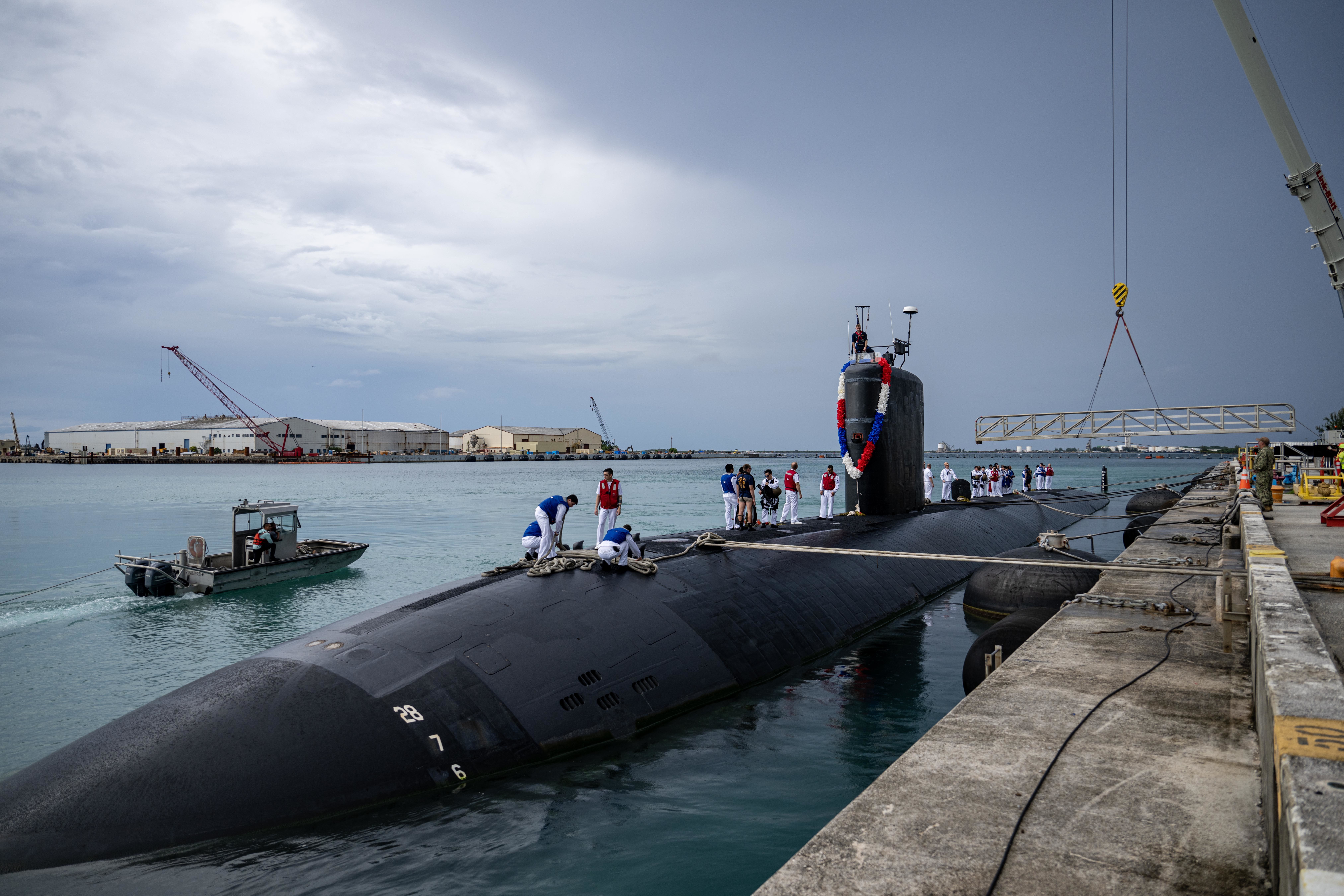
Finally, the extensive U.S. military presence around Venezuela, including aircraft carriers and thousands of troops enforcing maritime interdictions and blockades, could stretch American resources and national attention.
If the United States appears willing to project force geographically but unevenly, Beijing may conclude that Washington is unable to respond forcefully in every theater simultaneously, possibly emboldening Chinese planners to launch a rapid operation of its own in Taiwan.
Undoubtedly, the CCP is watching where the U.S. focuses attention, resources, and political capital, and weighing its options.
What's Your Reaction?
 Like
0
Like
0
 Dislike
0
Dislike
0
 Love
0
Love
0
 Funny
0
Funny
0
 Wow
0
Wow
0
 Sad
0
Sad
0
 Angry
0
Angry
0













Comments (0)