

‘Tragic Injustice’: Sentence of Hong Kong Media Mogul Jimmy Lai Sparks Global Condemnation


.
The heavy penalty handed down by a Hong Kong court to former media mogul Jimmy Lai under a Beijing-imposed national security law has drawn condemnation from governments and officials around the world, who call the move unjust and further evidence of the Chinese regime’s clampdown on the city’s dwindling freedoms.
The ruling was delivered on Feb. 9 by three national security judges, handpicked by the city’s pro-Beijing government. Lai had denied all charges.
Lai, who suffers from diabetes and heart palpitations, has already been kept behind bars for five years and two months in Hong Kong. He now has 28 days to appeal the court ruling.
U.S. Secretary of State Marco Rubio called on the Hong Kong authorities to grant Lai humanitarian parole.
“The Hong Kong High Court’s decision to sentence Jimmy Lai to 20 years is an unjust and tragic conclusion to this case,” Rubio said in a Feb. 9 statement.
“It shows the world that Beijing will go to extraordinary lengths to silence those who advocate fundamental freedoms in Hong Kong, casting aside the international commitments Beijing made in the 1984 Sino-British Joint Declaration.”
UK Foreign Secretary Yvette Cooper said Lai, also a British national, was punished for “exercising his right to freedom of expression.”
“For the 78-year-old, this is tantamount to a life sentence,” Cooper said in a statement. “I remain deeply concerned for Mr Lai’s health, and I again call on the Hong Kong authorities to end his appalling ordeal and release him on humanitarian grounds, so that he may be reunited with his family.”
Cooper said the Labor government “will rapidly engage further” on Lai’s case following the sentencing.
British Prime Minister Keir Starmer has confirmed that, during his recent visit to China, he raised Lai’s case directly with Chinese regime leader Xi Jinping and called for the former publisher’s release.
.
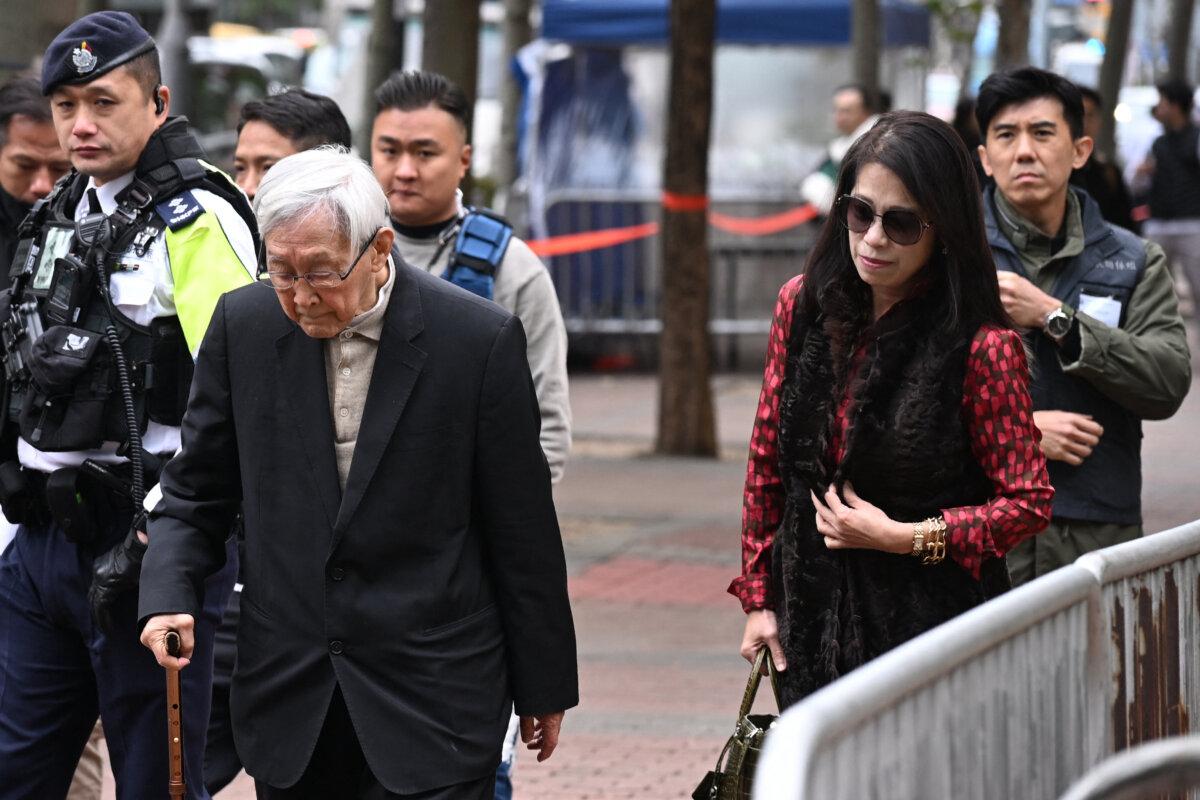
Teresa Lai (R), wife of former media tycoon Jimmy Lai, and Joseph Zen, retired cardinal of the Catholic Church (L), arrive at the West Kowloon Magistrates Court for Jimmy Lai's sentencing in Hong Kong on Feb. 9, 2026. Peter Parks/AFP via Getty Images
.
On Feb. 9, six former Apple Daily employees also received sentences ranging from six years and nine months to 10 years.
Australian Foreign Minister Penny Wong called on Beijing to “cease suppression of freedoms of expression, assembly, media and civil society,” and called for the repeal of the national security law in Hong Kong.
“The Australian Government is gravely concerned by the sentences handed down to Jimmy Lai and his co-defendants in Hong Kong today,” Wong said in a statement. “Our thoughts are with their family members and supporters at this difficult time.”
The European Union reiterated a call for the “immediate and unconditional release” of Lai, particularly in light of his advanced age and health condition.
“The politically motivated prosecution of Jimmy Lai and the former Apple Daily executives and journalists harms Hong Kong’s reputation,” the EU’s diplomatic arm, the European External Action Service, said in a statement.
“The EU calls on the Hong Kong authorities to restore confidence in press freedom in Hong Kong, one of the pillars of its historic success as an international financial centre, and to stop prosecuting journalists.”
.
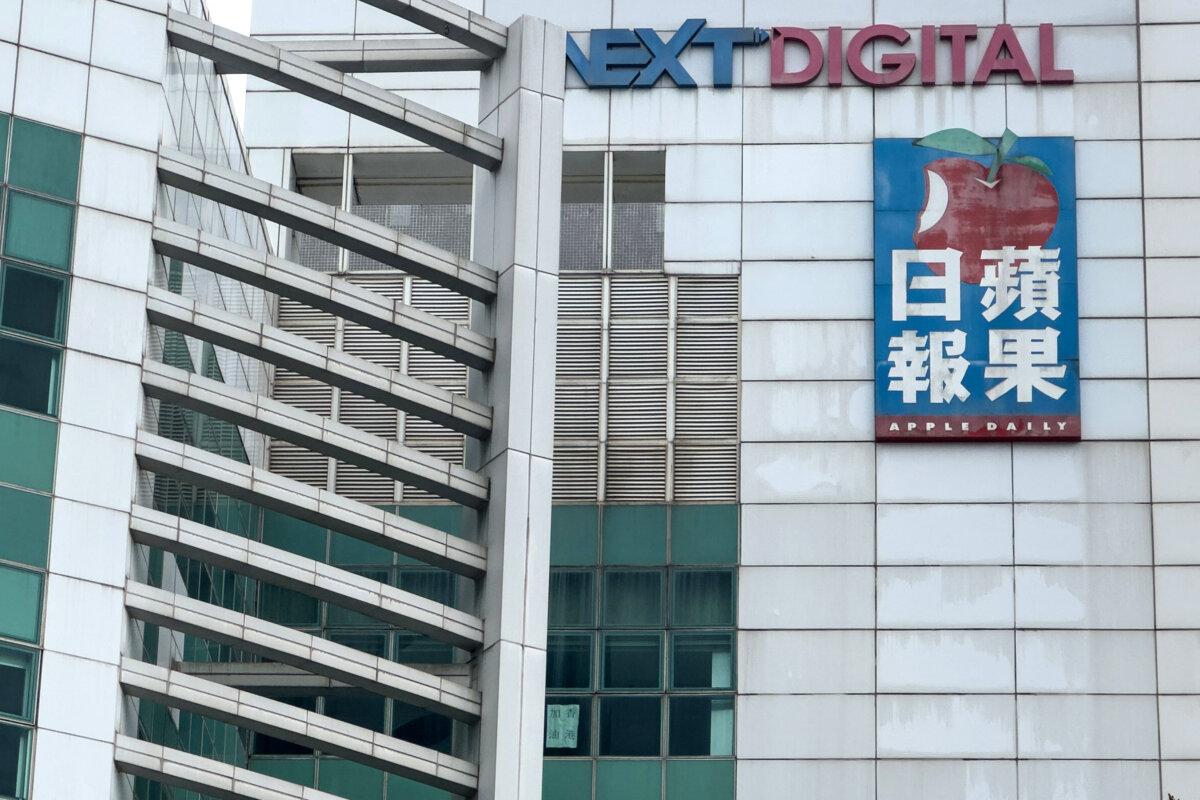
A poster (bottom C), with words reading "Hong Kong add oil," an expression meaning "keep going," is displayed on one of the windows of the shuttered Apple Daily newspaper office in Hong Kong on Feb. 9, 2026. Yan Zhao/AFP via Getty Images
.
Hong Kong, China
Hong Kong Chief Executive John Lee, in a statement, applauded Lai’s sentencing, saying the court decision “manifests that the rule of law and justice were upheld.”
China’s foreign ministry spokesperson, Lin Jian, voiced support for Hong Kong authorities in defending national security, calling Lai’s case “an internal affair” at a regular briefing.
“We urge relevant countries to respect China’s sovereignty and the rule of law in Hong Kong, refrain from making irresponsible remarks” on Hong Kong’s handling of the case, Lin told reporters in Beijing.
‘Lesson’ for Taiwan
Joseph Wu, Taiwan’s national security chief, said the harsh sentence imposed on Lai is further evidence of Beijing’s clamping down on dissent in what was once an icon of freedom.
“It’s a lesson for #Taiwan,” Wu said on X, urging the island’s 23 million people to reject any forms of unification with communist China, including the proposal that could make Taiwan a Hong Kong-style special administrative zone of China.
“It’s evil,” he added.
Taiwan’s Mainland Affairs Council, a top government body overseeing relations with Beijing, condemned the CCP and Hong Kong government for “using national security as a pretext to suppress freedom and human rights.”
“We remind Taiwanese people to take Hong Kong’s painful experience as a lesson and to safeguard our hard-earned freedoms in daily life,” the council said in a statement.
“We also call on the international community to stay vigilant against the CCP’s erosion of freedom and human rights, and to stand with Taiwan in defending the democratic front line.”
‘Enabled by Impunity’
The Inter-Parliamentary Alliance on China, a coalition of legislators from 31 countries, including the United States and Britain, said on X that Lai’s sentence is a “tragic injustice.”
“The imposition of a 20-year sentence on a 78-year-old publisher for peaceful political expression is not justice. It is punishment for dissent, enabled by impunity,” the group’s 86 lawmakers said in a statement.
.
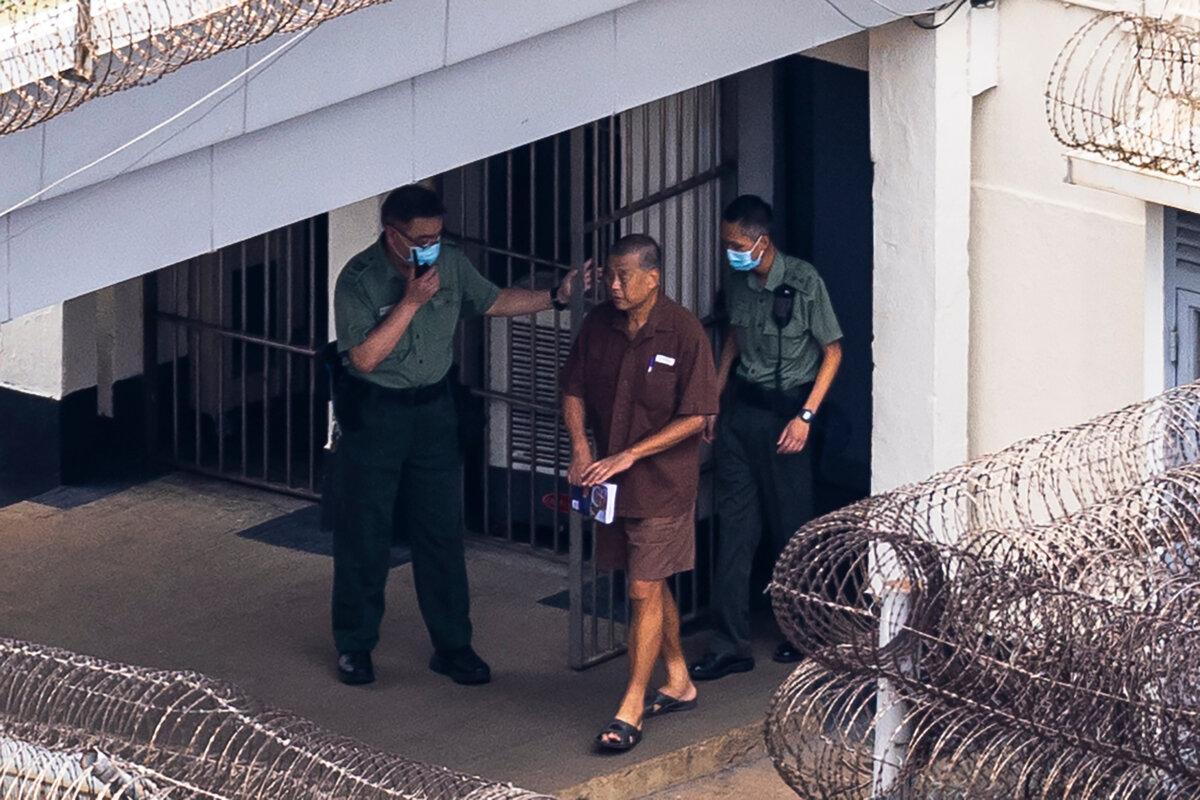
Jimmy Lai walks through Stanley prison in Hong Kong on July 28, 2023. Louise Delmotte/AP Photo
.
The legislators called on democratic governments to respond to Lai’s sentencing with coordinated diplomatic pressure and accountability.
“Jimmy Lai’s persecution serves as irrefutable proof that Hong Kong’s legal system answers to Beijing, and must not be afforded any status to distinguish it from China,” they said.
“The response of governments to this outrage will serve as a test, not only of their commitment to fundamental rights and values, but also of whether serious treaty violations should carry consequences.”
.
What's Your Reaction?
 Like
0
Like
0
 Dislike
0
Dislike
0
 Love
0
Love
0
 Funny
0
Funny
0
 Wow
0
Wow
0
 Sad
0
Sad
0
 Angry
0
Angry
0















Comments (0)