

Russia-Themed Stores Closing Down Across China as Retail Craze Fades

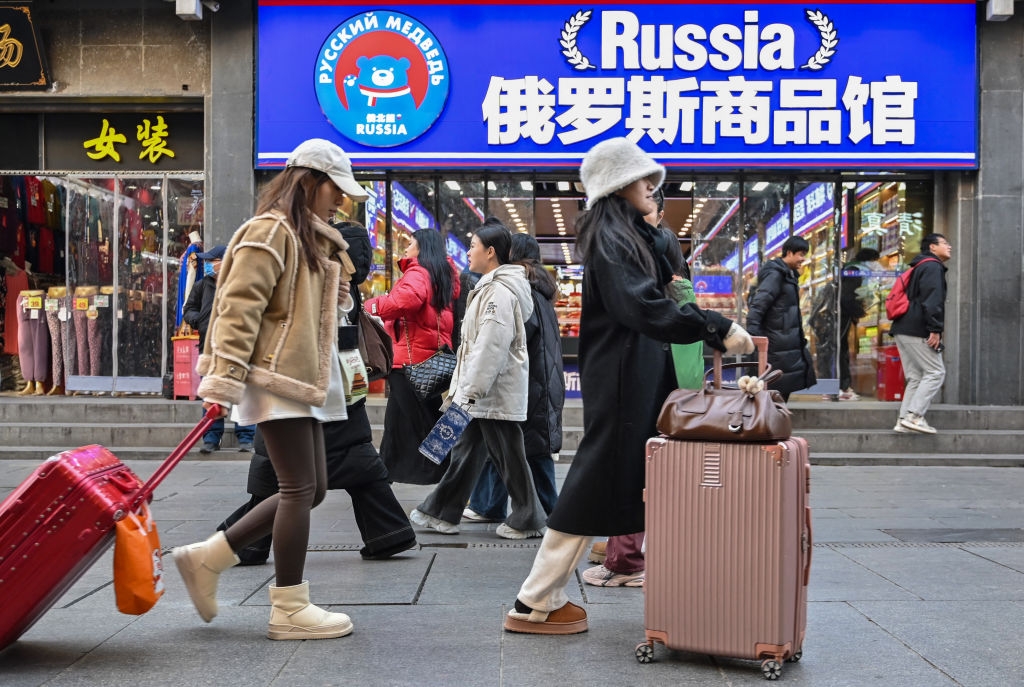
Once a trendy fixture in shopping malls across China, Russian goods stores—known for selling snacks, crafts, and souvenirs marketed as authentic imports—are closing in droves.
In less than a year, the fad has gone from rapid expansion to mass liquidation, leaving empty storefronts in major commercial hubs nationwide.
From Tourist Magnet to Empty Shelves
In Nanjing, a flagship store in the scenic Wuyi Lane, once packed with tourists, has quietly swapped its bright red “Authentic Russian Goods” sign for one reading “Snack Market,” according to local Chinese state-controlled Yangtse Evening News.The news outlet reported Aug. 9 that some shelves were empty. The store owner blamed the collapse on high rents, steep franchise fees, and costly procurement, and said that most tourists preferred Nanjing’s own specialty snacks over foreign-branded goods, leaving the shop with unsold inventory and mounting losses. The owner resorted to selling stock at 70 percent off.
Made in China?
While the stores initially drew crowds with their exotic branding, complaints soon mounted that many so-called imports were actually made in China.Videos in Zhang’s report showed Russian models hired to stroll through malls, giving the stores an air of authenticity. Yet Russian influencers living in China who visited the stores said they had never seen many of the products in Russia and did not recognize several brands.
Customers later discovered that a so-called “Russian rye bread” was produced in Hebei Province in China, and a “Russian smoked sausage” came from Heilongjiang, a Chinese province that borders Russia.
The closures have extended far beyond Nanjing, sweeping through major cities from Shanghai’s waterfront to Guangzhou’s wholesale markets.
China–Russia Relations
At their peak, Russian goods stores were a commercial extension of China’s diplomatic courtship with Moscow. In May 2024, Russian President Vladimir Putin and Chinese leader Xi Jinping reaffirmed their “no limits” partnership, as Russia faced deepening isolation from the West over its war in Ukraine.“Reports from my reliable sources within the CCP indicate that neither before nor after Trump’s recent call with Putin did Putin inform Xi, effectively sidelining him,” wrote Yuan. “This suggests that the relationship between the United States and Russia could improve once the war concludes.”
What's Your Reaction?
 Like
0
Like
0
 Dislike
0
Dislike
0
 Love
0
Love
0
 Funny
0
Funny
0
 Wow
0
Wow
0
 Sad
0
Sad
0
 Angry
0
Angry
0













Comments (0)