

‘Quiet and Subservient’: How Beijing Tested Australia—and Why One Analyst Says Canberra Faltered


.
The Australian government is exactly where Chinese Communist Party (CCP) leader Xi Jinping wants it to be, which is to be “quiet and subservient,” according to an ominous warning from defence expert Peter Jennings.
Jennings was the Deputy Secretary for Strategy in the Defence Department (2009-12); Chief of Staff to the Minister for Defence (1996-98); and Senior Adviser for Strategic Policy to the Prime Minister (2002-03).
After serving as head of the Australian Strategic Policy Institute (ASPI) for a decade, from 2012 to 2022, Jennings is now an adjunct fellow at the free market IPA.
.

Peter Jennings, Adjunct Fellow at the Institute of Public Affairs. Photo courtesy of the IPA.
.
Jennings claimed the Chinese Communist Party’s motivation was to be provacative and “to show the relative powerlessness of the Australian Navy in response, and we had the pretty unedifying spectacle of the Prime Minister, the Foreign Minister, and the Defence Minister all really defending the Chinese position.”
If the CCP flotilla currently near the Philippines does eventually make its way to Australian waters, Jennings says he'll be looking for “any indication of the Navy being given permission to be more aggressive in its management of [the matter].”
.
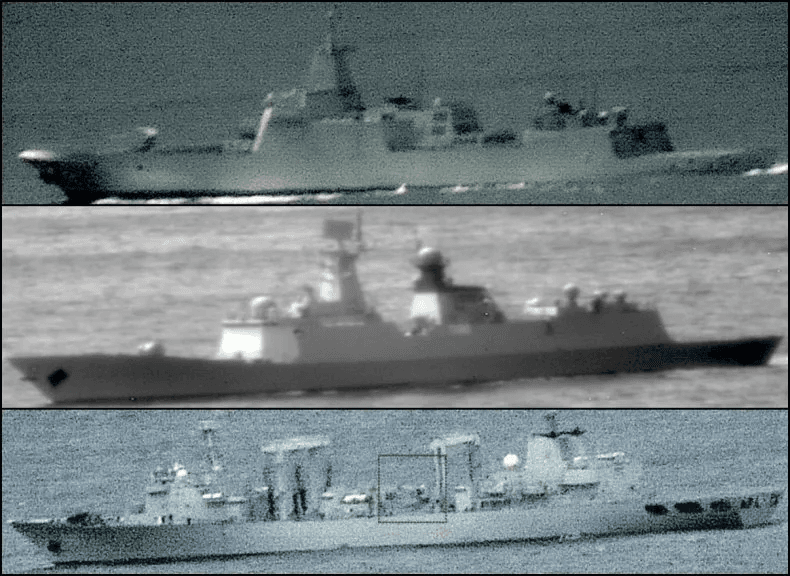
He said Australian officers could stage more overflights or disrupt their electronic warfare—measures aimed at keeping the PLAN “on their toes.”
No Trade-Off for Trade
Goods and services exports to China totalled $196 billion in 2024, representing 30 percent of total export revenues and making China the country’s largest two-way trading partner.In contrast, Australia is China’s 18th largest market. Chinese interests also have a total of $73 billion invested in Australian businesses.
Australia’s dependence on trade and investment with China is often cited by both politicians and analysts as a reason to soft-pedal in the face of provocation, but Jennings says the risk of not acting outweighs those benefits.
“It’s not about whether we can sell lobster to China. It really isn’t. Trade with China is great for as long as we’re able to do it. But none of that changes the strategic plan, which is for China to become the dominating power in our part of the world. Is that in our interests? No, it’s not.”
Calls for US to Apply More Pressure on Defence Spending
Jennings also believes the U.S. administration needs to apply more pressure on Australia’s defence spending, which he says is less than the Hawke government during the Cold War, which was at 3 to 3.5 percent.Jennings says he was relieved this did not result in any significant pushback from the Trump administration.
“[Defence Minister] Richard Marles, every single press conference he holds, says that this [government] is spending more in dollar terms than any previous Australian government has spent before. That’s true. [But] when inflation’s absolutely out of control, that’s not a difficult thing to achieve.”
Jennings argues that to gain public approval for any large dollar amount increase means the government has to “summon up the courage to talk to the Australian population in a more honest way about ... the broader strategic plan of China to become the dominant power in the Indo-Pacific, [and to] push the United States out.”
.
What's Your Reaction?
 Like
0
Like
0
 Dislike
0
Dislike
0
 Love
0
Love
0
 Funny
0
Funny
0
 Wow
0
Wow
0
 Sad
0
Sad
0
 Angry
0
Angry
0












Comments (0)