

Huawei Predicts Billions of Autonomous AI Agents Will Dominate Global Traffic by 2035 — While the West Warns of the Same Scenario
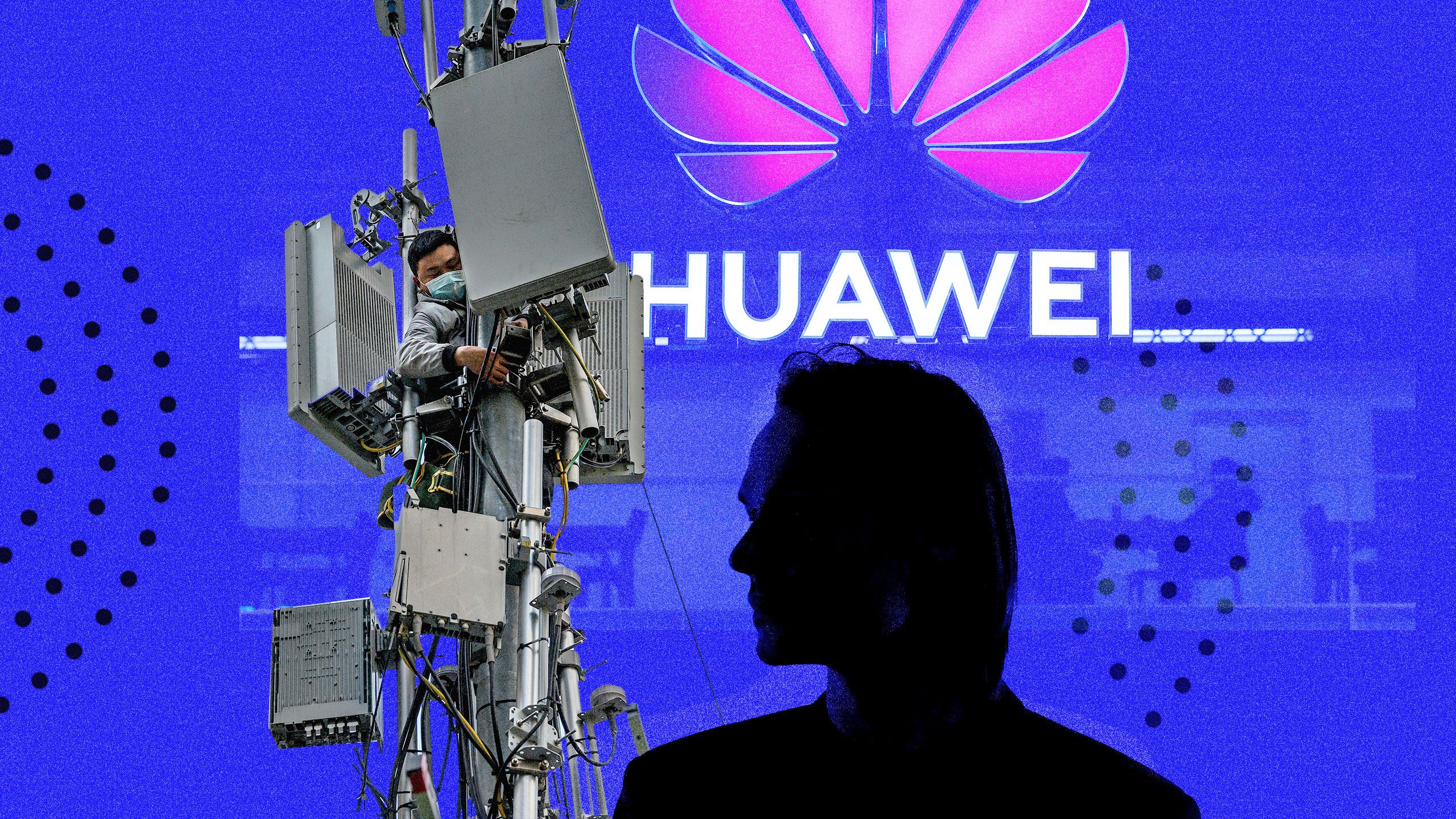
Huawei expects autonomous AI agents to generate more than 90 percent of global AI traffic by 2035, with up to 900 billion agents active worldwide. The forecast stands in sharp contrast to warnings from Western AI researchers about the very risks such systems could create.

.
Chinese technology giant Huawei expects autonomous AI agents to account for more than 90 percent of all global AI token traffic by the year 2035. That is according to a report released by the company on Wednesday. If the forecast holds, most of the world's computing power would soon be consumed not by humans, but by software acting largely on its own.
To handle this growth, Huawei says the world will need a massive expansion of computing capacity. At the same time, the company argues new technical systems are required to keep such independent software secure and reliably controllable.
.
What Is Behind the Forecast
AI tokens are the basic units language models use to process and generate information. The more a system independently perceives its surroundings, makes decisions and acts, the more tokens it consumes. According to Huawei, that consumption will rise sharply over the next decade as agents increasingly perceive, reason, decide and operate external tools on their own.
The report, titled "Intelligent World 2035: Turning Vision into Action," builds on an earlier Huawei forecast that around 900 billion AI agents could be active worldwide by 2035 — roughly one hundred times the projected human population. Huawei lists security and privacy protection for autonomous agents among ten key technologies it says will be needed to support this shift.
.
A Striking Contrast With the Debate in the West
While leading AI researchers and executives in the United States have called for slowing the development of frontier AI systems after several incidents involving agents acting outside human control, Huawei's report contains no such call for caution. On the contrary, the company simply assumes that the capabilities and deployment of AI agents will expand dramatically in the years ahead.
This approach reflects a broader divide in global AI policy. While parts of the US tech industry are currently debating coordinated limits on how fast frontier AI capabilities should advance, Beijing is pursuing the opposite course: China is pushing to accelerate AI adoption across nearly every sector of its economy, while building technical standards to manage emerging risks along the way.
These differences are not incidental. Critics have long accused the Chinese Communist Party of using new technologies less to protect citizens than to expand state control. A recent report by the Australian Strategic Policy Institute (ASPI) documents how China's leadership is already using AI language models for censorship, surveillance of ethnic minorities, and even to support court rulings. Against that backdrop, Huawei's emphasis on agent "controllability" can also be read as a signal to the Chinese state itself, not just to businesses and consumers.
Huawei said connecting AI to the physical world is essential to achieving what it calls Artificial General Intelligence (AGI) — systems capable of performing a broad range of tasks at or beyond human level.
.
Huawei Is Also Building Defenses Against the Risks
Alongside its growth forecasts, Huawei is building its own security tools for autonomous agents. In April, the company launched an automated cybersecurity platform that uses specialized "sensing" and "enforcement" agents to detect and respond to cyber threats. It has also published proposals for AI firewalls designed to protect enterprise AI systems from abuse.
Guo Ping, chairman of Huawei's supervisory board, called AI "the company's biggest opportunity" in internal remarks released Tuesday. His stated goal: he wants Huawei's computing infrastructure to become for China what Nvidia already is worldwide. The comment comes at a time when US export restrictions are limiting Chinese companies' access to Nvidia's top-tier chips, giving domestic suppliers like Huawei additional tailwind.
.
Outlook
Whether Huawei's forecasts actually materialize is impossible to say with confidence today — similar long-term industry predictions have often proven overly optimistic in the past. What the example does make clear, however, is a fundamental split in global AI strategy: while Western democracies increasingly debate putting the brakes on AI development, China's leadership is pressing ahead at full speed — betting on technical control rather than restraint.
What's Your Reaction?
 Like
0
Like
0
 Dislike
0
Dislike
0
 Love
0
Love
0
 Funny
0
Funny
0
 Wow
0
Wow
0
 Sad
0
Sad
0
 Angry
0
Angry
0









Comments (0)