

China’s Coercive South China Sea Strategy Threatens to Destabilize Indo-Pacific: Experts


.
China is using water cannon attacks and an environmental guise in an attempt to legitimize its de facto control over parts of the South China Sea—a strategy that experts warn threatens to weaken regional sovereignty, erode maritime law, and destabilize the Indo-Pacific.
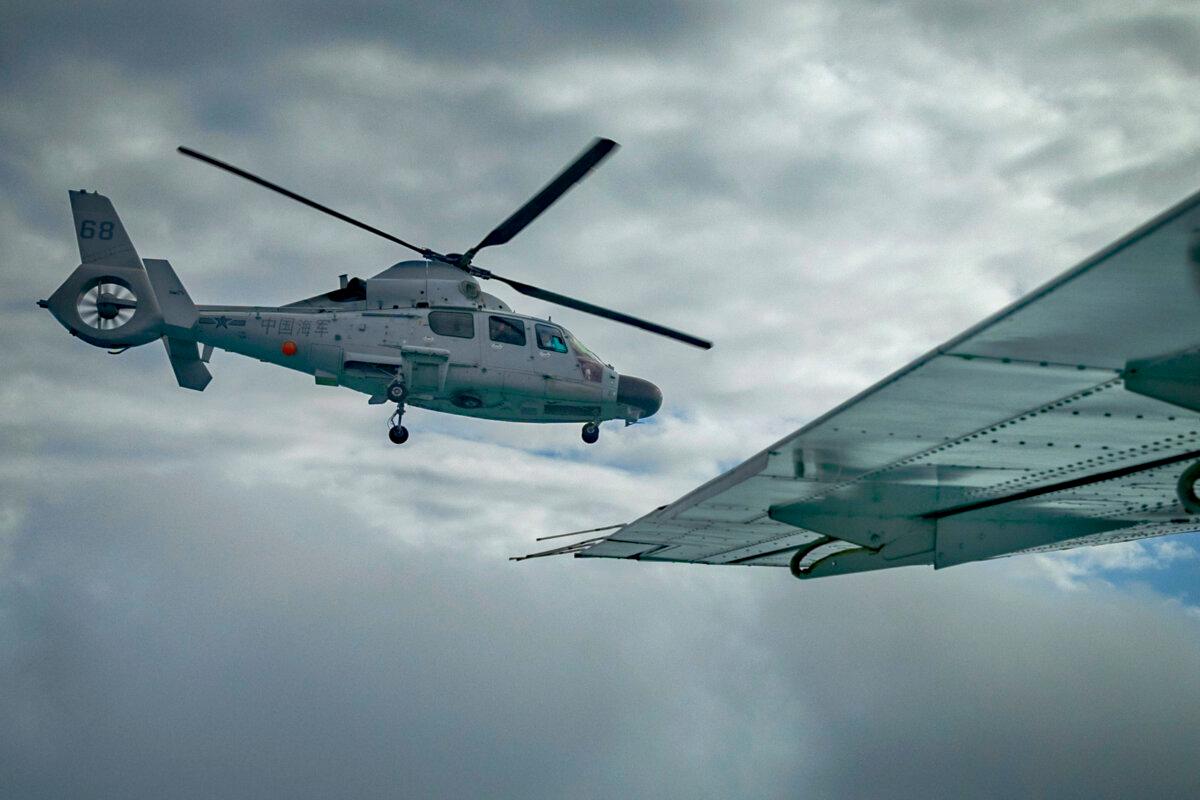
A Philippine ship was targeted by water cannons from Chinese coast guard vessels on Sept. 16 near the disputed Scarborough Shoal in the South China Sea.
‘A Chilling Effect’
These aggressive actions are having a direct impact on the ground, say experts.Lucio Pitlo III, president of the Philippine Association for Chinese Studies (PACS), told The Epoch Times that as Manila continues to encourage its fishermen to fish around the shoal and provide protection and supplies, Beijing’s recent provocative moves “may send a chilling effect.”
“I don’t expect the Philippine government to back down on this, [but] I think that would have an immediate impact on fishermen that would be deprived of their livelihood,” Pitlo said.
China’s Environmental Lawfare
The confrontation is part of Beijing’s multi-pronged approach, which also involves legal tactics to assert its claims.The designated nature reserve at Scarborough Shoal spans 3,500 hectares (8,650 acres), ostensibly to protect the ecosystem and to maintain “diversity, stability and sustainability,” according to officials.
However, Vincent Kyle Parada, a former defense analyst for the Philippine navy, told The Epoch Times that the latest initiative from China is “a clear example of what we call lawfare.”
.
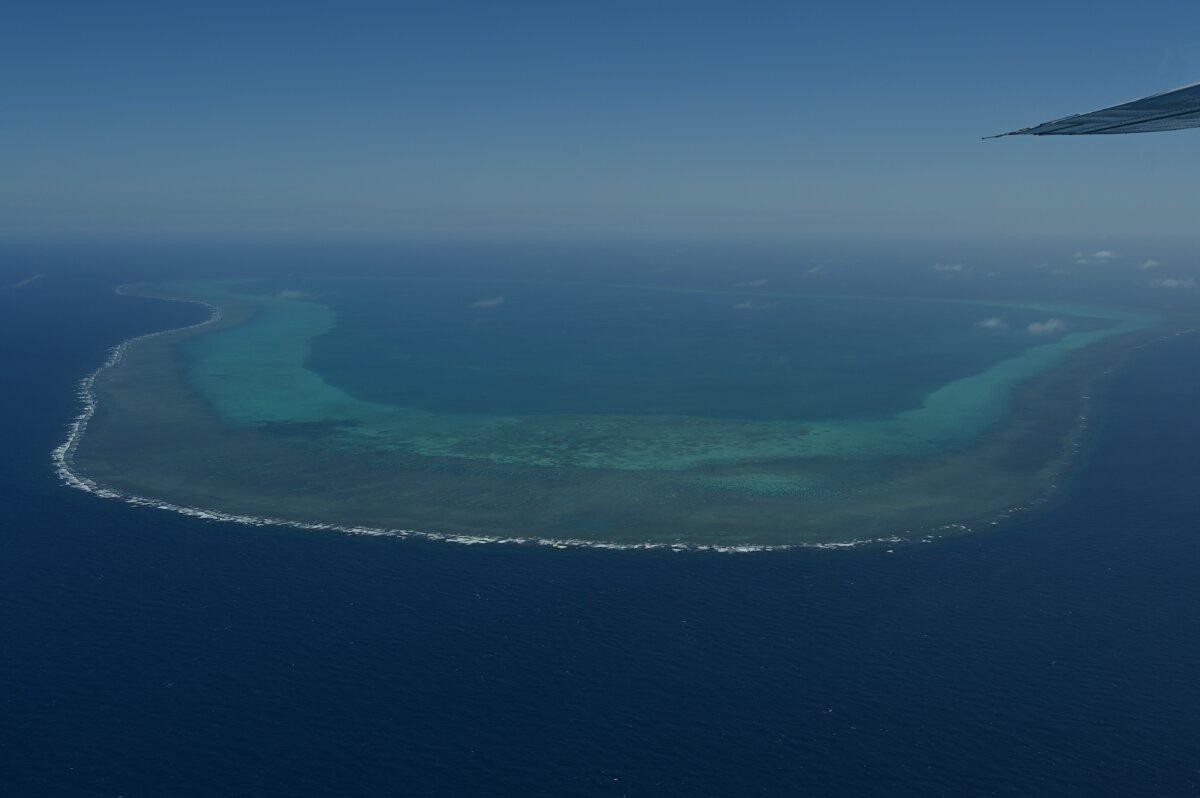
He said that Beijing’s goal is to “package its occupation of Scarborough Shoal as a legitimate activity under the guise of environmental protection and maritime law enforcement.”
Parada added that in that way, Chinese authorities could frame Philippine attempts to assert their sovereignty and territorial integrity as intrusions into a protected zone, “essentially flipping the narrative on Manila.”
Even though some countries have utilized legal systems to achieve their strategic objectives, “what distinguishes China’s recent attempt is that it is a deliberate misrepresentation of the law,” he stated.
“Beijing itself is responsible for irreparable environmental damage to the South China Sea—whether it’s through unregulated, and unreported fishing, island-building activities, or other destructive practices,” Parada said.
Challenge to the Indo-Pacific
Hunter Marston, an adjunct fellow at the Center for Strategic and International Studies (CSIS) in Washington, warned that Beijing’s recent attempts to occupy the Philippines’ territory show it has largely ignored international law.“The tensions were on high display, so the implications of China’s occupation of Scarborough Shoal, which falls within the Philippines’ Exclusive Economic Zone, are pretty significant in that it shows that China has the active ability to undermine the U.N. Convention on the Law of the Sea to which it is a signatory,” Marston told The Epoch Times.
Marston further stated that China could therefore expand its presence throughout the South China Sea, which could pose a significant challenge to the Indo-Pacific.
“China can cross the Pacific and slowly erode the sovereignty of littoral states like the Philippines, thereby undermining the United States’ ability to come to its allies’ defense,” he said.
.
US–Philippines Alliance in Action
On Sept. 12, U.S. Secretary of State Rubio directly addressed the nature reserve plan on social media.Pitlo, the PACS president, who is also a research fellow at the Asia Pacific Pathways to Progress Foundation, reinforced this position, noting that the United States and its allies deem China’s move as a violation of international norms and would likely not allow Beijing to turn traditional fishing grounds into an exclusionary regime.
“I think the U.S. and Philippines will challenge this diplomatically through protests and messaging, formal communication, as well as in public statements to the media, and at the same time through actions on the ground,” Pitlo said.
Marston from CSIS confirmed that this strategy of confronting Beijing is already being solidified through the alliance’s core pillars, specifically the Enhanced Defense Cooperation Agreement, which allows the U.S. and Philippine militaries to train together and respond to local crises.
“That reflects the Philippines’ overarching national security priority of checking China’s incursions into Philippine territorial waters, so the United States has transferred some military equipment and made provisions in terms of defense assistance to the Philippines,” he said.
Marston said that these specific actions, along with the strong statements from U.S. officials, are the practical application of a much broader U.S. doctrine designed to maintain primacy in the Pacific.
“The United States comes to the defense of its allies and partners, and its maximal goal is to deter China and to prevent it from expanding its territorial presence in the South China Sea, which impinges on core U.S. interests such as the freedom of navigation and freedom of commerce,” Marston said.
.
What's Your Reaction?
 Like
0
Like
0
 Dislike
0
Dislike
0
 Love
0
Love
0
 Funny
0
Funny
0
 Wow
0
Wow
0
 Sad
0
Sad
0
 Angry
0
Angry
0















Comments (0)