

A Bulldozer, a Beijing Market, and a Blackout: What China Doesn't Want You to Know
A Bulldozer, a Beijing Market, and a Blackout: What China Doesn't Want You to Know - On a busy Saturday morning in the Chinese capital, a heavy construction vehicle plowed into a crowded open-air market. Videos appeared online — and were gone within hours. Authorities have said nothing. The pattern is disturbingly familiar.

.
On a busy Saturday morning in the Chinese capital, a heavy construction vehicle plowed into a crowded open-air market. Videos appeared online — and were gone within hours. Authorities have said nothing. The pattern is disturbingly familiar.
.
What Witnesses Say Happened
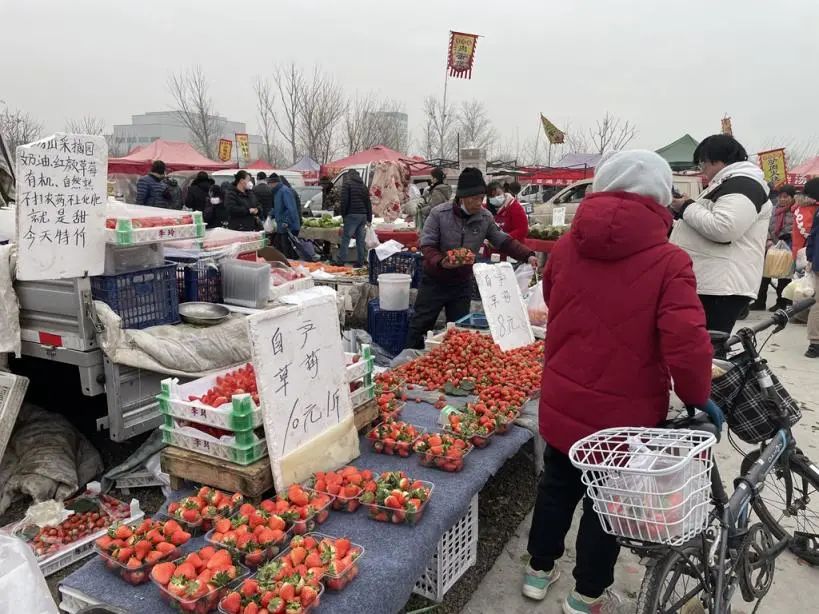
At approximately 11 a.m. on Saturday, March 29, 2026, a man in his fifties drove a yellow front-end loader — a large construction vehicle — through the Dahanji Market in Beijing's Fangshan District, one of the most heavily trafficked rural produce markets in southwestern Beijing.
Videos briefly circulating online showed multiple people lying on the ground after the front loader drove into the market. The Epoch Times reported that a witness said the section of road had been closed off, and that the bulldozer appeared to break through a checkpoint before entering the crowded market space.
After the vehicle came to a stop, the crowd pulled the driver out and began beating him before police intervened and took him into custody.
The casualty figures remain unconfirmed. Reports circulating on social media before deletion cited between 8 and 13 fatalities, with numerous others injured. The Epoch Times could not independently verify these numbers, and no official casualty figures have been released.
What is not in dispute: something serious happened at Dahanji Market on March 29. Multiple local residents confirmed the incident to journalists. Emergency services were dispatched. The driver was arrested. And within hours, the story had been systematically erased from the Chinese internet.
The Erasure Begins
Chinese authorities moved quickly to restrict the flow of information. Searches for "Dahanji Market" on major domestic platforms, including Douyin and WeChat, returned no results or error messages by Saturday afternoon. Independent monitors observed that several local news threads and social media posts regarding the incident were removed within hours of publication.
One Beijing resident described watching a video on Douyin before it disappeared: "At first, there were videos on Douyin, and then very quickly they were gone. They couldn't even be downloaded. I saw the video on Douyin myself." Another resident said the incident was "widely discussed online before the videos disappeared."
The suppression extended beyond social media. As of the time of reporting, no official statement had been issued by the Beijing Municipal Government, the Fangshan District Public Security Bureau, or any other Chinese authority. State media — which would normally carry at least a brief official account of a serious public safety incident in the capital — published nothing.
This pattern of information management is common in the immediate aftermath of public safety incidents in the capital, often deployed to prevent social unrest or further public speculation. But the speed and completeness of this particular blackout suggests authorities viewed the incident as especially sensitive.
Fangshan: A District With Grievances
The location of the attack is not without significance. Dahanji Market sits in Fangshan — a district with a long history of demolition disputes, forced relocations, and unresolved petitioner grievances.
Yin Dengzhen, a former petitioner from China who has lived in Fangshan, wrote on X that the market is "the place in Fangshan with the highest flow of people," and noted that "many villagers here have been forced by the government to give up their homes in demolition disputes, and it is also one of the places where petitioners are most concentrated."
Whether the driver had personal grievances connected to these demolition disputes is unknown. Police have not released any information about his identity, background, or motive. What witnesses described — a man deliberately driving a construction vehicle through a security checkpoint into a crowd — is consistent with the pattern of intentional "revenge against society" attacks that have been rising sharply across China.
A Capital City, a Capital Crime — and Total Silence
What makes the Fangshan incident particularly striking is its location. This did not happen in a remote province, a restive border region, or a city already associated with social unrest. It happened in Beijing — the political heart of the People's Republic, a city under some of the most intensive surveillance and security infrastructure in the world, a place where the Communist Party's control is meant to be most complete.
The fact that a man in his fifties was able to drive a heavy construction vehicle through a security barrier and into one of the capital's busiest markets — in broad daylight, on a Saturday morning — raises uncomfortable questions about the effectiveness of the surveillance state that Beijing projects so forcefully.
And the fact that authorities responded not with transparency but with immediate and total censorship raises a different set of questions: about what they fear, and about what the public might conclude if it were allowed to draw its own conclusions.
The Same Playbook, Again
This is the third major "revenge against society" incident to occur in a major Chinese city in less than a week. On March 26, two separate stabbing attacks in Shenzhen left multiple people dead — and were similarly scrubbed from social media within hours, with no official statement issued.
The pattern has become numbingly consistent. An attack occurs. Videos appear. Videos disappear. Authorities say nothing. Life is expected to continue as normal.
Chinese users on X were not willing to stay silent. "The real culprit is the Communist Party," one wrote. "There have been a few too many Zhang Xianzhong-style incidents lately," wrote another — invoking the increasingly common online shorthand for mass violence driven by social despair.
"Zhang Xianzhong mode" — a term we documented in our Shenzhen coverage — refers to the 17th-century rebel commander whose name has become Chinese internet slang for indiscriminate, rage-driven mass violence. The fact that the phrase is now being applied to incidents in both Shenzhen and Beijing within the same week speaks to a growing public recognition that something systemic is unfolding — something the Party's censorship machinery can delete from Douyin but cannot delete from the lived experience of the people who witness it.
The Question That Cannot Be Censored
China's "stability maintenance" apparatus — the world's most expensive and comprehensive system of social control — is built on one central premise: that by controlling information, the Party can control perception, and by controlling perception, it can prevent the kind of collective reckoning that might threaten its hold on power.
The Fangshan bulldozer attack, like the Shenzhen stabbings before it, tests that premise. The videos were deleted. The hashtags were blocked. The official silence is complete.
But the man is still in police custody. The market stalls are still damaged. The families of the injured and the dead are still there. And the grievances — over demolition disputes, unresolved petitions, economic despair, and a system that offers no legitimate outlet for any of it — are still there too.
Those things cannot be deleted. Not from Douyin. Not from anywhere.
.
Sources:
- BNO News – "Bulldozer Crashes Into Market in Beijing; Casualties Unclear Amid Censorship" (March 29, 2026): https://bnonews.com/index.php/2026/03/bulldozer-crashes-into-market-in-beijing-casualties-unclear-amid-censorship/
- LatestLY – "Beijing Bulldozer Crash: Heavy Loader Runs Over People at Dahanji Market in Fangshan; Multiple Casualties Reported" (March 30, 2026): https://www.latestly.com/world/beijing-bulldozer-crash-heavy-loader-runs-over-people-at-dahanji-market-in-fangshan-multiple-casualties-reported-watch-video-7372352.html
- Gazeta Express – "Bulldozer Crushes Crowd of People in Open-Air Market in Beijing — At Least 13 Dead and Many Injured" (March 30, 2026): https://www.gazetaexpress.com/en/Bulldozer-crushes-crowd-of-people-in-open-air-market-in-Beijing--at-least-13-dead-and-many-injured/
- They Will Kill You – "Bulldozer Attack at Beijing Market Leaves Multiple Casualties Amid Information Blackout" (March 30, 2026): https://theywillkillyou.com/news/watch-bulldozer-attack-at-beijing-market-leaves-multiple-casualties-amid-information-blackout
- Lokmat Times – "China: Casualties Feared After Bulldozer Runs Over Crowd in Beijing Market" (March 30, 2026): https://www.lokmattimes.com/international/china-casualties-feared-after-bulldozer-runs-over-crowd-in-beijing-market-watch-video-a517/
- Foreign Affairs – "The Roots of 'Revenge Against Society' Attacks in China" (December 2024): https://www.foreignaffairs.com/china/roots-revenge-against-society-attacks-china
- China Leadership Monitor – "Going Xianzhong Mode: Can Local Governments Stop 'Revenge Against Society' Attacks?" (June 2025): https://www.prcleader.org/post/going-xianzhong-mode-can-local-governments-stop-revenge-against-society-attacks
.
What's Your Reaction?
 Like
0
Like
0
 Dislike
0
Dislike
0
 Love
0
Love
0
 Funny
0
Funny
0
 Wow
0
Wow
0
 Sad
0
Sad
0
 Angry
0
Angry
0















Comments (0)