

What’s on the Table for the Trump–Xi Meeting?


.
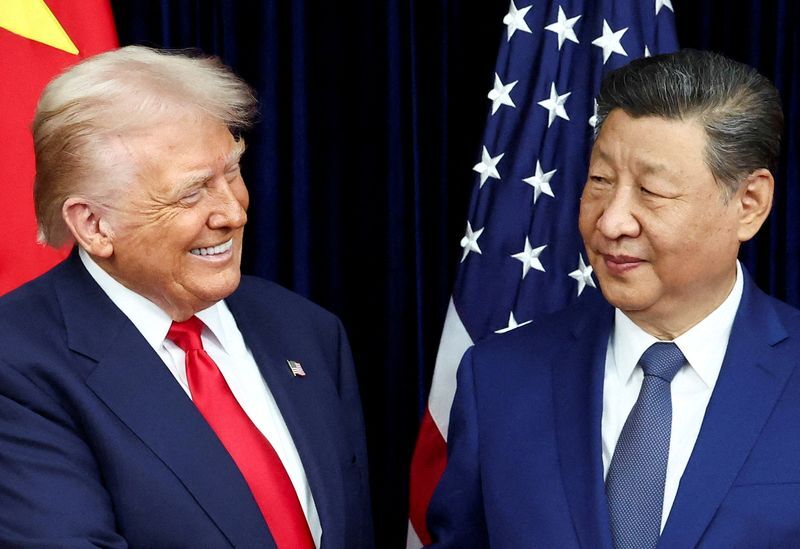
Markets are rallying ahead of the meeting between President Donald Trump and Chinese Communist Party (CCP) leader Xi Jinping, in which the two are expected to strike a deal that will increase trade and at least pause a rare-earth restriction that was expected to disrupt global supply chains.
In an interview with NBC’s “Meet the Press” on Oct. 26, Bessent said, “President Trump gave me a great deal of negotiating leverage with the threat of the 100 percent tariffs.”
Trump has said he wants a “deal on everything,” previewing a long list of issues he will bring up at the bilateral meeting.
The U.S. president is currently on a tour through Asia that began with attending the first day of the ASEAN summit in Malaysia on Oct. 26. There, he oversaw the signing of a peace deal between Thailand and Cambodia and signed trade agreements with Vietnam, Malaysia, Cambodia, and Thailand.
He is now at his next stop, Japan, where the country’s monarch received him before Trump met with newly elected Prime Minister Sanae Takaichi. Trump will travel to South Korea on Oct. 29 to meet with President Lee Jae-myung, address global and business leaders at APEC, and then meet with Xi on Oct. 30.
Rare-Earth Exports
High on the U.S. list of demands is reliability in China’s rare-earth exports.On Oct. 9, Beijing announced export controls on seven rare earths, building on an April announcement and bringing the total number of controlled rare earths to 12.
Crucially, the Chinese communist regime would require licenses for trade of any goods containing 0.1 percent or more rare earths that were mined or processed in China, and China controls some 90 percent of rare earth processing. When Beijing announced restrictions in April, the slowdown in rare-earth exports put global automakers at risk of having to shut down production lines after just weeks.
The recent move temporarily derailed Trump–Xi talks. On Oct. 10, Trump threatened 100 percent additional tariffs and other export controls, as officials in the United States and other international bodies called on China to roll back the restrictions. Then, U.S.–China talks began, with U.S. Trade Representative Jamieson Greer saying the Chinese side agreed to defer in the face of the high tariffs.
Bessent said similarly that, following the most recent round of in-person negotiations, he’s expecting “some kind of deferral” on the restrictions.
Soybeans
In the current trade war, China made a move it used in 2018 by boycotting U.S. soybeans amid a record harvest. Trump has said soybeans would be a “major” topic of discussion as Beijing’s boycott has been an “economically hostile act.”This means no other market can fill the gap left by China, which turned to Brazil and Argentina to meet its soybean needs this year, used mainly for livestock feed. Trump has said he will bail out American soybean farmers in the short term with tariff revenue and expects Beijing not to try to use American farmers as leverage.
Fentanyl
In February, Trump imposed tariffs on China over its failure to fulfill its role in curbing the fentanyl crisis. In an executive order, he stated that Beijing subsidizes chemical companies that produce fentanyl precursors, supports the drug trafficking network through money laundering schemes and other means, and could have shut down these operations if it wished.Trump has said that he expects Beijing to do something about fentanyl if it wants to reduce the 20 percent tariff.
Russian Energy
Washington has called on Beijing multiple times to exert pressure on Moscow to end the war in Ukraine and has raised the possibility of curbing purchases of Russian energy to do so.“One of the things we’ll talk about is the Russia–Ukraine [war]. They’re killing 7,000 people a week—soldiers, mostly soldiers—and we'll certainly be talking about that. He’d like to see that end, too.”
The United States has sanctioned Russian oil companies to cut off financing of the war as it tries to get the parties to come to a cease-fire agreement.
No Change on Taiwan Issue
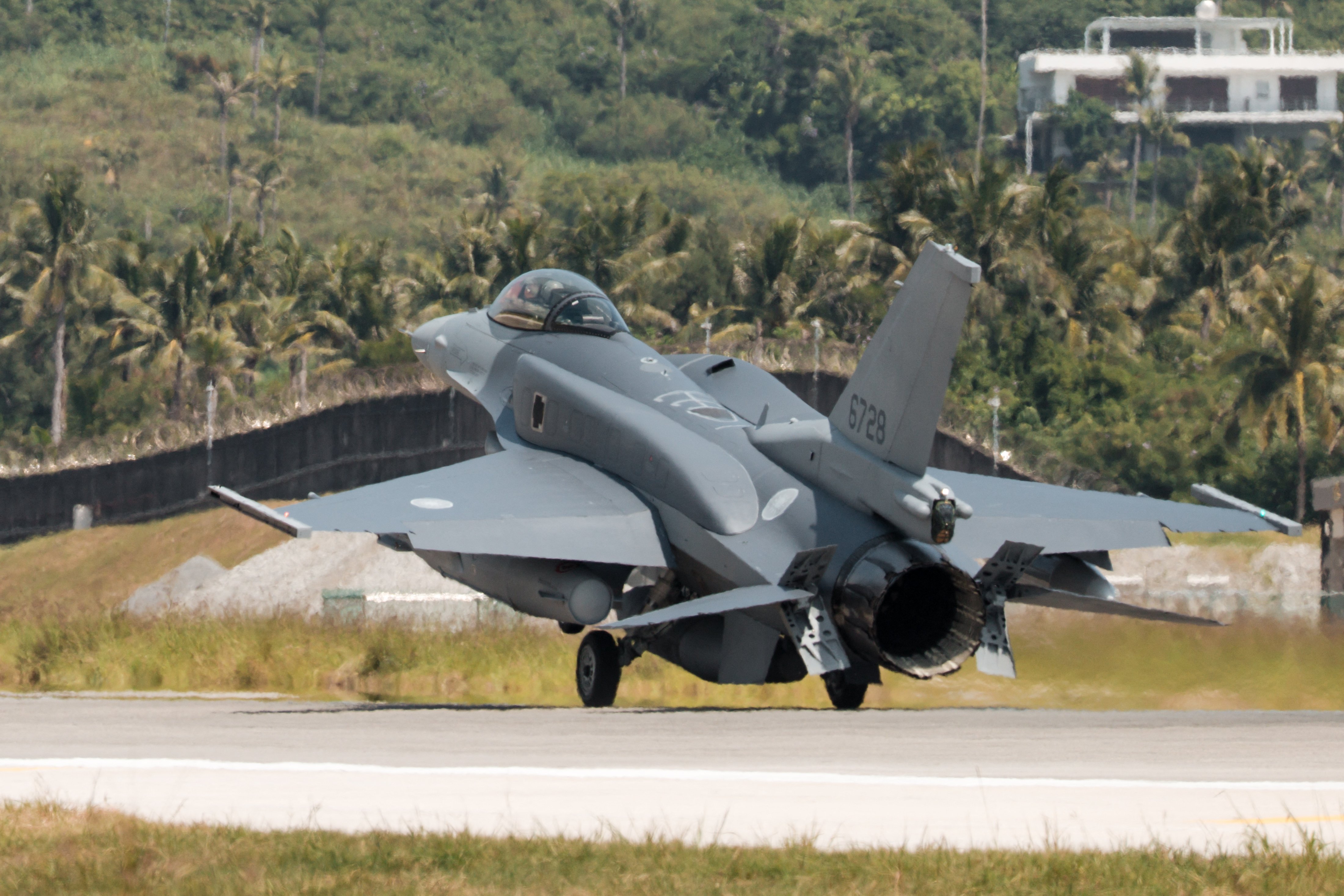
Reports that Beijing wanted Washington to defer to the Chinese regime on the issue of Taiwan earlier this month prompted U.S. officials to reiterate the United States’ position.The United States has a “One China” policy that recognizes Beijing as the governing body of China and Taiwan as a separate entity with which it does not have a formal defense pact. The 1979 Taiwan Relations Act and subsequent “Six Assurances” allow for weapons sales to Taiwan with no input from China and no position regarding Taiwan’s sovereignty.
Beijing has adopted the term “one China principle” but uses it to refer to the idea that Taiwan should be under the CCP’s territory and rule. It often pressures other nations to adopt its definition of the policy over the United States’ policy.
Trump said before leaving for his Asia tour that he would be discussing Taiwan with Xi.
Aboard Air Force One, he echoed previous comments in saying that he did not think the Chinese regime would attack Taiwan in 2027, as Xi has instructed the Chinese military to prepare for.
“I hope they won’t, but we'll have to see. Maybe they will, maybe they won’t,” Trump said. “It would be very dangerous for them to do.”
Jimmy Lai
As Trump departed for Asia, he also said he would bring up the release of Hong Kong democracy activist Jimmy Lai with Xi.“It’s on my list—I’m gonna ask,” Trump told reporters on Oct. 24. “It’s been a long time, and it’ll be on my list.”
Tariffs and Trade Deficit
According to Trump and U.S. officials, key to the recent negotiations was the president’s ability to impose tariffs in retaliation for Beijing’s unfair trade practices, such as the rare-earth restrictions.Trump in April announced several tariffs on China, totaling in the triple digits, and they have been paused and pushed back several times as the two nations try to work out a deal.
Tariffs of about 157 percent were set to go into effect on Nov. 10, before Trump threatened 100 percent additional tariffs to begin on Nov. 1 if Beijing were to go through with the rare-earth restrictions.
Trump administration officials have said several times that the Chinese regime wants to bring that number down and has continued talks with the United States to that end.
Trump has said he wants concessions from China in exchange for lowering tariffs, not least of all closing the trade deficit.
Beijing had agreed to purchase U.S. goods and services above 2017 levels by at least $200 billion and make reforms to prevent technology and intellectual property theft. Still, the agreement is primarily considered to have fallen by the wayside. A formal finding that China failed to fulfill its commitment could result in penalties such as tariffs.
Trump says the tariffs he has imposed under emergency powers have been critical to securing trade deals with countries around the world, but the Supreme Court will have the final say on their legality.
Trump’s Asia tour comes just ahead of a hearing at the high court on Nov. 5, which Trump has said he wants to attend in person.
.
What's Your Reaction?
 Like
0
Like
0
 Dislike
0
Dislike
0
 Love
0
Love
0
 Funny
0
Funny
0
 Wow
0
Wow
0
 Sad
0
Sad
0
 Angry
0
Angry
0













Comments (0)