

US Senate Committee Advances Bill That Could Push Mercedes-Benz Out of the American Market
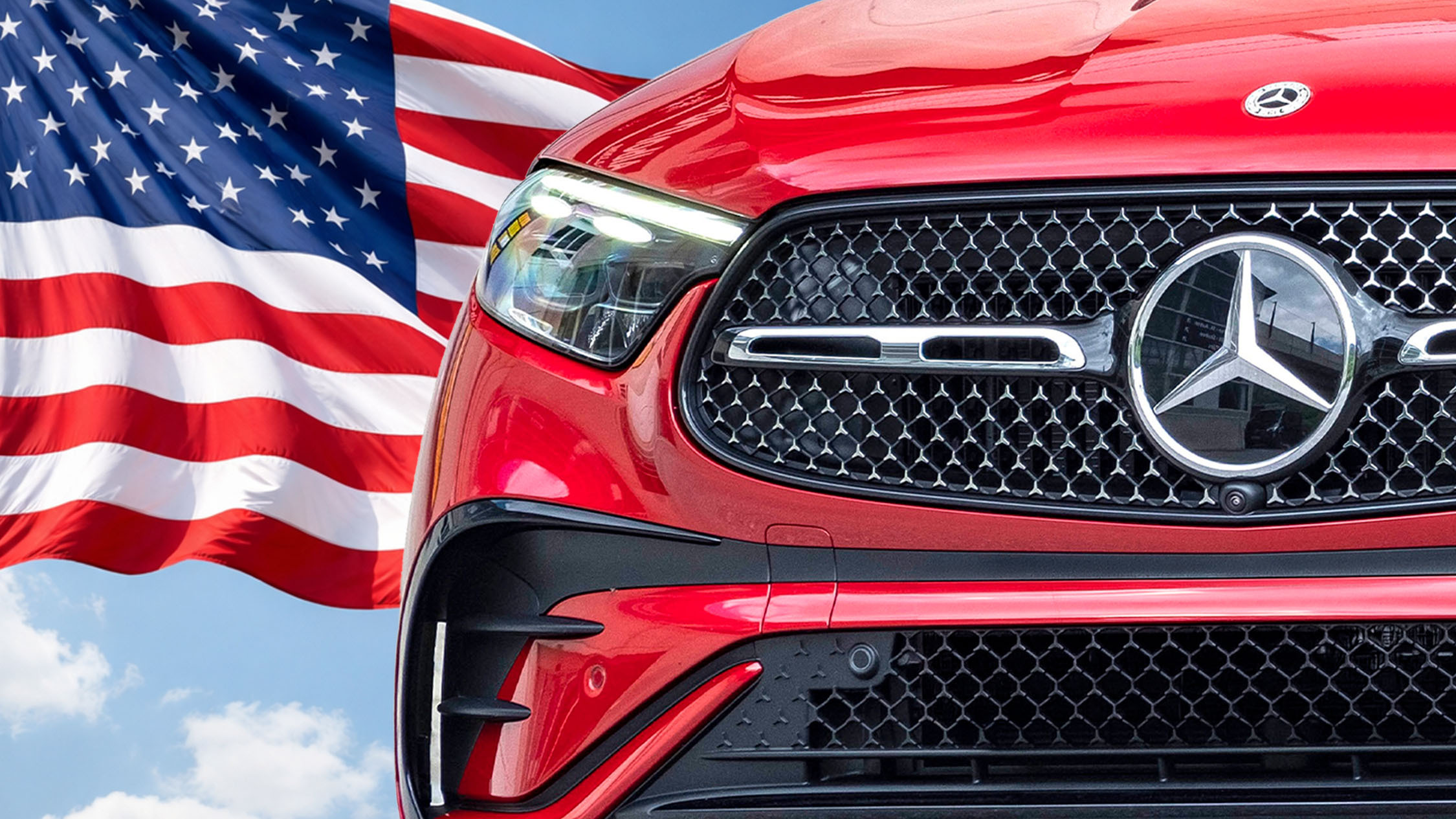
The Senate Commerce Committee has approved a bill designed to permanently lock in restrictions on Chinese-linked vehicles and components. A side effect of the ownership rules could force Mercedes-Benz out of the U.S. market because of its Chinese shareholders, though lawmakers say the company will have years to adapt.

.
A Bipartisan Push to Make China Restrictions Permanent
The Senate Commerce, Science, and Transportation Committee voted on July 22 to advance the Connected Vehicle Security Act of 2026, a bill sponsored by Senator Bernie Moreno (Republican, Ohio) and Senator Elissa Slotkin (Democrat, Michigan). The legislation would ban the import, manufacture, and sale of connected vehicles, along with related software and hardware, that are tied to China, Russia, Iran, or North Korea.
The bill's core purpose is to convert an existing Commerce Department rule from January 2025 into permanent law. That rule already restricts Chinese and Russian connectivity technology in vehicles, with software provisions set to take effect in 2027 and hardware provisions in 2030. Supporters argue that writing the ban into statute would prevent a future administration from simply reversing it. The measure has drawn backing from General Motors, the United Auto Workers union, and the CAR Coalition, an alliance of traditional automakers.
.
The Mercedes-Benz Problem
Buried in the bill is a clause that goes further than most people expected: it would bar any automaker with more than 15 percent Chinese ownership from selling connected vehicles in the United States at all. Mercedes-Benz, it turns out, does not clear that bar. Roughly 20 percent of the German company's shares are held by Chinese investors — about 10 percent by the state-owned BAIC Motor Corporation and another 10 percent by Geely chairman Li Shufu, according to Bloomberg reporting on the matter. Neither shareholder holds a board seat or has demonstrated operational control, but the raw percentage alone would be enough to trigger the ban.
Committee chairman Ted Cruz (Republican, Texas) flagged this problem directly, warning colleagues that the bill's current wording would sweep up Mercedes-Benz along with the Chinese automakers it was written to target. Senator Moreno responded that the company would have until 2030 to bring its ownership structure into compliance, and that waivers would remain available if needed.
Mercedes-Benz has reportedly been lobbying to raise the ownership cap to 25 percent — the same threshold the bill applies to suppliers of connected components — or to replace the fixed percentage with a broader national-security review that would weigh actual influence rather than a simple ownership number. That lobbying effort has not gone unnoticed: the House Select Committee on China publicly criticized the company on social media in mid-July, describing it as a Chinese-owned automaker that should not be shaping American legislation.
.
Why This Goes Beyond One Carmaker
The ownership threshold does not only affect Mercedes-Benz. Volvo Cars would technically fall under the same 15 percent line, though a grandfathering clause in the bill is expected to preserve its existing arrangement with the U.S. government, partly reflecting the roughly four billion dollars the company has invested in its Alabama plant through 2030. Smaller manufacturers with Chinese capital, including Faraday Future, Lotus, and Karma Automotive, could also be drawn into the same net depending on how exemptions are finalized.
Mercedes-Benz's stake in the U.S. is not trivial either. Its plant in Tuscaloosa, Alabama, has produced more than five million vehicles since it opened in 1997, and the company also runs a facility in South Carolina. A forced exit would be one of the most significant disruptions imposed on a foreign automaker in the U.S. market in years.
.
The Bigger Picture: A Broader Wall Against Chinese-Linked Vehicles
The bill fits into a wider pattern of Washington tightening the door on Chinese vehicle technology. Polestar, majority-owned by China's Geely, was already forced to stop U.S. sales after the Commerce Department denied it authorization under the existing connected-vehicle rule. A companion bill in the House, carrying a similar 15 percent threshold, is moving through committee separately and could ultimately need to be reconciled with the Senate version.
Beyond America's borders, Chinese automakers have continued to expand rapidly despite steep U.S. tariffs, gaining meaningful footholds in European and Mexican markets — in Mexico, Chinese brands now account for roughly 15 percent of new car sales. That expansion is part of why Washington lawmakers, across party lines, have pushed to close off the U.S. market entirely rather than rely on tariffs alone.
.
What Happens Next
Passing the Commerce Committee is only one step. The bill still needs a vote on the full Senate floor, while its House counterpart must clear three separate committees before both chambers can reconcile a final version. Given the current political momentum and the backing of major U.S. automakers and organized labor, analysts expect the legislation to keep moving, though the fate of the Mercedes-Benz ownership clause specifically remains unresolved and will likely be the subject of continued negotiation before any final vote.
.
Sources:
- Bloomberg — "Mercedes Pushes to Ease US Bill Targeting Automakers With Chinese Ownership": https://www.bloomberg.com/news/articles/2026-07-20/mercedes-looks-to-soften-bill-to-ban-automakers-with-china-ties
- CNBC — "Mercedes-Benz may be shut out of U.S. market under bill aimed at Chinese automaker ownership": https://www.cnbc.com/2026/05/29/mercedes-benz-ban-congressional-bill-china-ownership.html
- GovTrack.us — S.4429, Connected Vehicle Security Act of 2026: https://www.govtrack.us/congress/bills/119/s4429
- Congress.gov — S.4429 Bill Summary: https://www.congress.gov/bill/119th-congress/senate-bill/4429
- Office of Senator Bernie Moreno — Official bill announcement: https://www.moreno.senate.gov/newsroom/press-releases/moreno-slotkin-bill-to-ban-chinese-vehicles-connected-components-from-u-s-market/
.
What's Your Reaction?
 Like
0
Like
0
 Dislike
0
Dislike
0
 Love
0
Love
0
 Funny
0
Funny
0
 Wow
0
Wow
0
 Sad
0
Sad
0
 Angry
0
Angry
0












Comments (0)