

China Tightens Exit Bans, Citing Tech Security and National Interests
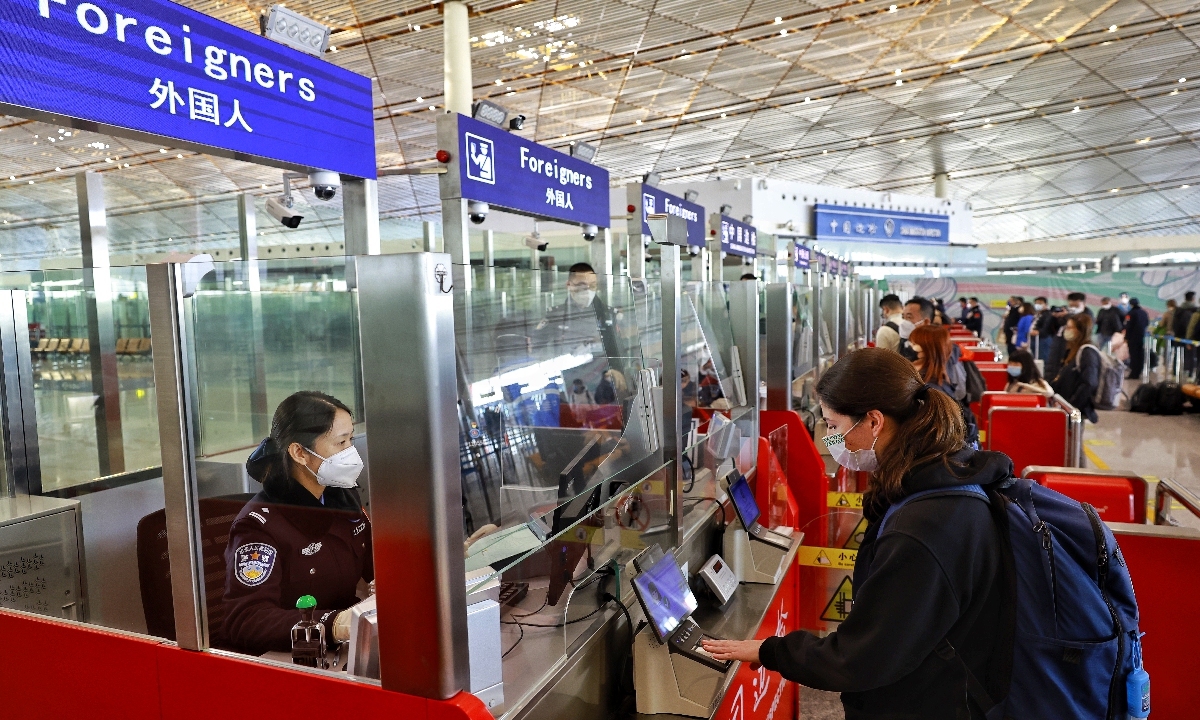
New Chinese border rules that took effect this week allow authorities to stop citizens from leaving the country if they are suspected of harming national security or violating technology export controls. The regulation, part of a broader overhaul of China's exit-and-entry system, also lets officials bar foreign nationals from entering for up to five years over false visa information. Legal experts and Taiwan's government say the rules hand security agencies wide new discretion, especially over people working in the tech sector.

.
New Rules Target "Illegal" Activity Abroad
China's revised exit-and-entry regulation took effect on Tuesday, giving border police the power to block citizens from leaving the country again if they engaged in illegal activity abroad that harmed national security. A citizen returning from such activity could face a travel ban lasting between six months and three years. The rule also covers violations of technology import and export controls, if those violations are judged to endanger industrial or technological security.
According to a summary of the measure, its stated purpose is to safeguard national sovereignty, security and development interests. The regulation is one of 19 articles issued by China's State Council in July and represents one of the most sweeping updates to the country's exit-and-entry framework since 2013.
.
What Changes for Travelers
Foreign nationals are affected too. Under the new rules, anyone who submits false information in a visa application, or at a Chinese port of entry, can be denied entry for one to five years. The regulation also introduces measures meant to stop citizens from being lured abroad and forced into gambling rings or online scam operations, a problem that has plagued parts of Southeast Asia in recent years.
Authorities are required to notify people if they are placed under an exit ban, though that notification can be withheld when a case involves national security or an active criminal investigation, according to legal analysis of the rules.
The trade and policy consultancy Trivium described the update as a clear signal of how seriously Beijing is treating the risk of sensitive technology and know-how leaving the country.
.
A Broader Push Against Tech Transfers
The tightened border controls arrive as China competes more directly with the United States in artificial intelligence, semiconductors and other advanced technology. Beijing blocked Meta's attempt to acquire the Singapore-based AI startup Manus, which has Chinese roots, earlier this year after the deal raised government concerns about transferring advanced technology abroad.
China has also worked to keep skilled engineers, particularly in the chip industry, from taking their expertise elsewhere. Taiwanese semiconductor specialists working on the mainland have said for years that they operate under close watch, given how central their knowledge is to keeping advanced chip factories running.
The competition over technology has intensified alongside broader U.S.–China trade friction, including tariff disputes and export restrictions on advanced computing chips imposed under the Trump administration, both of which have pushed Beijing to guard its own technological assets more tightly.
.
Taiwan and Rights Groups Raise Concerns
Taiwan's government, which Beijing considers part of Chinese territory, has urged its citizens to be cautious when traveling to the mainland under the new rules. A senior Taiwanese official overseeing China policy said the regulation formalizes border-control practices that previously had no clear legal basis, and gives enforcement agencies broader discretionary power — a particular concern, he said, for Taiwanese professionals working in the tech industry. Chinese authorities have rejected that criticism, saying the rules actually give Taiwanese travelers clearer legal protection.
Exit bans are not new in China. Rights advocates and foreign governments have documented cases over the years in which the tool was used against business executives, government employees and, at times, religious or political dissidents — including practitioners of Falun Gong, who have long reported travel restrictions tied to their beliefs. Just last month, a U.S. citizen and Myanmar researcher was detained in China on national-security accusations, underscoring how broadly such measures can be applied.
.
What Comes Next
The Cyberspace Administration of China, which also monitors online speech, has tried to reassure the public that the new rules are aimed at people involved in illegal cross-border activity, not ordinary travelers with legitimate reasons to go abroad. Still, legal advisers to multinational companies say the changes introduce fresh uncertainty for firms that rely on moving staff in and out of China, particularly in technology and semiconductor roles.
With the rules now in force, the coming months are likely to test how broadly Chinese authorities apply the new grounds for exit bans — and how much visibility travelers and companies will have when someone is stopped at the border.
.
What's Your Reaction?
 Like
0
Like
0
 Dislike
0
Dislike
0
 Love
0
Love
0
 Funny
0
Funny
0
 Wow
0
Wow
0
 Sad
0
Sad
0
 Angry
0
Angry
0














Comments (0)