

US and China Agree to Cut Tariffs on $30 Billion in Goods After High-Stakes Trump-Xi Summit
The United States and China have agreed to cut tariffs on roughly $30 billion worth of goods traded between the two countries. The deal followed a three-day state visit by Chinese President Xi Jinping to Washington and talks with President Donald Trump. It is one of eight agreements reached during the summit, alongside new coal purchases, an AI safety dialogue and a fresh investment council.

.
Washington and Beijing have taken a concrete step toward easing their long-running trade war. Following a three-day state visit by Chinese President Xi Jinping, the two governments announced they will lower tariffs on about $30 billion worth of goods traded in each direction.
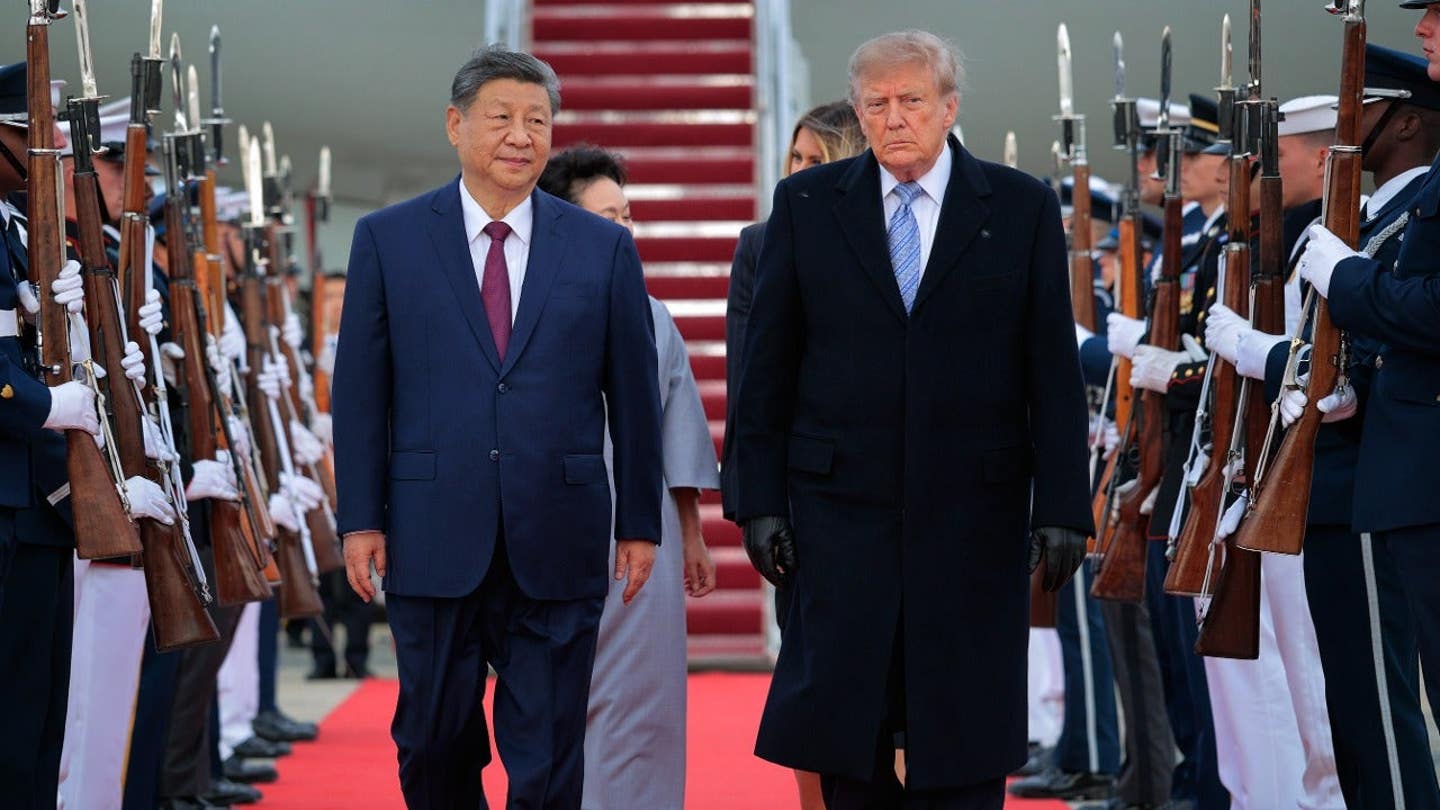
The announcement came at the close of a summit that mixed formal ceremony with substantive negotiation. President Donald Trump hosted Xi for meetings, a state dinner and a military review, while trade officials worked out the details behind closed doors.
.
What Was Agreed on Tariffs
According to a White House statement, the tariff cuts apply only to "non-sensitive goods" — products that do not touch on national security concerns such as semiconductors or advanced technology.
On the U.S. side, American exporters of agricultural products, seafood, timber, cosmetics and medical devices will get more favorable treatment when entering the Chinese market. In return, the U.S. will lower tariffs on Chinese-made small appliances, toys, holiday decorations and children's car seats.
U.S. Trade Representative Jamieson Greer told CNBC that the terms were the product of weeks of negotiation, and that fuller details, including exact tariff rates, would follow. Neither government has yet published a complete list of covered products.
.
A New Institution Behind the Deal
The tariff reductions were negotiated through the U.S.-China Board of Trade, a body first proposed during Trump's May 2026 visit to Beijing and formally launched this week in Washington. A companion body, the U.S.-China Board of Investment, was also established to work through investment disputes between the two countries.
Going forward, both boards are meant to give Washington and Beijing a standing channel for resolving trade friction, rather than relying solely on periodic summits.
.
Beyond Tariffs: Coal, AI and a Broader Package
The tariff agreement was just one piece of what Chinese officials described as an eight-point consensus reached during the visit. As part of the package, China committed to importing at least 10 million metric tons of American coal in 2027 and again in 2028 — a concrete boost for a U.S. industry the Trump administration has been trying to revive.
The two countries also agreed to open a dialogue on artificial intelligence, with a first session scheduled for November, and to set up a communication channel for handling AI-related incidents. Additional pledges touched on stabilizing global petroleum supplies, coordinating positions on Iran's nuclear program, and improving military crisis communication between the two powers.
.
How We Got Here: A Year of Tariff Escalation
The agreement marks one of the clearest de-escalations in a trade conflict Trump launched in February 2025, when he imposed a 10% tariff on all Chinese imports, citing Beijing's role in the fentanyl crisis and illegal immigration. China responded with its own tariffs on U.S. coal, liquefied natural gas, crude oil and vehicles.
Tensions peaked in April 2025, when U.S. tariffs on Chinese goods reached 145% after Trump's "Liberation Day" reciprocal tariff announcement. China answered with tariffs of up to 125% on American products, effectively freezing large parts of bilateral trade.
A truce followed in May 2025, when negotiators meeting in Geneva agreed to cut U.S. tariffs to 30% and China's to 10% for 90 days — an arrangement extended again in August. A further round of talks in South Korea in October 2025 saw China pledge to crack down on fentanyl precursor chemicals, resume soybean purchases and ease rare-earth export restrictions, in exchange for further U.S. tariff relief.
.
Reasons for Caution
Despite the progress, notable gaps remain. Rare-earth mineral exports — a persistent flashpoint given China's dominance of global supply — were not fully resolved; both sides said only that they would continue working toward restoring "appropriate" shipment levels.
There is also a track record of unmet promises to weigh against the new commitments. U.S. Agriculture Department data show China has fallen short of earlier pledges to buy American soybeans and other farm goods, a reminder that agreements with Beijing's centrally directed economy do not always translate into delivered results. Given the Chinese Communist Party's history of using trade as a lever of state policy, independent verification of the new coal and tariff commitments will matter as much as the announcement itself.
.
What Comes Next
Both governments say they will continue using the Board of Trade to pursue further tariff reductions and resolve other disputes, leaving the door open to a broader agreement in the months ahead. The two leaders also agreed to meet again at the APEC summit in Shenzhen in November and at the G20 summit in Florida later this year.
For the Trump administration, the deal represents a tangible, if partial, win in its effort to rebalance trade with China while avoiding a full economic rupture between the world's two largest economies. Whether it holds will depend on follow-through from Beijing in the months ahead — something officials on both sides say will become clearer once full tariff rates are published, expected as early as next week.
.
Sources
- Axios – "U.S., China reach $30 billion tariff deal after Trump-Xi summit": https://www.axios.com/2026/09/26/us-china-tariffs-trade-30-billion
- The Hill – "US, China agree to cut tariffs on $30 billion worth of goods, set up channel for AI incidents": https://thehill.com/homenews/administration/6112947-donald-trump-xi-jinping-tariffs/
- Fortune – "China and the U.S. agree to set up a new AI safety channel...": https://fortune.com/2026/09/26/china-us-new-ai-safety-channel-pledge-tariffs-cuts-30-billion-goods/
- Business Standard (via Bloomberg) – "US says China agreed to buy 10 million tonnes of coal in 2027, 2028": https://www.business-standard.com/world-news/us-says-china-agreed-to-buy-10-million-tonnes-of-coal-in-2027-2028-126092600597_1.html
- TRT World – "Xi-Trump talks yield plan for reciprocal tariff relief on $30B in goods": https://www.trtworld.com/article/9d1499e58cd1
.
What's Your Reaction?
 Like
0
Like
0
 Dislike
0
Dislike
0
 Love
0
Love
0
 Funny
0
Funny
0
 Wow
0
Wow
0
 Sad
0
Sad
0
 Angry
0
Angry
0













Comments (0)