

Trump's Venezuela Oil Deal: A Blow to Communism's Last Foothold in Latin America
The Trump administration has secured majority U.S. control over more than 65 billion barrels of Venezuelan oil reserves in a deal negotiated with interim President Delcy Rodríguez. Backers call it a historic chance to pull Venezuela out of decades of socialist collapse and Cuban, Russian and Chinese influence. Critics call it exploitation. Independent reporting shows both the deal's real promise and its unresolved risks.

.
A Country Built by Oil, Wrecked by Ideology
Venezuela sits on more oil than any other nation on earth — over 300 billion barrels, according to the U.S. Energy Information Administration. Yet for two decades, that wealth barely reached ordinary Venezuelans.
Under Hugo Chávez and later Nicolás Maduro, the state oil company PDVSA was stripped for parts. Foreign investors, including major American firms, were pushed out or nationalized. Chevron was the lone big U.S. company that stayed.
The result was predictable. Production collapsed, infrastructure crumbled, and millions of Venezuelans fled the country. Meanwhile, Havana, Moscow and Beijing filled the vacuum left by fleeing Western capital — through intelligence cooperation, arms sales and loans that bound Caracas ever closer to authoritarian patrons.
That backdrop matters for understanding why the new oil agreement is being treated as more than a business transaction.
The Deal: What Was Actually Agreed
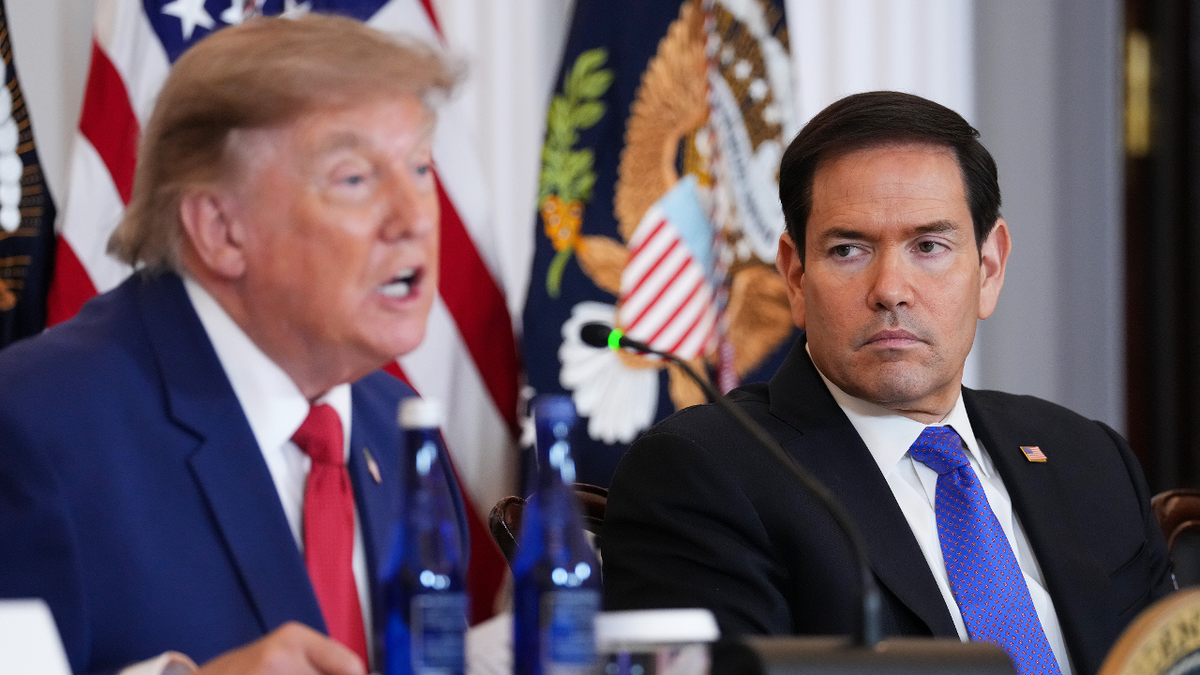
President Trump announced the agreement on his Truth Social platform in late August 2026, calling it the "biggest oil deal in world history." According to Trump, the arrangement gives the United States majority control of more than 65 billion barrels of Venezuela's proven oil reserves, negotiated by Secretary of State Marco Rubio and Secretary of War Pete Hegseth working with Venezuela's interim government.
Interim President Delcy Rodríguez confirmed the outline: development of 17 oil fields with a proven potential of 65 billion barrels, an investment target of roughly $100 billion, and projected tax revenue for Caracas exceeding $200 billion. According to a U.S. official cited by NPR, the new joint venture would give the United States a 55% effective stake in output, including ownership rights and the ability to purchase oil at cost, with the crude flowing toward the U.S. strategic petroleum reserve and military use.
Rodríguez separately said the initial 25-year deal targets production of 1.5 million barrels per day, with plans to later develop eight additional untapped fields (so-called "greenfield" sites, meaning oil fields not yet developed).
The precise legal structure, however, remains murky. Trump's own announcement did not disclose which private companies would operate the fields, and reporting from Al Jazeera noted the White House gave no detail on the structure of the agreement or how majority control would actually be exercised.
Why the Timing Matters
The deal follows a dramatic year in Venezuelan politics. In January 2026, U.S. forces captured Maduro, who now faces narco-terrorism charges in the United States. Delcy Rodríguez, his former vice president, assumed the presidency and has since moved to open the long-closed oil sector to private and foreign capital — reversing one of Chavismo's founding principles.
Since then, the Trump administration has eased sanctions, pushed U.S. energy executives to re-enter the country, and pressed Caracas on human rights. According to the White House's own account of the deal, negotiations were tied to reconciliation talks between Venezuela's opposition-led 2015 National Assembly and the interim government — talks that have already produced judicial reforms and the release of hundreds of political prisoners.
Independent reporting confirms genuine, if incomplete, progress. The Associated Press noted that Rodríguez's government has released over 200 detainees, though human rights monitors estimate hundreds more remain jailed. Opposition leader María Corina Machado, the 2024 Nobel Peace Prize laureate who documented Maduro's stolen election, has still not been allowed to return to the country.
The Case For: Ending a Communist Beachhead
Supporters of the deal argue it does something sanctions and diplomacy never achieved: it makes it economically costly for any future government to swing Venezuela back into the orbit of Havana, Moscow or Beijing.
For years, cut-rate Venezuelan oil functioned as a lifeline for Cuba's communist government, while Chinese loans and Russian arms deepened Caracas's dependence on authoritarian patrons. A binding, decades-long American commercial stake changes those incentives. It ties Venezuela's most valuable resource to a Western partner with the capital and technology to actually rebuild the shattered industry — something experts quoted by PBS say will take years and enormous sums regardless of who controls it.
Rubio has framed the strategy publicly as leverage rather than occupation: stabilize the country, rebuild the industry under fair terms, and use that footing to press for elections and the rule of law. The administration points to results already on the ground — Maduro's removal, eased sanctions, prisoner releases and cooperation on post-earthquake reconstruction — as evidence the approach is working faster than years of "engagement" with Maduro ever did.
The Case Against: Legitimacy and Exploitation Concerns
Not everyone is convinced. Democratic Senator Chris Van Hollen has publicly described the arrangement as a resource grab, calling the U.S. military action that preceded it "a reckless act of war to grab Venezuelan oil for US oil companies."
Critics also raise a legal question: can an unelected interim government legitimately sign a 25-to-100-year concession binding the country's most valuable asset? The Hill reported that some opposition figures argue the deal cannot be properly enforced given Rodríguez's own contested legitimacy as head of government. Reconciliation talks between the interim authorities and the 2015 National Assembly, intended to address exactly this gap, only began in August and remain at an early stage.
There are also practical doubts. Experts interviewed by PBS and The Hill caution that Venezuela's oil infrastructure is so degraded that a meaningful production increase will take years, regardless of who signs the paperwork — meaning the deal's economic benefits, for both countries, are more a long-term bet than an immediate windfall.
What Comes Next
The agreement is a foundation, not a finished transition. Several benchmarks will determine whether it becomes a genuine turning point for Venezuela or simply a new arrangement layered on top of old problems:
- Prisoner releases. Hundreds of political detainees reportedly remain jailed despite the releases secured so far.
- Elections. Trump has said Venezuela is "not ready yet" for elections; no firm timeline exists.
- Revenue oversight. The White House says U.S. audit and monitoring provisions will track how oil revenue is spent, aiming to prevent it from re-financing the old patronage system.
- Machado's return. Her continued exclusion from the country remains a flashpoint for the opposition.
Whether the deal ultimately curbs communist influence in the Western Hemisphere or becomes a new source of controversy will depend less on the size of the numbers announced in August than on what happens in Caracas over the next several years.
.
Sources
- NPR / Associated Press — "Trump says U.S. has entered deal with Venezuela to take control of 65 billion barrels of oil reserves": https://www.npr.org/2026/08/28/nx-s1-5948229/trump-says-u-s-has-entered-deal-with-venezuela-to-take-control-of-65-billion-barrels-of-oil-reserves
- PBS News — "What we know about Trump's deal giving U.S. access to vast oil reserves in Venezuela": https://www.pbs.org/newshour/politics/what-we-know-about-trumps-deal-giving-u-s-access-to-vast-oil-reserves-in-venezuela
- Al Jazeera — "Trump announces 'biggest oil deal in world history' with Venezuela": https://www.aljazeera.com/news/2026/8/29/trump-announces-biggest-oil-deal-in-world-history-with-venezuela
- Fox Business — "Venezuela says Trump's historic oil deal targets 1.5M barrels per day, could generate $200B": https://www.foxbusiness.com/energy/venezuela-says-trumps-historic-oil-deal-targets-1-5m-barrels-per-day-could-generate-200b
- The Hill — "Trump touts Venezuela deal, but political, logistical hurdles stand between US and oil": https://thehill.com/policy/energy-environment/6062147-trump-touts-venezuela-deal-but-political-logistical-hurdles-stand-between-us-and-oil/
- The National (UAE) — "Trump's Venezuela oil deal gives US access to vast reserves as Iran war drives energy concerns": https://www.thenationalnews.com/news/us/2026/09/01/trumps-venezuela-oil-deal-gives-us-access-to-vast-reserves-as-iran-war-drives-energy-concerns/
.
What's Your Reaction?
 Like
0
Like
0
 Dislike
0
Dislike
0
 Love
0
Love
0
 Funny
0
Funny
0
 Wow
0
Wow
0
 Sad
0
Sad
0
 Angry
0
Angry
0














Comments (0)