

Those 3-Minute Micro Drama Videos? You Might Be Watching CCP Propaganda

.
President Donald Trump falls in love with a White House cleaner, for whom he is determined to leave his wife—it’s the plot of a fake micro drama that supposedly took U.S. housewives by storm and raked in $203 million in revenue.
The micro drama, its supposed popularity, and its massive revenue, reported by multiple Chinese media outlets in late July, all turned out to be fake news. However, as viewers become increasingly obsessed with micro dramas, China experts told The Epoch Times, the mobile-first entertainment format has become a key propaganda tool for the Chinese Communist Party (CCP) to direct nationalist sentiment in China and to influence overseas viewers.
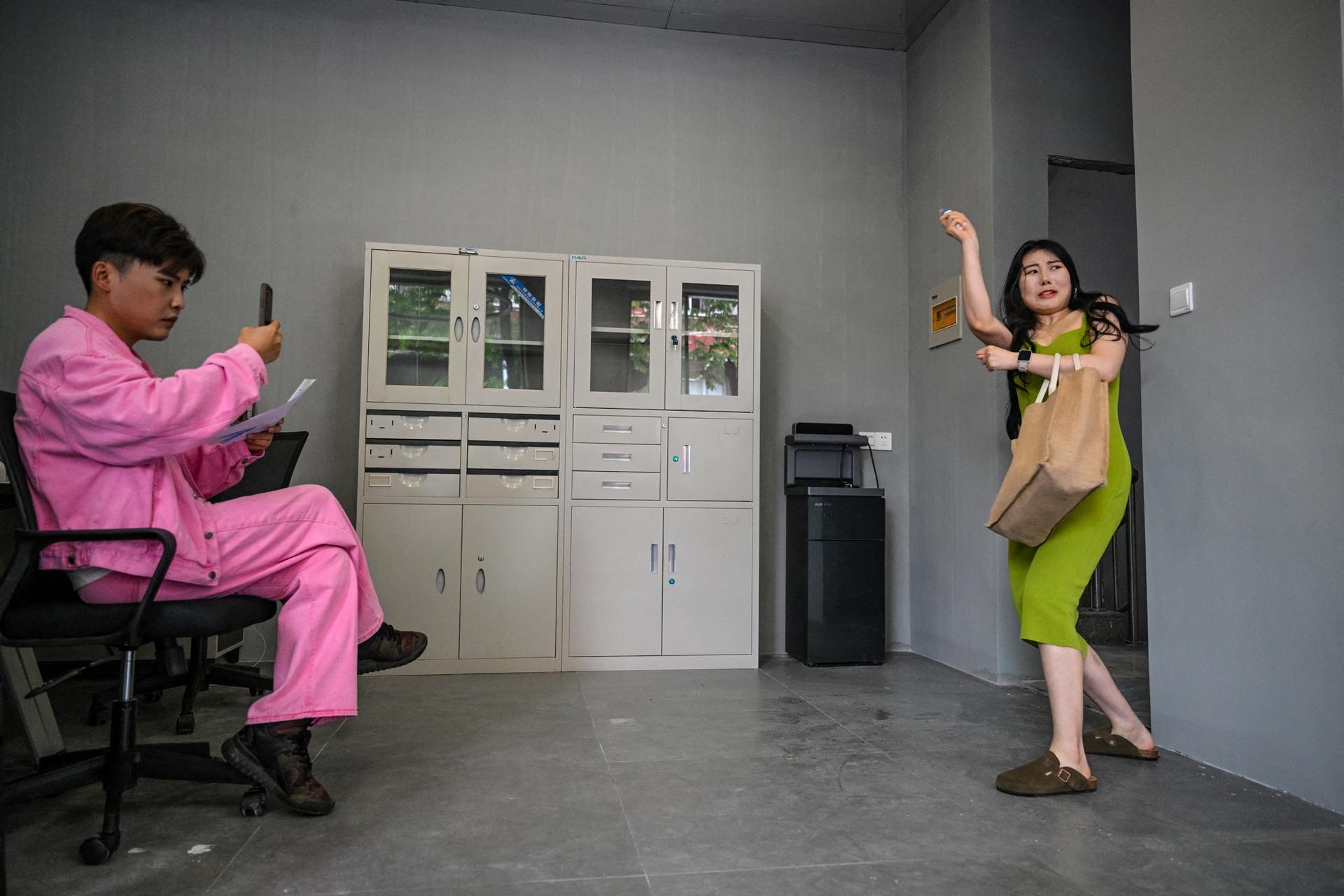
Micro dramas, also known as Verticals because most are shot vertically to fit mobile phone screens, are serialized short videos. They typically feature one- to three-minute-long episodes with twists and turns to entice viewers to pay to find out what happens next.
Common themes of the stories include romance, which often involves a working-class girl and a secret billionaire; and revenge, where an underdog heroine emerges victorious after becoming rich and powerful.
On micro drama apps and social media platforms including YouTube, TikTok, Facebook, X, and Instagram, titles such as “Summer Honeymoon With My Secret Billionaire,” “Doctor Boss Is My Baby Daddy,” and “What Doesn’t Break Me” have amassed tens of millions of views.
A Growing Market
The industry first boomed in China, where investors embraced the new format, which is much cheaper to make and can bring in returns faster than traditional films and TV shows.According to iiMedia Research, in 2023, the size of the Chinese online micro drama market was $ 5.25 billion, more than double the size in 2022. It is projected to reach more than $14 billion in 2027.
Ever since the U.S. short video platform Quibi failed to take off in 2020, Chinese players have dominated the global market.
By March, there were 237 Chinese micro drama apps in overseas app stores, Chinese state-owned media Guangming Daily said in August.
Censorship
In China, online media are regulated by a plethora of state agencies, most notably, the National Radio and Television Administration (NRTA), China’s state organ for media regulation and censorship, and the Cyberspace Administration of China. Both are headed by deputy leaders of the CCP’s Publicity Department, also known as the Central Propaganda Department.The agencies are required to “adhere to the correct political direction, public opinion orientation, value orientation, and aesthetic taste,” and to “adhere to the principle of Party control over the media.”
Following the announcement, NRTA launched a targeted campaign to censor micro dramas. By November 2023, tens of thousands of series, or more than 170 million episodes, were purged for allegedly “containing pornographic, vulgar, bloody, violent, low-brow, aesthetically unpleasant,” or “harmful” content, according to state media CCTV.
From June 2024, the regime formally included micro dramas in its censorship system. In February, NRTA reiterated the requirement to implement the system, warning that unlicensed or unregistered micro dramas are not allowed to be published or promoted.
Sheng Xue, a Toronto-based writer and Chinese human rights activist, told The Epoch Times that the CCP is worried that content that satirizes reality, expresses grievance, or shows drastic emotions may lead to mass social discontent.
.

Tang Jingyuan, a U.S.-based physician and current affairs commentator, said the regime is anxious about any popular forms of media.
“Be it micro drama or other formats, they could all bring about the free flow of information and spread information that the CCP doesn’t want people to see,” he told The Epoch Times.
Red Tourism and Going Global
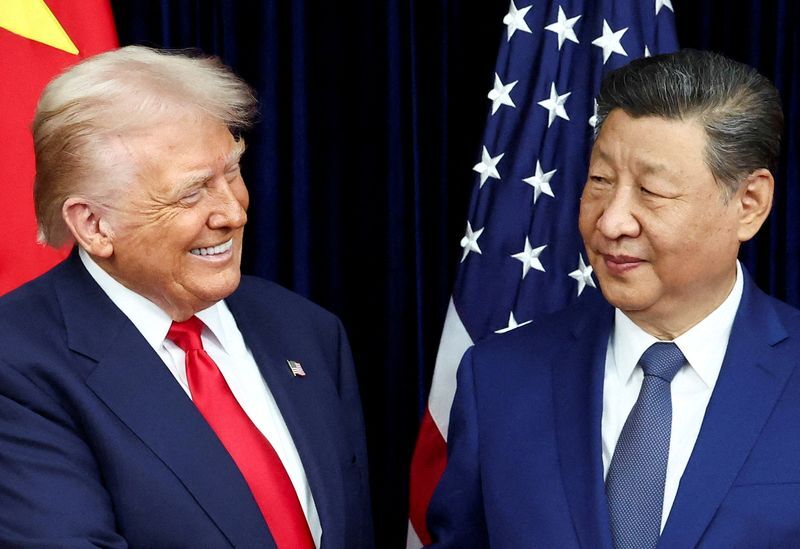
While censoring micro dramas, the CCP has also sought to capitalize on the popularity of the new media, encouraging creators to promote red tourism and socialist ideology, and to “go global” by handing out subsidies, holding forums, and organizing contests.Telling “China’s story” is part of the CCP’s United Front strategy aimed at gaining support from domestic non-party members and increasing the regime’s soft power abroad. The phrase was popularized following a speech given by Chinese leader Xi Jinping, who told Party members to “do well in telling China’s story and spreading China’s voice.”
Themes of the competition include the modernization of China, “green” China, Chinese cultural heritage, and stories about how the regime works with the world to “build a community with a shared future for mankind"—another CCP mantra that was described by Chinese Foreign Minister Wang Yi as “the core tenet of ‘Xi Jinping Thought on Diplomacy.'”
The phrase “community with a shared future” was used in 2007 by former Chinese leader Hu Jintao to describe China and Taiwan. He expanded the term to include “all mankind” the following year, while his successor, Xi, integrated it into a core part of the CCP’s diplomatic narrative.
.

In Xi’s multiple speeches delivered at the United Nations, whose titles are variations of “building a community with a shared future for mankind,” the communist leader has spoken against U.S. hegemony, promoted multipolarity, and decried “imperialism, colonialism, and hegemonism.”
For domestic micro drama viewers, Chinese local authorities launched dozens of campaigns in the past year, using the new media format to promote stories of so-called red landmarks—such as sites with CCP-linked historical events and residences of Party elders. They also include places that boast intangible cultural heritage such as weaving, incense making, paper cutting art, pottery mending, and local-style operas.
Kung Shan-Son, an associate research fellow at Taiwan’s state-funded Institute for National Defense and Security Research (INDSR), said that the CCP’s purpose of promoting intangible cultural heritage goes beyond boosting China’s cultural influence abroad.
“What’s more important is to garner nationalist sentiment in China, which can in turn be translated into support for the communist rule,” he told The Epoch Times.
Tang said red tourism has been an essential means for the CCP to achieve multiple ends, including “improving the party’s image domestically and globally,” “covering up and revising the CCP’s criminal record,” and “inciting anti-America or anti-Japanese sentiment,” when the regime needs it.
INDSR research fellow Shen Ming-Shih said that the regime has officially adopted micro dramas as a key tool in its united front strategy.
Propaganda “will be packaged and camouflaged, but as the CCP makes more of such content, it will inevitably take the space of normal micro dramas ... and spread political narrative or disinformation worldwide,” he said.
Referring to the fake viral drama about the U.S. president, Sheng said the incident shows the potential for micro dramas to become a tool to influence public opinion globally.
“The CCP could use the format to create false issues or incorporate political innuendos to influence overseas people’s perception of their own country’s political or social issues,” she said. “With the advancement of generative AI, the risk will increase.”
.
What's Your Reaction?
 Like
0
Like
0
 Dislike
0
Dislike
0
 Love
0
Love
0
 Funny
0
Funny
0
 Wow
0
Wow
0
 Sad
0
Sad
0
 Angry
0
Angry
0













Comments (0)