

Power Play: China’s Mega-Dam Isn’t Needed for Electricity, Says Hydrologist


A Chinese hydrologist has described China’s new mega-dam project in the Tibet Autonomous Region as a political endeavor of communist leader Xi Jinping aimed at reviving national pride rather than safely addressing the country’s energy needs.
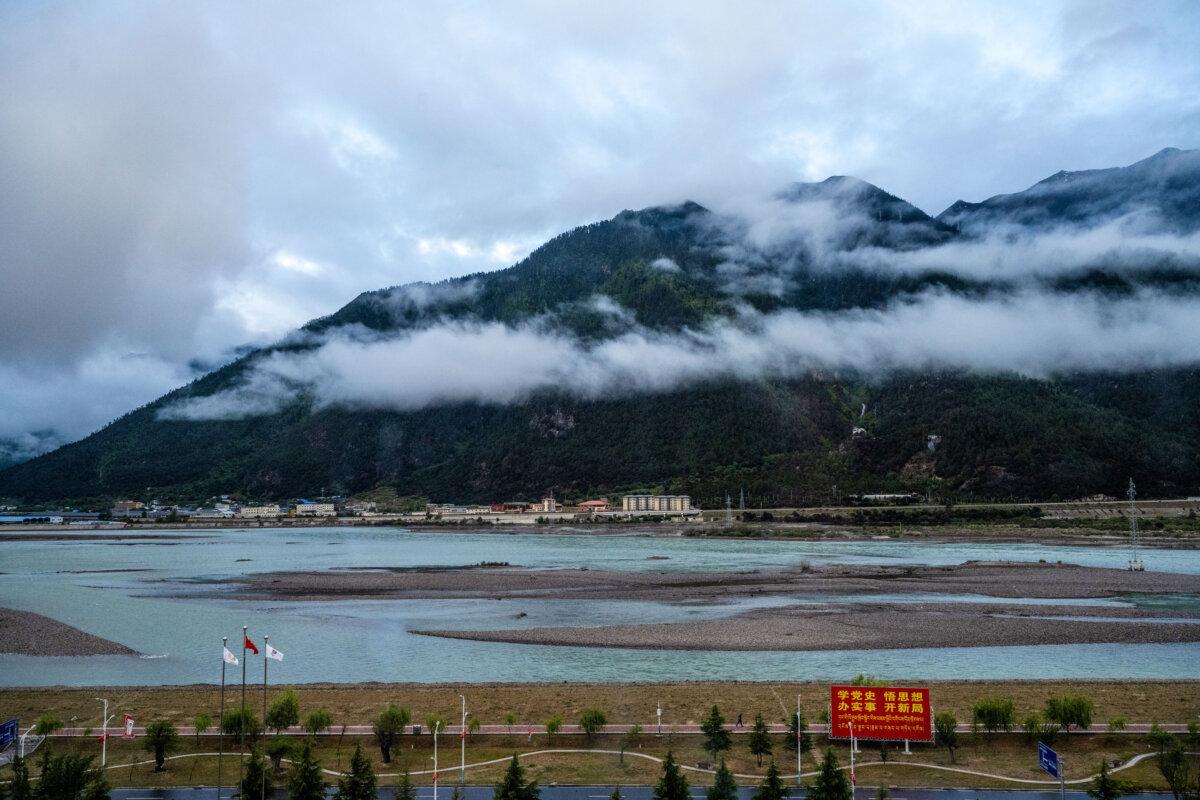
Formally known as the Motuo Hydropower Station, or Medog to Tibetans, the $167 billion dam project in Motuo (Medog) county along the Yarlung Tsangpo River—the headwaters of Siang River in the Indian state of Assam, which then flows on to become India’s Brahmaputra River and Bangladesh’s Jamuna River—was officially approved in December 2024, with construction formally launched on July 19 of this year.
Chinese authorities have framed the project as a key source of renewable energy to support the country’s carbon neutrality goals, as well as a means to drive industrial growth and create jobs in Tibet.
Once completed, the Motuo mega-dam is expected to claim the title of the largest hydroelectric dam in the world, with a projected annual output of 300 terawatt-hours (TWh)—far surpassing the current 112 TWh record held by China’s own Three Gorges Dam.
China Has Surplus Electricity
China currently produces more electricity than its population is using, hydrologist Wang Weiluo, who currently resides in Germany, told The Epoch Times in an interview.“There’s simply no need to build a new hydropower station on the lower reaches of the Yarlung Tsangpo,” the renowned hydraulic engineer with extensive knowledge of dam safety, reservoir management, and flood risk in China said. “China currently has a power surplus. Many solar power facilities are underutilized.”
According to the 2024 China Power Market Development Report, the country generated a total of 10,090 TWh of electricity that year, while total consumption stood at 9,850 TWh trillion—an excess of around 240 TWh, which is more than double the annual output of the Three Gorges Dam.
“These figures clearly show that China is not suffering from a power shortage. There’s no energy-based justification for launching the Motuo project,” Wang said of the high risk plans due to the tectonic instability of the region posing huge structural risks to the project. “The dam is not being built to address power shortages in Tibet, nor to meet China’s national electricity demands.”
While China has an excess in electricity, it remains a net importer of fossil fuels, particularly oil and gas.
Instead, Wang said, Xi’s main consideration in pushing ahead with the Motuo project is so that China can hold onto its status as the world leader in large-scale hydropower—a position now being threatened by the DRC’s planned mega-dam.
Overtaking Itaipu Dam
Wang said that the Three Gorges Dam was originally designed in order to surpass the Itaipu Dam, located on the border of Brazil and Paraguay, which long held the record for the world’s top hydroelectric producer since its first generating unit went into operation in 1984.China began construction of the Three Gorges Dam in December 1994. The dam structure was completed in 2006, and the power station became fully operational by 2009, with all generating units in service.
Since then, the two dams have competed for global dominance, with Three Gorges holding the top spot for electricity produced since 2017.
“The Three Gorges Project set over 100 world records. The CCP was immensely proud of it, and many ordinary Chinese felt the same,” Wang said. “But when you consider the scale of forced relocation, the total cost of construction, the post-project problems, and the burden of the Three Gorges Fund, there is really nothing to be proud of.”
While many Chinese join the CCP to celebrate this “world first” position, Africa’s Grand Inga Project is quietly gaining momentum. With serious feasibility studies and development planning underway since the early 2000s, Motuo will be a five-dam system connected by four 20 kilometer-long (12.5 mile-long) tunnels bored through the Namcha Barwa mountain, projected to deliver an installed capacity of 40–44 gigawatts and an annual output of 250–300 TWh to surpass the Three Gorges Dam in all metrics, according to China’s Global Energy Interconnection platform.
Plans for dam projects in Tibet also trace back to the early 2000s. The Tibetan regional authorities eventually approved hydropower development of the Yarlung Tsangpo area in 2020. China’s central authorities included the project in China’s 14th Five-Year Plan in March 2021. That July, Xi personally visited Nyingchi in Tibet, inspecting a potential dam site on the river’s lower reaches, Chinese state media reported.
“The number one goal of constructing the Yarlung Tsangpo dam is to secure China’s leading position in global hydropower,” Wang said. “It aims to reclaim two threatened ‘world number one’ titles in hydropower: the largest installed capacity and the highest annual output.”
.
Economic Motivations
Taiwanese scholar Hsu Shih-Jung told The Epoch Times that he also remains skeptical of Beijing’s assertion that the Motuo Dam project is primarily intended to generate even more electricity or to contribute to China’s carbon neutrality targets.In his view, beyond its political ambitions, the CCP may also view the proposed Motuo Dam as a means to absorb China’s excess industrial capacity in the sectors of steel, cement, and heavy machinery.
Feasibility Concerns, Ecological Impact, Cross-Border Effects
Wang has been a vocal critic of the Yarlung Tsangpo hydropower project ever since China formally began considering it in 2020. However, his opposition is not primarily due to the project’s image-driven nature but rather two more pressing concerns.Fan published his report in October 2022 but it was quickly censored and removed from the internet. Fortunately, some overseas websites preserved a copy of the report before it was removed by China.
Wang’s second concern is the ecological disturbance the project would bring to one of the most biodiverse but environmentally fragile areas on Earth, as the dams would divert much of the river’s water into tunnels to generate electricity. This would significantly alter downstream water and sediment flows. Such material from the mountains naturally fertilizes farmland in the Ganges delta during monsoon season and shapes marine life in the Bay of Bengal.
The Yarlung Tsangpo region is the only place in China where Bengal tigers are found and is often described as an “ecological treasure trove” or a “living museum” of plant diversity. It is home to numerous rare and endemic plants of national and global significance, including the Motuo orchid, Himalayan yew, and Motuo rhododendron.
Hsu shared similar concerns, emphasizing that projects of this magnitude carry wide-ranging impacts and require comprehensive, multi-dimensional evaluations.
Border concerns are a significant issue in India-China relations. The two countries have a history of conflict, including a war in the 1960s that left behind a disputed border, as well as more recent skirmishes along that boundary. The dam site is located within this contested area. Infrastructure projects in disputed regions are often seen as strategic maneuvers, further escalating military tensions between the two nations. [delete]
Therefore, for India, the construction of a dam upstream by an adversarial neighbor is particularly troubling. Experts and Indian officials have expressed fears that, in a worst-case scenario, China could manipulate the flow of water with the dam—either by withholding water to cause scarcity or by releasing large volumes suddenly to trigger downstream flooding in India. [delete]
In response, India is even planning to build its own dam on the Brahmaputra—with a proposed storage capacity of nine billion cubic meters—specifically designed to act as a buffer and mitigate sudden water surges from China. This plan has also been criticized for risks to its structural stability and environmental impacts. [delete]In a recent interview with The Epoch Times, Li Yuanhua, a former professor at Capital Normal University in Beijing and now a resident of Australia, echoed Hsu’s view that broader evaluations are necessary for a project of this scale.
However, he added, such expectations are merely wishful thinking under the CCP.
“We do not expect the CCP to carry out any responsible or objective assessments,” he said.
Li went on to say that the CCP always acts based on short-term interests, without any long-term planning. Large-scale projects like this one are driven not only by the fantasies of Party leaders but also by mid- and high-level officials who eagerly embrace them.
“Such projects involve massive investments, creating greater opportunities for corruption and personal gain,” he said. “Whether these projects benefit society or cause long-term harm is simply not part of their consideration.”
.
What's Your Reaction?
 Like
0
Like
0
 Dislike
0
Dislike
0
 Love
0
Love
0
 Funny
0
Funny
0
 Wow
0
Wow
0
 Sad
0
Sad
0
 Angry
0
Angry
0












Comments (0)