

Peruvian Court Ruling Blocks Regulatory Oversight of Chinese Controlled Strategic Latin American Port


.
A ruling by a judge prohibiting a Peruvian regulatory body from inspecting the Port of Chancay, controlled by a Chinese state-owned company, has raised concerns about China’s growing influence in Latin America.
Analysts said that the Chinese-run port in Peru could pose a national security threat in the event of hostilities between the Chinese regime and the United States.
On Feb. 16, Ernesto Álvarez Miranda, the then-president of Peru’s Council of Ministers, equivalent to the country’s prime minister, expressed concern about a new ruling by a Peruvian judge that could increase the control that a Chinese state-owned company with ties to the country’s military sector exercises over the strategic port of Chancay. Hernando de Soto, an economist, was named president of the Council of Ministers on Feb. 23 to be sworn in the next day.
This came after the Jan. 29 ruling by the Superior Court of Justice of Lima in Peru, in which Judge Juan Carlos Nuñez Matos prohibited a government regulatory body, the Supervisory Agency for Investment in Public Transportation Infrastructure (Ositrán), from inspecting the port.
Verónica Zambrano, president of Ositrán, told The Epoch Times that from a constitutional point of view, it is possible to “understand that there would be a threat to the sovereignty and jurisdiction of the state.”
The State Department’s Bureau of Western Hemisphere Affairs said in a Feb. 11 post on X that the U.S. government is “Concerned about latest reports that Peru could be powerless to oversee Chancay, one of its largest ports, which is under the jurisdiction of predatory Chinese owners.”
“We support Peru’s sovereign right to oversee critical infrastructure in its own territory,” the department said.
The Ruling
According to the ruling, Ositrán must “refrain from exercising—directly or through its departments or affiliated technical bodies—its regulatory, supervisory, oversight, and sanctioning powers with respect to the operations and activities of the plaintiff within the Chancay Multipurpose Port Terminal.”The court decision was a response to a lawsuit filed by Chinese state-owned company Cosco Shipping against Ositrán and the presidency of the Council of Ministers in late 2024, in which the company claimed that the government agency’s supervision of the port violated its rights to control the infrastructure.
.
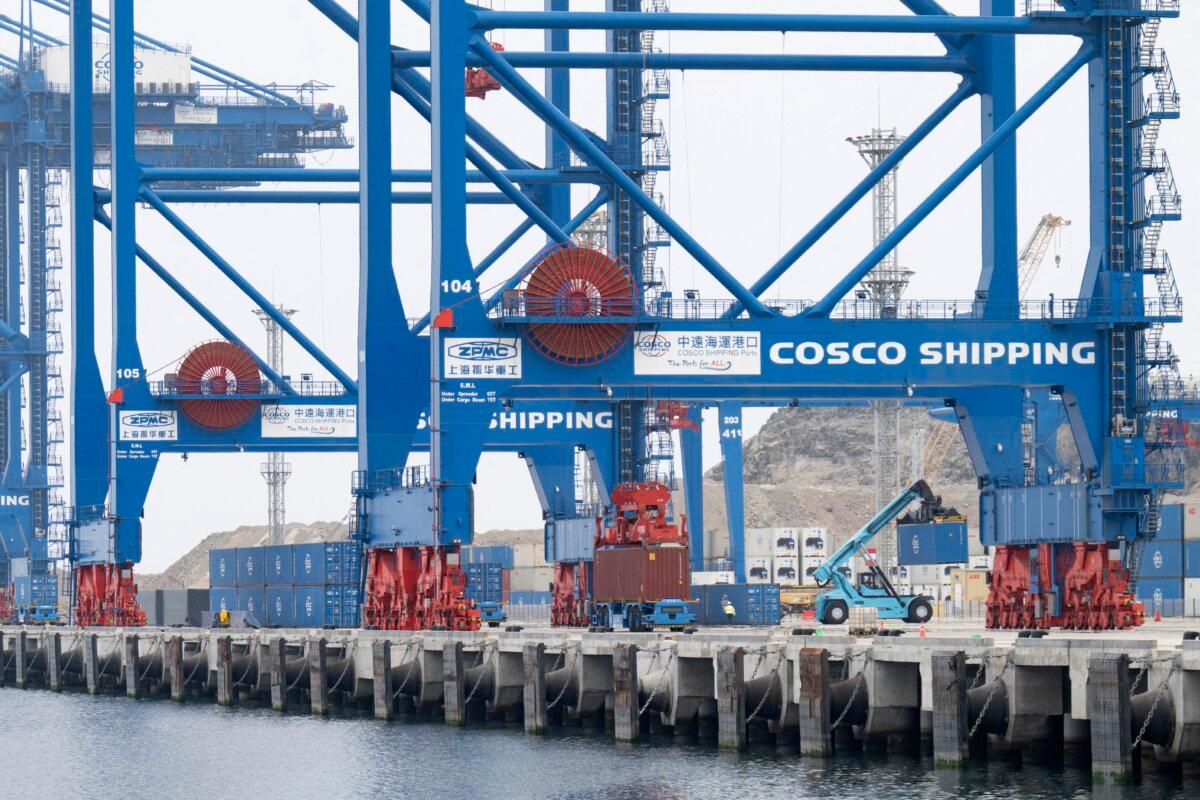
The president of Ositrán stated to Epoch Times that in defending its case, the Chinese state-owned company was selectively choosing Peruvian legislation and ignoring laws that preserve Ositrán’s functions to supervise the port of Chancay.
Considering these other laws, “all of Ositrán’s functions for public use terminals are maintained, that is, the functions of supervision, regulation, inspection, and sanctioning.”
According to Zambrano, “it is unacceptable that such functions, arising from different laws, can be removed at the whim of a judge.”
According to the president of Ositrán, the case is even more important because the company’s claim that it shouldn’t be subject to regulatory supervision is unprecedented in the country.
“All port terminals in Peru, with the exception of the port of Yurimaguas, were built with private investment,” said Zambrano.
She said the only difference between these ports and the port of Chancay, besides the fact that they have a concession contract, is that in the concessioned terminals, they receive the areas for the construction of the entire port, both on the maritime and land sides, from the state.
In the case of Cosco Shipping, it already owned the land area and then received the maritime area from the state.
“In other words, not all of the project is developed exclusively on private property, but also on state-owned land,” Zambrano said.
Previous Controversies
According to the ruling, technical, operational, and safety supervision of the port will be carried out by the same body that licensed Chancay, the National Port Authority (ANP).However, the National Port Authority has already been involved in controversies linked to Cosco.
In 2024, in the final months of the port’s construction, the ANP discovered that the contract signed with the Chinese state-owned company contained clauses that granted Cosco an “exclusive right to use essential services,” giving Cosco almost exclusive control of the port.
“In 2021, the company requested and obtained a Port License, in which it was improperly granted exclusivity for the operation of essential services, when there was no legal framework for this,” said Zambrano.
At the time, the Port Authority attempted to rescind this clause of the contract, claiming that it was an “administrative error” since they did not have the authority to approve this clause and because it violated the country’s laws.
Cosco, however, insisted on maintaining the contract as it was, threatening to withdraw its investment from the port and resort to international arbitration.
As a result, the Peruvian authorities amended their national legislation to allow an agreement that would previously have been considered illegal.
.
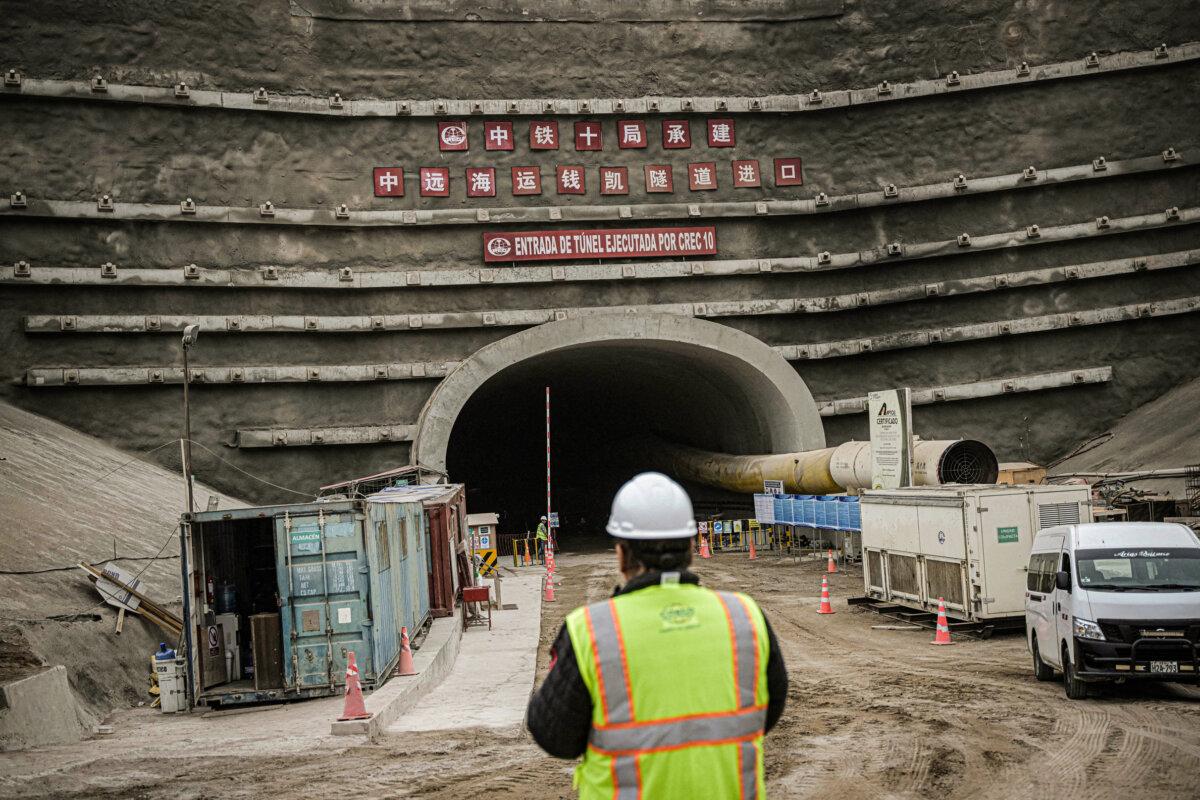
The Comptroller General of the Republic, César Aguilar, said on Feb. 13 that it would conduct an audit of the Chacay Port project, according to multiple local media outlets.
“We began reviewing the Chancay [port] project from the outset because there are things that—we believe—are inconsistent. This includes the contract, the addenda, and we must also consider [the recent ruling] related to the injunction in favor of Cosco Shipping,” he told the press.
According to Aguilar, one of the key points to be investigated is the various addenda that were made to the original contract, resulting in several contractual modifications that have no clear justification.
According to the president of Ositrán, the Peruvian government’s response must be very firm in order to reaffirm that the laws in Peru are respected.
Concerns About the Port
The port of Chancay was built with an investment of around $3.6 billion from the Chinese state-owned company Cosco Shipping Ports, which currently holds a 60 percent stake in the port.However, “COSCO will also be the exclusive operator of the port, thanks to changes it forced into Peruvian law during port construction,” said Ryan Berg, director, Americas Program at the Center for Strategic and International Studies (CSIS), in congressional testimony.
As an important node on the Chinese regime’s Belt and Road Initiative, and its first logistics hub in the Americas, Chinese leader Xi Jinping joined then Peruvian president, Dina Boluarte at the port’s inauguration on Nov. 14, 2024.
One of the factors that makes this infrastructure so critical is the possibility of it being used for military purposes, according to Evan Ellis in a 2024 report published by the Strategic Studies Institute of the U.S. Army War College.
.
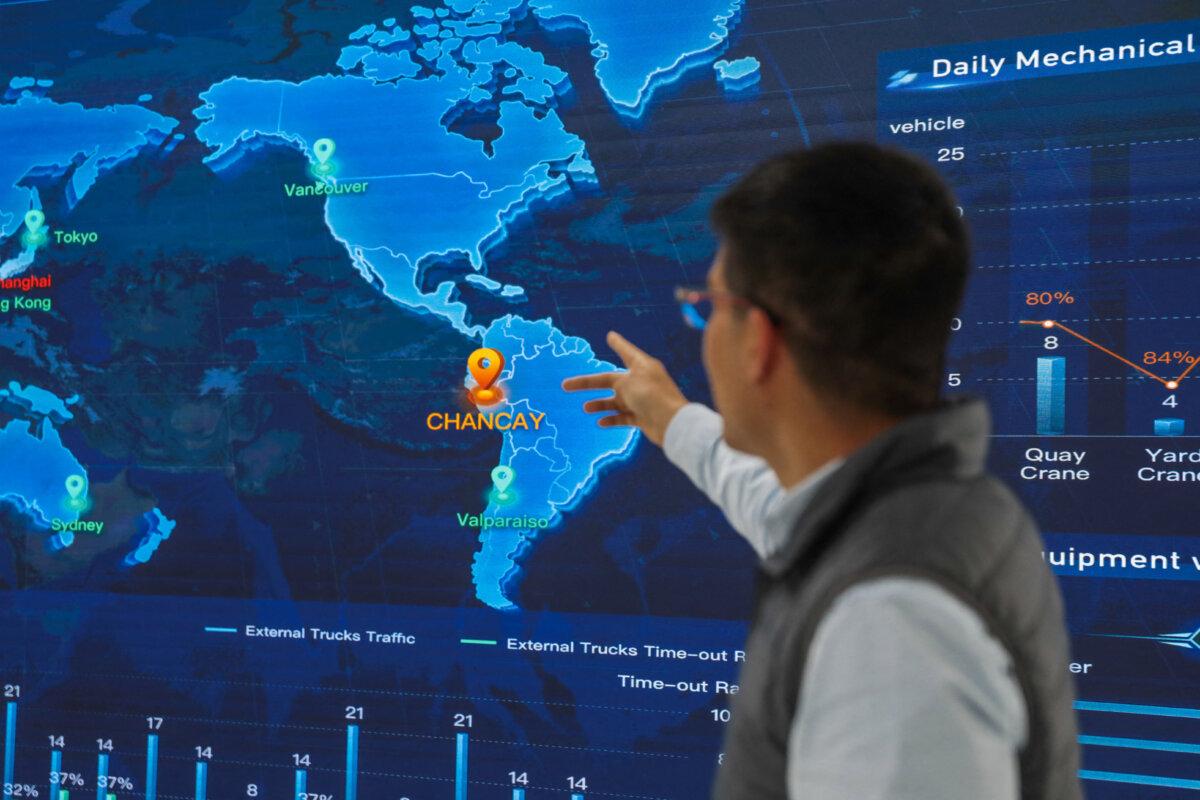
Chancay is a deep-water port, a feature that allows military ships to dock there.
According to a January 2025 Pentagon report, Cosco Shipping is listed as a Chinese military company operating in the United States in accordance with Section 1260H of the William Thornberry National Defense Authorization Act for Fiscal Year 2021.
“For example, the Port of Chancay in Peru. If there is inadequate control of the port or if the Peruvian government is sympathetic to the Chinese regime, it could be used to resupply Chinese warships with weapons [or] missiles or to support combat operations against the United States or flanks in the eastern Pacific.”
In an attempt to counter China’s advances in the port of Chancay and increase the U.S. presence, in January, the U.S. State Department announced the potential sale of $1.5 billion in equipment and services to modernize the country’s main naval base.
“The proposed sale will improve Peru’s port infrastructure to accommodate current and future naval and logistical operations and requirements,” the U.S. Defense Security Cooperation Agency said in a Jan. 15 statement.
.
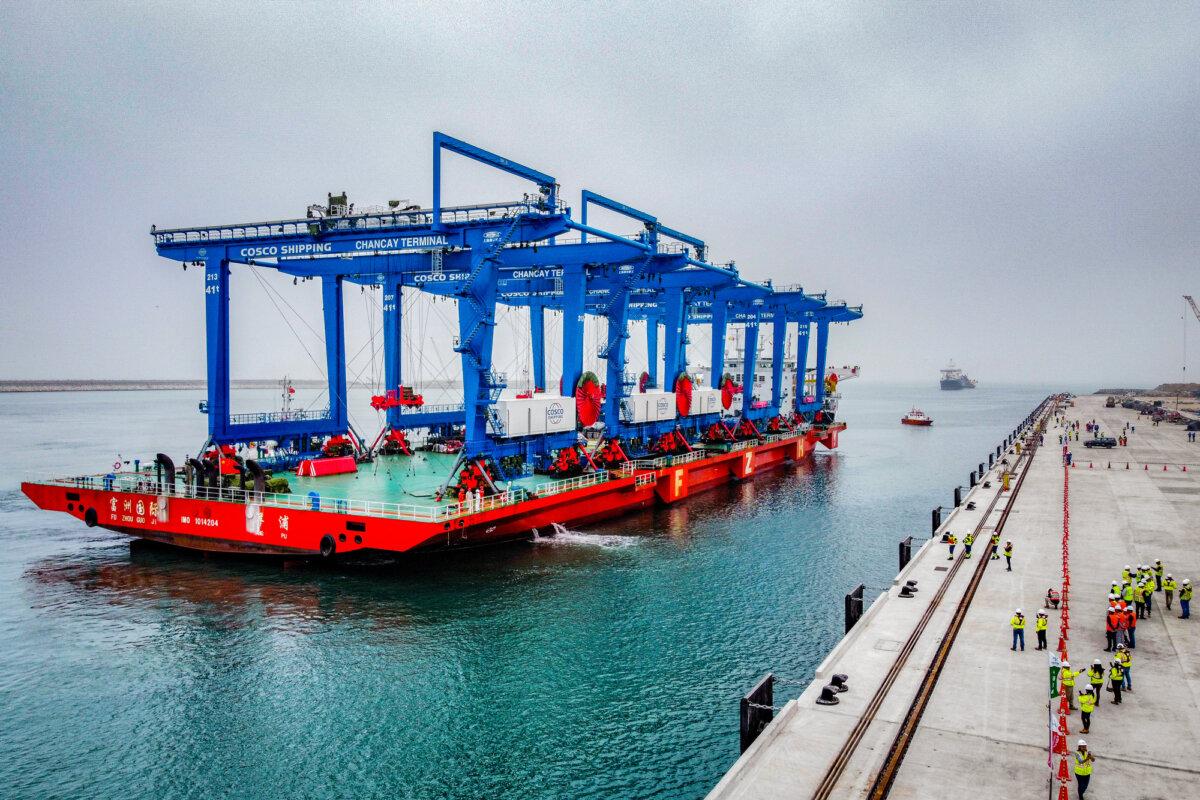
A concern is how China’s control of the port, which is expected to be one of the largest ports in Latin America, will reshape the region. It is expected to consolidate a large amount of the commercial shipment volume between the region and China.
During the port’s inauguration, Xi said that Chancay would consolidate Peru’s position as the gateway connecting Asia and Latin America.
Berg said in a CSIS video presentation that control of ports has become essential to international criminal enterprises.
The ‘Intimidating Letter’
The news that Ositrán would be prohibited from inspecting the Peruvian port took on international proportions after a local journalist, Diego Acuña, published a video about the case and shortly thereafter received a letter from Cosco Shipping threatening to take legal action if the journalist did not remove his video from the internet.“The day after [the video was published], they sent me a letter with a very intimidating tone. They gave me 24 hours to retract a series of things that they didn’t even specify,” Acuña told The Epoch Times.
An excerpt from the letter, seen by The Epoch Times, said, “Proceed to rectify the inaccurate statements, falsehoods, and insinuations exposed in one of your videos. If this does not happen, we will be forced to evaluate and initiate legal action as provided for by law.”
Acuña said that the purpose of the letter was to prevent him from investigating the company further, including how it obtained its contracts, legal resolutions, and the true purpose of its activities.
“The goal was to intimidate and silence me, making me stop talking about the issue,” he said.
The U.S. ambassador to Peru said on Feb. 13 in response to Acuña on X, “The press is the fourth estate of democracy and is protected by our Constitution. Freedom of expression is a core value. It is dangerous—though not surprising—to see China exporting censorship.”
What's Your Reaction?
 Like
0
Like
0
 Dislike
0
Dislike
0
 Love
0
Love
0
 Funny
0
Funny
0
 Wow
0
Wow
0
 Sad
0
Sad
0
 Angry
0
Angry
0














Comments (0)