

Northern China Battles Record Floods as Typhoon Bavi's Remnants Move North
Severe flooding has struck Hebei and Liaoning provinces in northern China, submerging roads, sweeping away vehicles, and stranding roughly 1,800 villagers. The disaster follows Typhoon Bavi, the strongest storm to hit mainland China this year, which has already forced the evacuation of millions of people along the country's eastern coast.


.
A Storm That Would Not Weaken
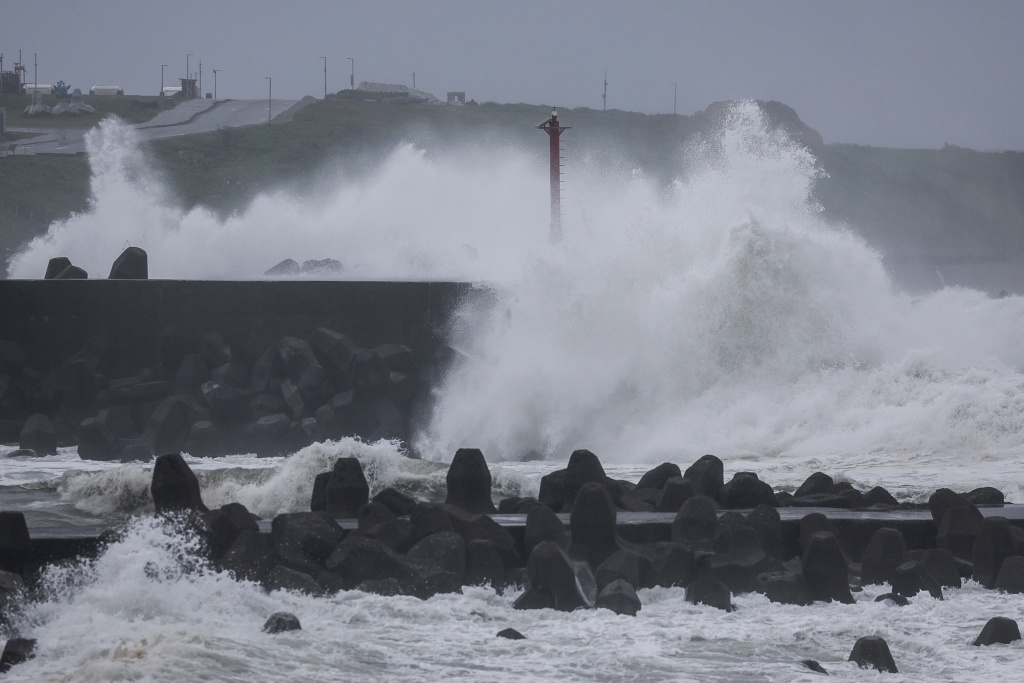
Typhoon Bavi made landfall twice within less than an hour late on July 11 near Zhejiang province, battering the coast with fierce winds and torrential rain. The storm struck the coastal city of Yuhuan before making a second landfall in Yueqing, part of Wenzhou. Residents described winds strong enough to tear off roof tiles and snap tree branches, with more than 1,300 trees falling in Yueqing alone.
What set Bavi apart was its staying power. According to the original Reuters report, the storm covered an area roughly the size of France and retained an unusually well-preserved warm core, allowing it to hold onto its moisture far longer than typical cyclones as it pushed north.
By the time it reached the Chinese mainland, Bavi had already caused damage further afield. More than 2.8 million people had been evacuated across the region, according to a Reuters tally of figures reported by Chinese state media. In Taiwan, the storm's outer bands injured 134 people and forced the cancellation of 137 international flights.
.
Villages Underwater, Cars Swept Away
The heaviest domestic impact came days later, once Bavi's remnants pushed rain deep into China's north. In Kuancheng county, Hebei province — home to roughly 240,000 people on the banks of the Luan River — floodwaters rose to more than two metres, based on a resident account carried by Chinese state media. Cars were filmed crashing into one another as they were swept along flooded roads.
Around 1,800 villagers in Kuancheng were left stranded, with state broadcaster CCTV reporting that relocating residents had become the local government's top priority. In neighboring Liaoning province, authorities raised a red alert for flash floods, the highest warning level, and ordered a halt to work, business, and public gatherings in affected areas.
Social media footage circulating on Chinese platforms showed residents wading, swimming, and even paddleboarding through submerged streets in Shenyang, Liaoning's capital. Public transit was hit hard: Shenyang's city government suspended classes at kindergartens and schools, halted construction work, and closed 94 tourist sites for the day. More than 3,500 government staff across a dozen departments were mobilized for rescue and relief work, while flooded roads forced the temporary closure of several bus routes and subway stations.
China Railway confirmed that more than 30 railway sections around Shenyang were disrupted. Nationwide, 46 rivers were reported to be running above official warning levels, according to figures from China's Ministry of Water Resources cited by CCTV.
.
A Recurring Test for China's Flood Defenses
This is not the first time northern Chinese cities have struggled to cope with sudden, intense rainfall — a pattern that has raised recurring questions about the country's urban drainage systems and disaster preparedness. Much of what the outside world learns about the scale of these events still passes through state broadcasters like CCTV and government social media statements, making independent verification of casualty and damage figures difficult in the early stages of a disaster.
Hebei's Qianxi county recorded nearly 190 millimeters of rain in the day before the floods, and rescuers used inflatable boats to reach people stranded on a partially submerged car after floodwaters turned a public square into a muddy lake, according to footage verified by Reuters. Experts note that a storm's danger does not end when it makes landfall. Benjamin Horton, dean of the School of Energy and Environment at the City University of Hong Kong, said a typhoon's large circulation can keep generating destructive weather hundreds of kilometers inland even after it weakens.
.
What Comes Next
Forecasters expect the danger to continue spreading north and east. Meteorologists writing for Yale Climate Connections have noted that this year's unusually active typhoon season lines up with a building El Niño pattern, which tends to let storms form farther out at sea and gather more strength before curving toward Asia.
For now, authorities in Hebei, Liaoning, and Jilin are focused on immediate relief: resettling stranded villagers, clearing flooded rail lines, and monitoring the 46 rivers still above warning levels. Whether the country's flood-control infrastructure holds up in the coming days will likely shape the public conversation once the immediate emergency passes.
.
Sources
- Reuters – "Heavy floods submerge roads, vehicles in northern China," July 13, 2026 (original wire text provided)
- South China Morning Post – "Schools and tourist sites closed as Typhoon Bavi heads through northern China" – https://www.scmp.com/news/china/politics/article/3360315/schools-and-tourist-sites-closed-typhoon-bavi-heads-through-northern-china
- CNBC (via Reuters/AFP reporting) – "Typhoon Bavi batters eastern China, threatens days of heavy rain" – https://www.cnbc.com/2026/07/12/typhoon-bavi-batters-eastern-china-threatens-days-of-heavy-rain.html
- NASA Earth Observatory – "Super Typhoon Bavi" – https://science.nasa.gov/earth/earth-observatory/super-typhoon-bavi/
.
What's Your Reaction?
 Like
0
Like
0
 Dislike
0
Dislike
0
 Love
0
Love
0
 Funny
0
Funny
0
 Wow
0
Wow
0
 Sad
0
Sad
0
 Angry
0
Angry
0















Comments (0)