

Germany’s Merz Pushes Deeper China Cooperation on 1st Beijing Trip


.
China and Germany want to deepen cooperation, German Chancellor Friedrich Merz and Chinese Premier Li Qiang said in Beijing on Feb. 25.
Merz, who is making his first trip to China since taking office last May, has been in Beijing for a two-day visit, accompanied by a delegation of 30 companies, including top carmakers such as Volkswagen and BMW.
“I attach great importance to maintaining and deepening these wherever possible,” German news magazine Der Spiegel reported Merz as saying during a meeting with Li on Wednesday.
“Our message from a European point of view is the same: We want partnership with China balanced, reliable, regulated, and fair,” Merz said.
“This is our offer. At the same time, it is what we also hope for and expect from the Chinese side.
“We have very specific concerns regarding our cooperation, which we want to improve and make fair.”
Merz is also meeting Chinese leader Xi Jinping on Wednesday afternoon.
“No one can bypass China anymore. Global political challenges cannot be managed today without Beijing. China’s voice is heard, including in Moscow. China has the opportunity to use its influence. For peace and security in the Pacific, China is a decisive factor.”
Merz said the federal government continues to adhere to its “One China” policy, meaning Berlin does not formally recognize Taiwan as an independent sovereign state in its diplomatic relations.
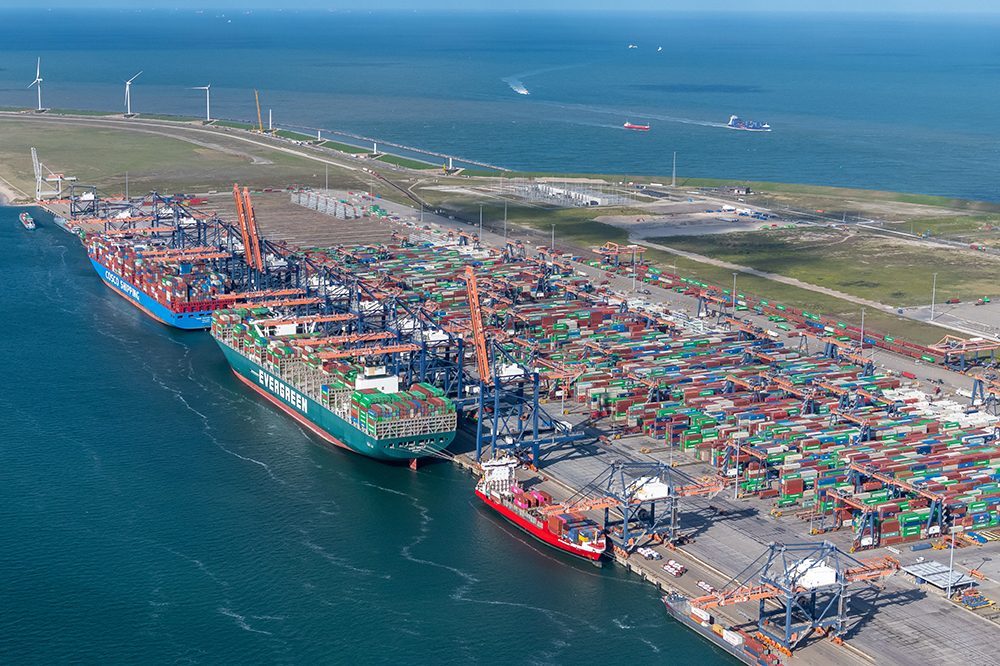
“With a foreign trade turnover (total of goods exports and imports) of 251.8 billion euros [$296 billion] the People’s Republic of China was Germany’s most important trading partner again in 2025, a title it also held in the period from 2016 to 2023,” the office said.
Trade with China rose 2.2 percent from 2024, when the United States briefly held the top spot.
Destatis added that China “therefore took over the top position from the United States, which was Germany’s most important trading partner in 2024.”
According to a recent report by research firm Rhodium Group, since 2020, Chinese growth rates and German exports have “essentially decoupled” due to rising Chinese competitiveness in “core German manufacturing sectors, the localization of production in China by large German firms and import substitution policies from Beijing.”
It said that the Chinese market “was a gold mine for German companies for decades.” But now the market share of, for example, German carmakers in China has collapsed by 33 percent, on average, between 2022 and 2025.
“But that mine is looking depleted for many firms amid a slowdown in the Chinese economy, brutal local competition that has eviscerated pricing power, and a shift in consumer preferences toward home-grown firms—a trend that has been encouraged by authorities in Beijing,” the report reads.
Rhodium Group said that carmakers are transferring an increasing share of research and development capabilities to China, though this “will primarily benefit jobs and value creation in China, rather than Germany,” it said.
“In the foreseeable future, Beijing could draw level with the U.S. in terms of military might. China is systematically exploiting the dependencies of others, reinterpreting the international order on its own terms,” he added.
He said that the United States’ “claim to leadership is being challenged, perhaps even forfeited.”
Germany’s outreach comes as several European countries have stepped up engagement with the Chinese Communist Party in recent months.
“It doesn’t make sense to stick our head in the sand when it comes to China; it’s in our interests to engage,” Starmer said at the time.
Irish Prime Minister Micheál Martin also paid an official visit to China in early January. Martin reaffirmed Ireland’s support for the “One China” policy during meetings in Beijing and Shanghai.
Last year, Xi offered Spain’s King Felipe VI a vision of cooperation with “great global influence” during the first Spanish state visit to China in nearly two decades.
What's Your Reaction?
 Like
0
Like
0
 Dislike
0
Dislike
0
 Love
0
Love
0
 Funny
0
Funny
0
 Wow
0
Wow
0
 Sad
0
Sad
0
 Angry
0
Angry
0














Comments (0)