

Australia Probing Whether Nauru’s $1 Billion China Deal Breaches Security Treaty

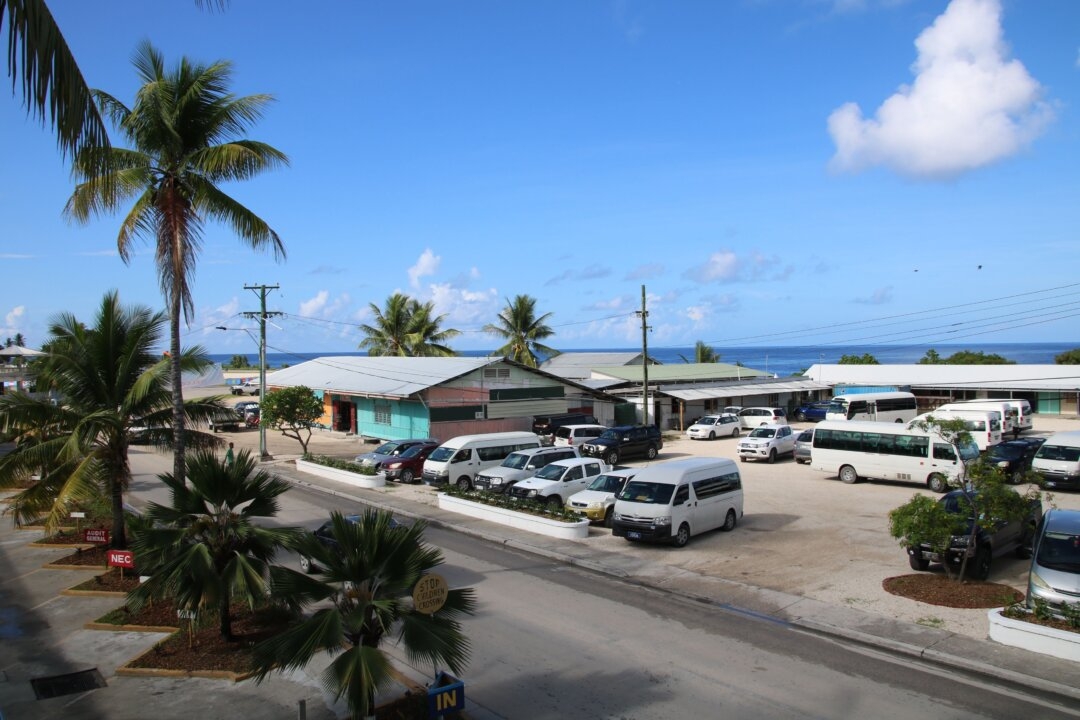
The Australian government is investigating whether Nauru’s new AU$1 billion (US$650 million) development deal with a Chinese corporation breaches an ongoing bilateral security pact.
That pact, agreed to in December 2024, requires Nauru to seek Australia’s consent before entering into any third-party security arrangement, including projects involving critical infrastructure such as telecommunications or banking.
The exclusivity condition is aimed at preventing a repeat of the 2022 Solomon Islands security deal with Beijing that gives the Chinese Communist Party (CCP) authority to deploy weapons, troops, and naval ships in the region.
Pacific Minister Pat Conroy confirmed Australian officials were currently in talks with Nauru to determine whether the Aug. 5 deal with the China Rural Revitalisation and Development Corporation (CRRDC) breached treaty rules.
“That is a really important treaty for us, that helps position us as a security partner of choice with Nauru,” Conroy said in Brisbane on Aug. 19.
.

Phase 1 of the three phase project is valued at AU$1 billion and covers a swathe of sectors like renewable energy, the phosphate industry, marine fisheries, water resources, and agriculture.
Like many public deals signed with Beijing, further details were not available.
“A scoping team from CRRDC is scheduled to arrive in Nauru in October, to engage with key local ministries and stakeholders for the development of a successful road-map guideline,” a statement said.
Pacific Minister Backs Aid
Minister Conroy stressed that Canberra was not opposed to development aid from other countries.“We think other countries should be doing their fair share and investing in the Pacific. That’s a good thing for the region,” he said.
.

“What we’ve been very clear is that every country in the world should respect the views of the Pacific Islands Forum (PIF), the leaders’ consensus, which is that security should be provided by countries within the PIF.”
Australia Signing ‘Veto’ Deals to Limit Beijing’s Influence
Over the past decade, Australia has stepped up its Pacific strategy through security pacts and high-level visits, underscoring efforts to limit the CCP’s influence in the region.In recent years, Canberra has signed a series of security agreements with Pacific nations, many containing exclusivity clauses.
A new treaty with Papua New Guinea (PNG) explicitly rules out any CCP security presence and will allow PNG citizens to serve in the Australian Defence Force. The official signing is planned during PNG’s 50th independence anniversary in Port Moresby this September.
Just a week earlier, Deputy Prime Minister Richard Marles travelled to PNG to meet Prime Minister James Marape to open the $500 million redevelopment of the Lombrum Naval Base.
However, talks with Kiribati have stalled with the Maamau government reluctant to advance negotiations.
What's Your Reaction?
 Like
0
Like
0
 Dislike
0
Dislike
0
 Love
0
Love
0
 Funny
0
Funny
0
 Wow
0
Wow
0
 Sad
0
Sad
0
 Angry
0
Angry
0












Comments (0)