

U.S. Senate Panel Moves to Sanction China's Forced Organ Harvesting Industry
The U.S. Senate Foreign Relations Committee has advanced a bipartisan bill that would impose serious sanctions on individuals involved in China's state-sponsored forced organ harvesting. The legislation, backed by senators from both parties, also demands a formal U.S. government investigation — and could finally hold Beijing accountable for one of the most disturbing human rights crimes of our time.

.
A Historic Step in Washington
On June 17, the U.S. Senate Foreign Relations Committee voted to advance the Falun Gong and Victims of Forced Organ Harvesting Protection Act — a landmark piece of bipartisan legislation targeting what many human rights experts describe as a systematic and state-enabled atrocity inside China.
The bill was first introduced in March 2026 by Senators Ted Cruz (R-Texas) and Jeff Merkley (D-Oregon), both members of the same committee. It has since gained additional momentum, including a co-sponsorship by Senator Adam Schiff (D-California). The move marks a significant step toward a full Senate floor vote.
"I hope we can really increase world awareness of this terrible practice," Senator Merkley told reporters following the committee vote.
What the Bill Would Do
The legislation is designed to directly target those responsible for forced organ harvesting in China. If signed into law, it would require the U.S. government to compile an official list of foreign individuals determined to have knowingly participated in or facilitated the practice.
The consequences for those named would be severe:
- All financial transactions with U.S. persons or entities would be blocked.
- Any property they hold in the United States would be frozen.
- They would be barred from entering the United States, and any existing visas would be immediately invalidated.
- They would also be disqualified from receiving any U.S. immigration benefits.
The bill defines "forced organ harvesting" broadly — as the removal of organs through coercion, abduction, deception, fraud, or the exploitation of a person's vulnerability.
Demanding Transparency and Accountability
On June 15, lawmakers amended the bill to include a detailed section documenting persistent concerns raised by both public and private organizations — alongside China's ongoing refusal to provide verifiable information.
The legislation points to the U.S. State Department's 2023 International Religious Freedom Report, which highlighted fears among religious minority groups — particularly Falun Gong practitioners and Uyghurs — that they could be targeted as organ sources. The same report referenced findings by the New York City Bar Association, which concluded there is substantial evidence that China continues to harvest organs from prisoners of conscience.
The bill explicitly acknowledges that the Chinese regime has failed to provide a credible or independently verifiable account of its transplant system. It also notes that U.S. authorities have yet to issue a formal assessment of the allegations — a gap the legislation aims to close.
What Washington Is Being Asked to Investigate
The bill directs U.S. authorities to conduct a formal investigation and produce a comprehensive report on China's organ transplant system. That report, to be prepared by the State Department in coordination with the Department of Health and Human Services and the National Institutes of Health, would need to address:
- Whether Beijing has systematically engaged in forced organ harvesting — past or present.
- A full summary of organ transplant policies, including those affecting Falun Gong practitioners and other prisoners of conscience.
- Annual transplant numbers alongside voluntary donor data.
- An assessment of whether official organ procurement timelines are realistic.
- A review of U.S. government grants over the past decade that supported organ transplant research in China.
Crucially, if U.S. officials determine that forced organ harvesting has occurred, they must also assess whether it constitutes an "atrocity" under U.S. law — a designation with significant diplomatic and legal consequences.
The Evidence: Years of International Alarm
Concerns about China's organ transplant industry have been mounting for two decades. UN human rights experts stated in June 2021 that they were "extremely alarmed" by credible reports of organ harvesting targeting minorities in Chinese detention, including Falun Gong practitioners, Uyghurs, Tibetans, Muslims, and Christians — people reportedly subjected to forced blood tests and organ examinations without consent, with their data entered into a database of living organ sources.
Data suggests that Chinese hospitals have performed significantly more transplants than the highest estimates of ethically obtained donors can account for. China has claimed since 2015 to source organs only from voluntary donors, but serious doubts remain about the credibility of that claim.
The London-based China Tribunal, an independent panel of international legal experts, published its final judgment in 2020, concluding that forced organ harvesting from prisoners of conscience had been practiced in China for a substantial period of time. The tribunal examined extensive written evidence and interviewed more than 50 witnesses, finding that Falun Gong practitioners — estimated at 70 to 80 million people in China — had likely been the primary source of organs.
Evidence also demonstrates that China's claimed legal reforms banning the use of prisoners' organs have not actually been implemented, and that the official transplant data has been falsified.
Falun Gong: The Primary Target
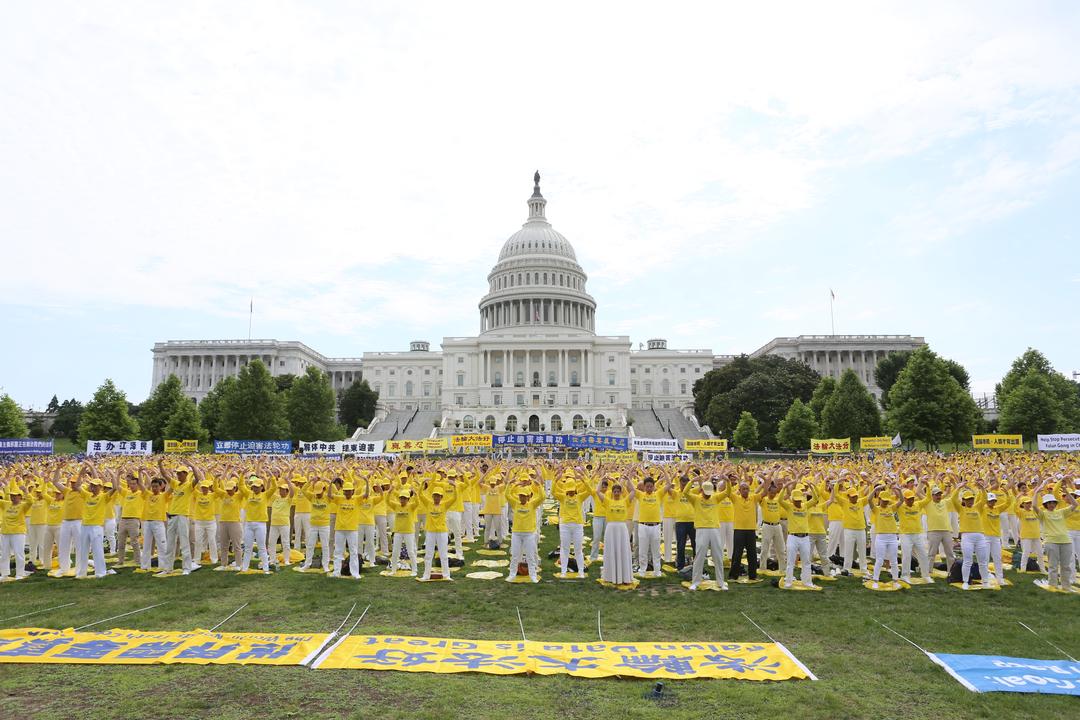
Falun Dafa (also known as Falun Gong) is a peaceful spiritual practice rooted in Buddhist principles, guided by the values of truthfulness, compassion, and tolerance. According to Amnesty International, tens of thousands of Falun Gong practitioners have been arbitrarily detained since the Chinese government launched its crackdown on the movement in 1999.
The CCP outlawed Falun Gong in 1999 and conducted mass arrests, torture, and detentions of practitioners in labor camps — with some subjected to forced organ harvesting. Those harvested organs have been used in domestic transplants within China and trafficked overseas.
Long Legislative Journey
The bill that advanced Tuesday is not the only organ harvesting legislation working its way through Congress. A related measure — the Stop Forced Organ Harvesting Act — passed the House in May 2025 by a vote of 406 to 1 and has been awaiting Senate action for over a year.
Senators Cruz and Smith are reportedly working on a compromise between the two bills. Senate Majority Leader John Thune has been described as a supporter, and President Trump is expected to sign whichever version reaches his desk.
Tuesday's committee vote means the Cruz-Merkley bill is now one step closer to a full Senate vote. If passed and signed, it would represent the most direct legislative action ever taken by the United States against those responsible for one of the worst documented human rights crimes in the world today.
.
Sources
-
U.S. Senator Ted Cruz – Official Press Release: Sens. Cruz, Merkley Introduce Bipartisan Bill to Hold China Accountable for Organ Harvesting https://www.cruz.senate.gov/newsroom/press-releases/sens-cruz-merkley-introduce-bipartisan-bill-to-hold-china-accountable-for-organ-harvesting-and-human-rights-violations
-
Congress.gov – S.4009, 119th Congress: Falun Gong and Victims of Forced Organ Harvesting Protection Act https://www.congress.gov/bill/119th-congress/senate-bill/4009/all-info
-
UN Office of the High Commissioner for Human Rights (OHCHR): China: UN human rights experts alarmed by 'organ harvesting' allegations (June 14, 2021) https://www.ohchr.org/en/press-releases/2021/06/china-un-human-rights-experts-alarmed-organ-harvesting-allegations
-
Tom Lantos Human Rights Commission, U.S. House of Representatives: Forced Organ Harvesting in China: Examining the Evidence https://humanrightscommission.house.gov/events/hearings/forced-organ-harvesting-china-examining-evidence
-
Congressional-Executive Commission on China (CECC): A Market Built on Victims: Stopping Illegal Organ Trafficking in China and Beyond (May 14, 2026) https://www.cecc.gov/events/hearings/market-built-victims-stopping-illegal-organ-trafficking-china-and-beyond
-
International Bar Association: Organ trafficking: China Tribunal finds evidence of forced harvesting crimes https://www.ibanet.org/article/0D8860DC-A94D-4E9B-80AE-46FAB2902879
-
Washington Examiner: GOP trying to stop US involvement in China's organ harvesting scheme (May 7, 2026) https://www.washingtonexaminer.com/policy/healthcare/4558254/gop-us-involvement-china-organ-harvesting-scheme/
-
Raoul Wallenberg Centre for Human Rights: Joint Statement – Falun Gong & Victims of Forced Organ Harvesting Protection Act 2026 https://www.raoulwallenbergcentre.org/en/news/2026-05-04
-
McCain Institute: Uncovering Evil: Illegal Organ Harvesting in China and the 2025 "Stop Forced Organ Harvesting Act" https://www.mccaininstitute.org/resources/blog/uncovering-evil-illegal-organ-harvesting-in-china-and-the-2025-stop-forced-organ-harvesting-act/
.
What's Your Reaction?
 Like
0
Like
0
 Dislike
0
Dislike
0
 Love
0
Love
0
 Funny
0
Funny
0
 Wow
0
Wow
0
 Sad
0
Sad
0
 Angry
0
Angry
0













Comments (0)