

US Races to Build Golden Dome Amid China’s Expanding Arsenal


.
Just one week after the Chinese communist party touted its latest long-reaching missile tech in a large-scale military parade in Beijing, the United States took another step towards building its own counterpunch system—the Golden Dome missile defense system.
The planned U.S. Golden Dome missile defense system is designed to intercept more than 100 missiles from adversaries such as China, North Korea, and Russia, which are forging closer ties against the United States.
“Golden Dome, once enacted, should have the ability to deny an adversary from carrying out a limited coercive attack by increasing the shot cost of the attacker,” said Robert Peters, research fellow for Nuclear Deterrence and Missile Defense at the Heritage Foundation.
“That is, Golden Dome is not meant to stop 1,000 missiles flying over the Pole but would be able to stop 120 from striking a target, through a proliferation constellation of orbital sensors and shooters, coupled with existing ground-based interceptors and theater range interceptors,” Peters told The Epoch Times.
Beijing’s Military Parade
Trump recently touted Golden Dome on Sept. 3, the same day that the Chinese communist regime showcased an array of ballistic, hypersonic, and cruise missiles as well as other military hardware at a Beijing parade marking the end of World War II.“Everyone wants to be a participant in it,” said Trump, referring to Canada’s possible participation in the system. “We’re gonna be having a Golden Dome the likes of which nobody’s ever seen before,” he added.
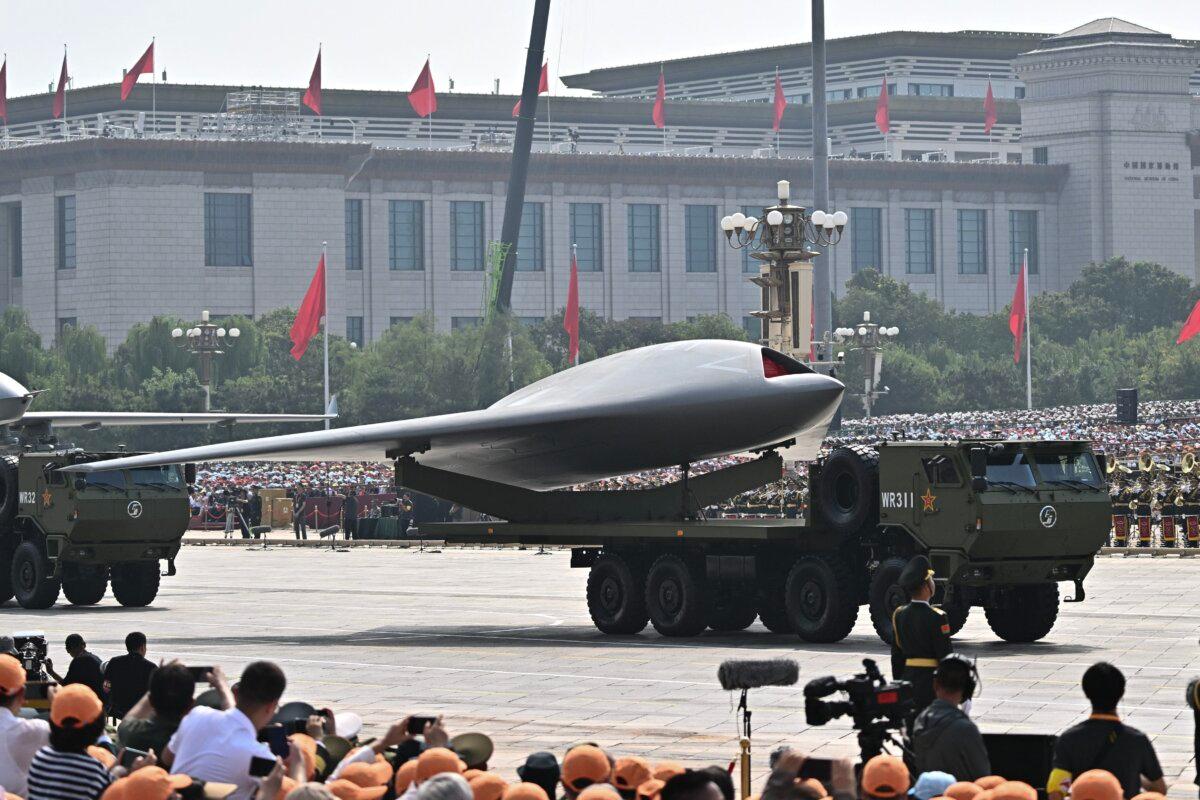
The day before the parade, Xi and Putin deepened economic ties by signing a deal to build the long-delayed Power of Siberia 2 gas pipeline. Putin said Moscow’s ties with Beijing are “at an unprecedented high level,” said the Kremlin in a statement. Xi said their relations have “stood the test of changes in the world,” according to China’s Foreign Ministry.
The day after the parade, Xi held talks with Kim in Beijing, pledging to deepen their ties. Xi assured Kim “his willingness to successfully defend, consolidate and develop the China-DPRK relations,” according to North Korea’s state media KCNA. Kim said Pyongyang will “ever invariably support and encourage the stand and efforts of the Communist Party of China.”
North Korea and China are accused of supporting Russia’s war against Ukraine. China has been helping Moscow’s war efforts by supplying dual-use items and critical minerals that can be used to produce military weapons, and North Korea sent munitions and soldiers to help Russia fight the war.
All three countries possess nuclear weapons and intercontinental ballistic missiles (ICBMs) capable of reaching the United States. Russia is known to have about 330 ICBMs, and China is believed to have more than 400. North Korea’s estimated number of ICBMs is about 10, but the U.S. Defense Intelligence Agency projects in its report released in May that it could have 50 in 10 years.
Timothy Heath, senior international defense researcher at the RAND Corp., told The Epoch Times, “Golden Dome could help target and destroy incoming ballistic missiles, including the newer ones displayed by China at the parade.”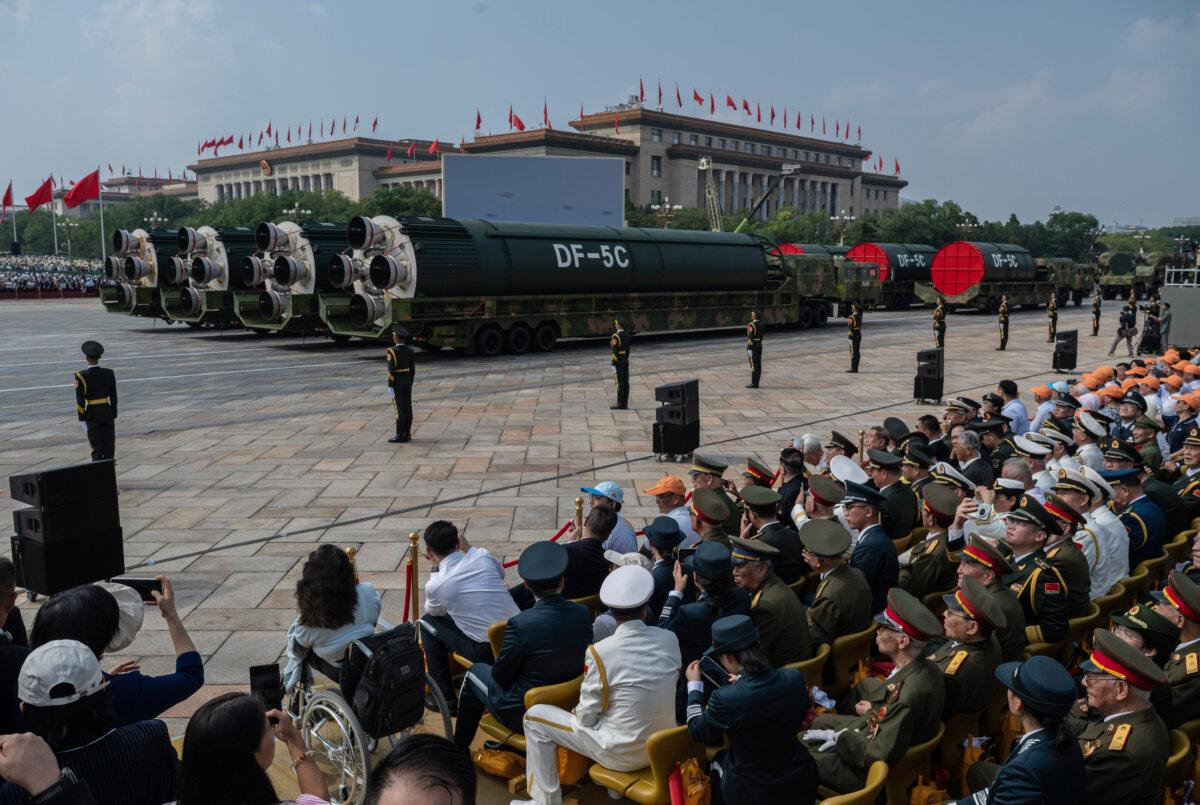
Cruise missiles displayed include the CJ-20A, the YJ-18C, and the CJ-1000. The CJ-20A and the YJ-18C, with limited ranges, can target U.S. assets in the Asia-Pacific region.
The CJ-1000 hypersonic cruise missile, with its estimated range of about 6,000 km, could potentially reach the United States if it is launched at a strategic location.
An expert cited by China’s state-run Global Times on Sept. 3 referred to the CJ-1000 at the parade as having capabilities to evade an interception by existing missile defense systems.
Heath at the RAND said, “Hypersonics are more challenging to counter due to their maneuverability mid-flight, but Golden Dome could perhaps provide some protection against those weapons as well.”
Golden Dome is meant to supplement current U.S. missile defense systems, including Ground-based Midcourse Defense (GMD), Aegis, Terminal High Altitude Area Defense (THAAD), and Patriot systems.
“Golden Dome would integrate existing homeland and theater missile defense systems with a new orbital system of sensors and interceptors into an overall architecture and supporting battle management system,” said Peters at the Heritage.
Though meant to provide comprehensive protection against missile attacks, the ambitious project does not come without downsides.
“A major downside of Golden Dome is the high cost and uncertain reliability of so complex a defense,” said Heath. “Moreover, developing Golden Dome could aggravate an arms race, as China can respond by simply building more missiles, which would overwhelm the missile defense,” Heath continued.
Chinese Foreign Ministry Spokesperson Mao Ning in May sharply criticized Trump’s Golden Dome announcement, saying the defense system carries “strong offensive implications” and “fuels an arms race.”
Several days after the parade, U.S. Secretary of War Pete Hegseth and Chinese Defense Minister Dong June held their first call.
“The U.S. has vital interests in the Asia-Pacific, the priority theater, and will resolutely protect those interests” and that the discussions were held in a constructive manner, Hegseth said.
.
What's Your Reaction?
 Like
0
Like
0
 Dislike
0
Dislike
0
 Love
0
Love
0
 Funny
0
Funny
0
 Wow
0
Wow
0
 Sad
0
Sad
0
 Angry
0
Angry
0















Comments (0)