

More Than a Wound Healer: How Manuka Honey Is Changing Medicine
Manuka honey has long been known for its wound-healing powers. But new research shows it can do much more — from relieving dry eyes after surgery to fighting bleeding gums and blocking influenza viruses. Here is what science currently knows, and what to watch out for.**

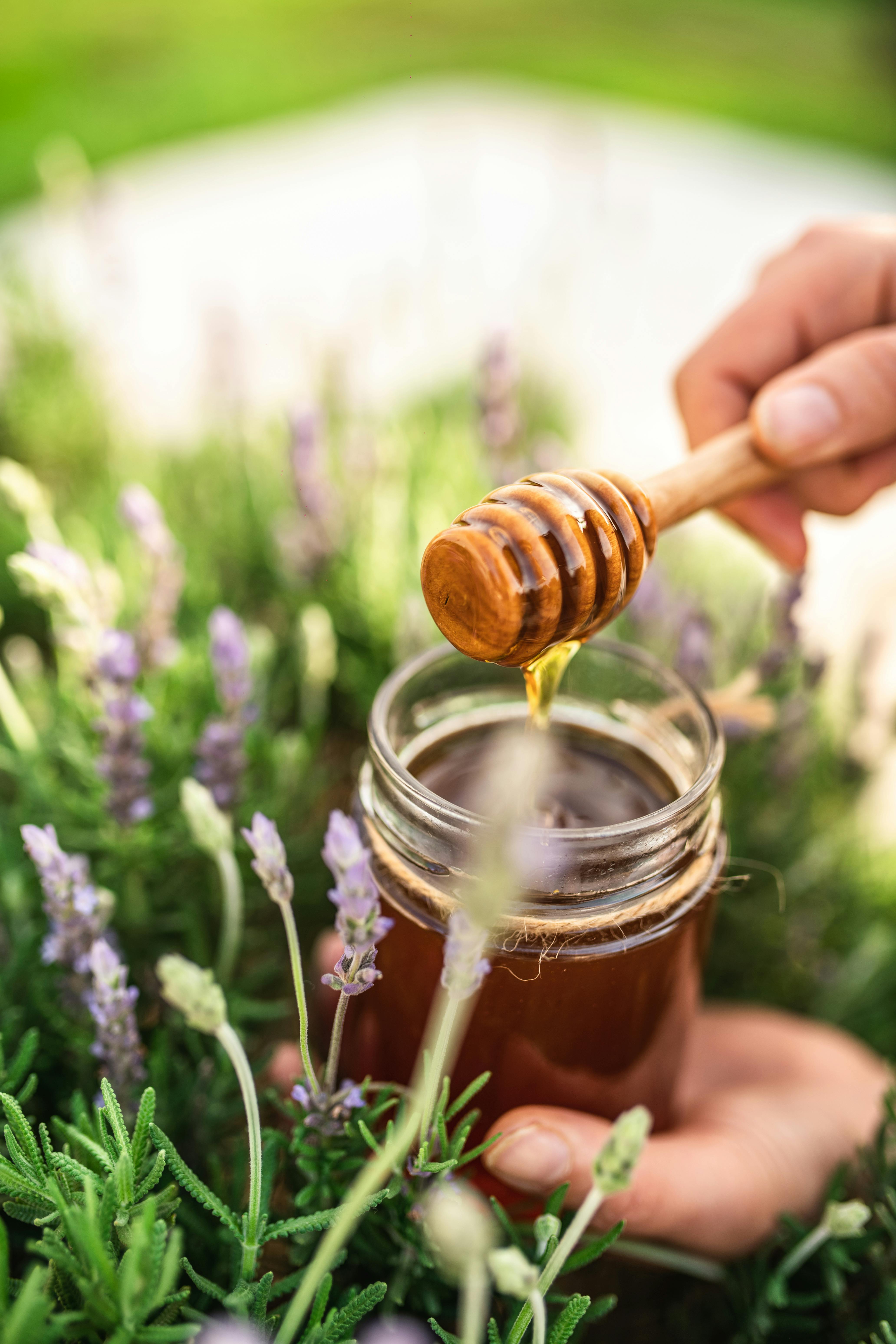
.
The Honey That Stands Apart
Not all honey is the same. Most honey fights bacteria through hydrogen peroxide — a substance that breaks down quickly when exposed to heat, light, or body fluids. Manuka honey works differently.
Produced by bees that pollinate the manuka bush (Leptospermum scoparium), native to New Zealand, this dark, thick honey derives its power from a compound called methylglyoxal (MGO). MGO is stable even under harsh conditions, and it fights bacteria through multiple mechanisms at once — which is a key reason bacteria do not easily develop resistance to it, unlike with conventional antibiotics.
Manuka honey is rated using the UMF (Unique Manuka Factor) grading system, ranging from UMF 5+ to UMF 25+. The higher the number, the greater the MGO concentration and the stronger its antibacterial effect. A jar can cost anywhere between $20 and $200, depending on grade and purity — but the science behind it increasingly justifies the price.
Relief for Dry Eyes — Even After Surgery
Dry eye disease is one of the most common reasons people visit eye doctors. Cataract surgery — among the most frequently performed operations in the world — is a known trigger: it often damages the eye's surface and disrupts normal tear production.
A controlled clinical study conducted at a public hospital in Madrid, published in Frontiers in Ophthalmology in 2026, compared manuka honey eye drops against standard artificial tears (containing sodium hyaluronate) in 53 patients recovering from cataract surgery. After one month, the manuka honey group showed a significantly greater reduction in dry eye symptoms and less eye redness and inflammation.
Researchers measured results using validated tools like the Ocular Surface Disease Index (OSDI) and a device that tracks how long tears stay stable on the eye surface. The manuka honey patients scored considerably better on both counts.
The study authors describe their findings as "hypothesis-generating" — meaning the results are promising but not yet definitive. Larger, longer trials are needed before firm clinical recommendations can be made. In addition, manuka-based eye drops are not yet approved by the U.S. Food and Drug Administration for over-the-counter use, since honey is not currently classified as a permitted active ingredient in ophthalmic medications. Anyone considering such drops should consult an eye specialist first.
Fighting Flu and Sinus Infections
Manuka honey has long been a go-to remedy for colds and sore throats. But its antiviral potential goes beyond soothing a scratchy throat.
A 2014 laboratory study published in Archives of Medical Research tested various types of honey against influenza viruses. Manuka honey was the most effective, significantly reducing the virus's ability to replicate inside cells. When combined with the common antiviral drugs oseltamivir (Tamiflu) and zanamivir (Relenza), the amount of medication required to achieve the same effect dropped to roughly a thousandth of the usual dose — a dramatic synergistic boost.
This is particularly relevant given the growing problem of antiviral drug resistance: in Japan, Tamiflu-resistant influenza increased from 2.6% to over 99% within a single flu season in the late 2000s. Natural compounds that enhance drug effectiveness without promoting resistance are increasingly valuable.
For the nose and sinuses, manuka honey's multi-pronged attack on bacteria is equally important. Unlike conventional antibiotics, which target bacteria via a single mechanism — making it easy for bacteria to adapt and become resistant — manuka honey attacks through several pathways simultaneously. Researchers monitoring bacteria treated with manuka honey over extended periods have not observed the development of resistance.
A small clinical study testing a 10% manuka honey nasal spray over eight weeks found improvements in nasal lining inflammation and an increase in beneficial bacteria in the nasal microbiome, compared to a saline spray used on the opposite side of the same patients' noses.
Several manuka honey nasal sprays are commercially available, typically blended with saline. Those with chronic sinus infections should consult a physician before self-treating.
Protecting Your Gums and Mouth
Using something sweet to improve oral health sounds counterintuitive. But manuka honey behaves very differently from the refined sugars that feed cavity-causing bacteria — it actually kills them.
A randomized controlled trial published in BMC Oral Health in 2025 tested manuka honey oral rinse on 42 older adults with xerostomia — the medical term for chronic dry mouth, a condition common in elderly patients and those on certain medications. After one month of using the rinse three times daily, the manuka honey group showed significantly higher salivary flow rates and greater symptom relief than groups using regular honey or saline. Patient satisfaction was notably high.
Other studies have found that manuka honey can reduce dental plaque more effectively than xylitol chewing gum and performs comparably to chlorhexidine mouthwash — a prescription-strength antiseptic commonly used to treat bleeding gums and gingivitis. In one pilot study, participants who chewed a manuka honey "chew" for 10 minutes after each meal experienced significant reductions in both plaque and gum bleeding over 21 days, compared to those using sugarless gum.
For sore throats, manuka honey's thick consistency coats inflamed tissue and delivers its antibacterial compounds directly to the area. One to two tablespoons — taken straight or stirred into warm water or tea — is the typical approach.
What to Keep in Mind Before You Start
Manuka honey is not a supplement to take carelessly. A few important precautions apply:
A standard serving is one to two teaspoons. Larger amounts deliver a significant spike in blood glucose — manuka honey is still a high-sugar product with a high glycemic index, and it should be treated as a targeted functional remedy rather than a daily wellness food.
Never give honey of any kind to infants under 12 months old. There is a risk of infant botulism, a potentially life-threatening illness caused by bacterial spores that honey can carry.
People with diabetes should use manuka honey with particular caution and consult their doctor first. Those sensitive to higher sugar intake may also experience mild digestive effects such as bloating.
Finally, if you're buying manuka honey, look for the UMF seal on the label — it's the internationally recognized authentication mark confirming the product's purity, potency, and New Zealand origin.
The Bottom Line
Manuka honey is not a miracle cure. But the weight of current research increasingly confirms that it is more than just a folk remedy. From post-surgical eye care to antiviral support and oral health, its therapeutic range is widening — backed by genuine science. Whether in your medicine cabinet or your kitchen, a high-quality jar of UMF-rated manuka honey may be one of the more versatile health tools available today.
.
Sources:
-
García-Bardera J. et al., "Efficacy of Manuka honey eye drops in managing dry eye disease after cataract surgery: a prospective controlled study," Frontiers in Ophthalmology, 2026 — https://pmc.ncbi.nlm.nih.gov/articles/PMC13160837/
-
Ghalwash D. et al., "Efficacy of Manuka honey oral rinse in treatment of xerostomia among elderly patients: a randomized controlled trial," BMC Oral Health, May 2025 — https://pmc.ncbi.nlm.nih.gov/articles/PMC12102786/
-
Watanabe K. et al., "Anti-influenza Viral Effects of Honey In Vitro: Potent High Activity of Manuka Honey," Archives of Medical Research, 2014 — https://www.researchgate.net/publication/262778420_Anti-influenza_Viral_Effects_of_Honey_In_Vitro_Potent_High_Activity_of_Manuka_Honey
-
Jenkins R. et al., "Antibacterial activity of varying UMF-graded Manuka honeys," NCBI/PMC — https://www.ncbi.nlm.nih.gov/pmc/articles/PMC6814216/
-
Berkheiser K. / Healthline, "6 Proven Benefits and Uses of Manuka Honey" (medically reviewed), updated October 2024 — https://www.healthline.com/nutrition/manuka-honey-uses-benefits
-
News-Medical.net, "Manuka honey eye drops outperform artificial tears for dry eye relief," May 2026 — https://www.news-medical.net/news/20260501/Manuka-honey-eye-drops-outperform-artificial-tears-for-dry-eye-relief.aspx
.
What's Your Reaction?
 Like
0
Like
0
 Dislike
0
Dislike
0
 Love
0
Love
0
 Funny
0
Funny
0
 Wow
0
Wow
0
 Sad
0
Sad
0
 Angry
0
Angry
0












Comments (0)