

Japan Works to Diversify Critical Mineral Supplies in Face of China Curbs, PM Says


.
Japanese Prime Minister Takaichi Sanae said the government is collaborating with its Group of Seven allies to establish a supply chain that minimizes reliance on “any single country” for critical materials, as its economy endures escalating retaliation from Beijing.
“We will press ahead with initiatives to reinforce supply chains to reduce dependence on any single country for critical supplies,” Takaichi said.
When asked at a Jan. 8 briefing whether the new restrictions would cover rare earth exports, He Yadong, a spokesperson for China’s commerce ministry, would not confirm, saying only that products intended for civilian use would be unaffected.
“There is absolutely no need to be concerned” for those engaged in normal civilian trade, He told reporters in Beijing.
Given that 70 percent of rare earth imports come from China, Akazawa said, the impact of Beijing’s fresh actions could be significant, and the government would carefully monitor the situation.
.
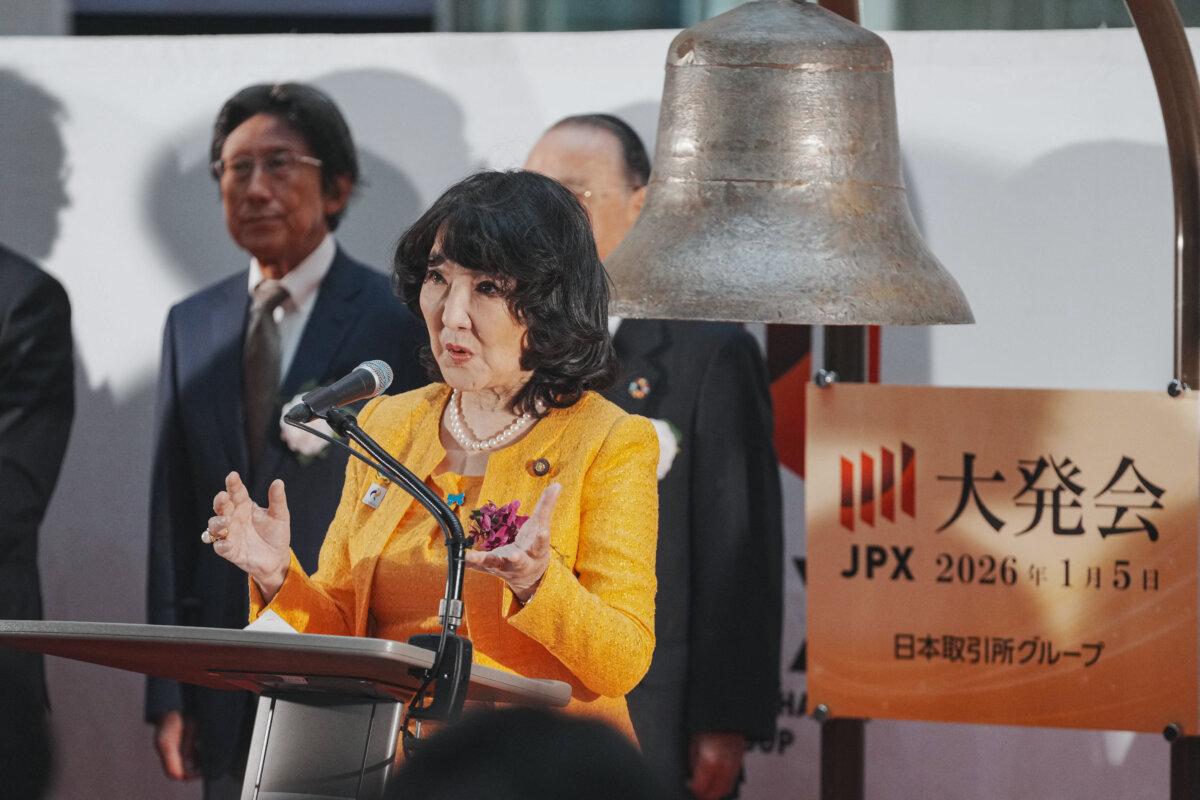
Japanese Finance Minister Satsuki Katayama is set to travel to the United States on Jan. 11 to discuss critical mineral supply with her G-7 counterparts.
At a Jan. 9 briefing, Katayama said she plans to share Japan’s stance on China’s new export controls at the meeting hosted by the U.S. Treasury.
She highlighted that Japan has sought to diversify its supply chains away from China, seeking alternatives in countries such as Australia and Malaysia, since facing China’s rare earth export restrictions beginning in 2010.
“The current consensus, at least among G7 nations, is that this practice—securing monopolistic positions through non-market means, and then using it as a weapon—is unacceptable,” Katayama told reporters. “It poses a crisis for the global economy and is extremely problematic in terms of economic security.”
The regime’s commerce ministry has described the latest export ban as a direct response to remarks made by the Japanese prime minister last November regarding Taiwan, claiming the comments constitute interference in China’s internal affairs.
Takaichi has rejected the regime’s demand to retract her earlier comments, saying they align with the government’s long-standing stance on Taiwan, which lies just 68 miles from Japan’s westernmost tip of Yonaguni.
“We will continue to work with relevant countries, including the United States and G7 countries, to take necessary measures in a firm yet calm manner from the perspective of national interests,” he said.
.
What's Your Reaction?
 Like
0
Like
0
 Dislike
0
Dislike
0
 Love
0
Love
0
 Funny
0
Funny
0
 Wow
0
Wow
0
 Sad
0
Sad
0
 Angry
0
Angry
0













Comments (0)