

How China’s Social Insurance Crackdown Could Devastate Businesses: Experts

In Shanghai’s Putuo District, a community restaurant recently posted a Help Wanted sign on its door, encouraging men aged 60 and up and women aged 55 and up to apply for a job with “generous pay.” Younger people need not apply, it said.
The ad highlights a significant transformation taking place in Chinese cities that could negatively impact businesses. Chinese authorities say that starting on Sept. 1, they will fully enforce long-standing social insurance contribution rules, wiping out a gray zone that allows many employers to evade payments and employees to opt out.
Retirees—who are largely exempt from those payroll costs—are suddenly in demand as a street-level workaround.
Economists are warning that the decision to enforce contribution rules could severely harm small and medium-sized businesses, which are already struggling with narrow profit margins. It also highlights deeper issues: a slowing economy, an aging population, and declining public trust in government systems.
The urgency in implementing the new rules, they say, stems from the regime’s need for new streams of cash after a real estate slump that crushed land-sale revenues and deepened fiscal stress on already indebted local governments.
“The Chinese regime is simply running out of money—it can’t keep propping things up,” said Henry Li, a Chinese economist and Tsinghua University graduate now based in Maryland.
What Changes on Sept. 1
China’s modern social insurance system dates back to the 1990s. Employers and employees are required to contribute to pension, medical, unemployment, work-injury, and maternity programs, as well as a mandatory housing fund.According to current data from the Ministry of Human Resources and Social Security, contributions to the “five insurances and one housing fund” can add roughly 40 to 60 percent on top of wages, depending on the region, with pension and medical insurance taking the largest share.
.
For years, enforcement was lax. Companies circumvented the rules by asking staff to sign “no-insurance” acknowledgments, reclassifying them as contractors or dispatch workers, or underreporting pay bases and covered months while topping up wages in cash.
That loophole is closing.
On Aug. 1, the Supreme People’s Court issued a judicial interpretation that nullifies any written or verbal agreements to “voluntarily” forgo contributions, effective Sept. 1. If a worker resigns due to a company’s failure to make contributions, courts can back severance claims. When authorities mandate back payments, late fees will accumulate at approximately 0.05 percent per day.
U.S.-based economist Davy J. Wong told The Epoch Times that Beijing is pushing this change through a court “interpretation,” instead of a new statute, which aims to create the appearance of a U.S.-style ruling and deflect some direct responsibility. However, since courts lack independence under the Chinese Communist Party (CCP), he notes that this is fundamentally a political decision.
Fiscal Squeeze
Li said all of China’s 31 provincial-level regions are running budget deficits and “even wealthy Shanghai is in the red.” At the same time, reports have spread of civil-service pay being cut or delayed and bonuses clawed back.
In a June report to China’s rubber-stamp legislature, the National People’s Congress, the National Audit Office said 25 provinces had misused at least 60.16 billion yuan ($8.4 billion) from residents’ pension plans. Of that, 41.40 billion yuan ($5.8 billion) was siphoned off or obtained through fraud, auditors said.
.
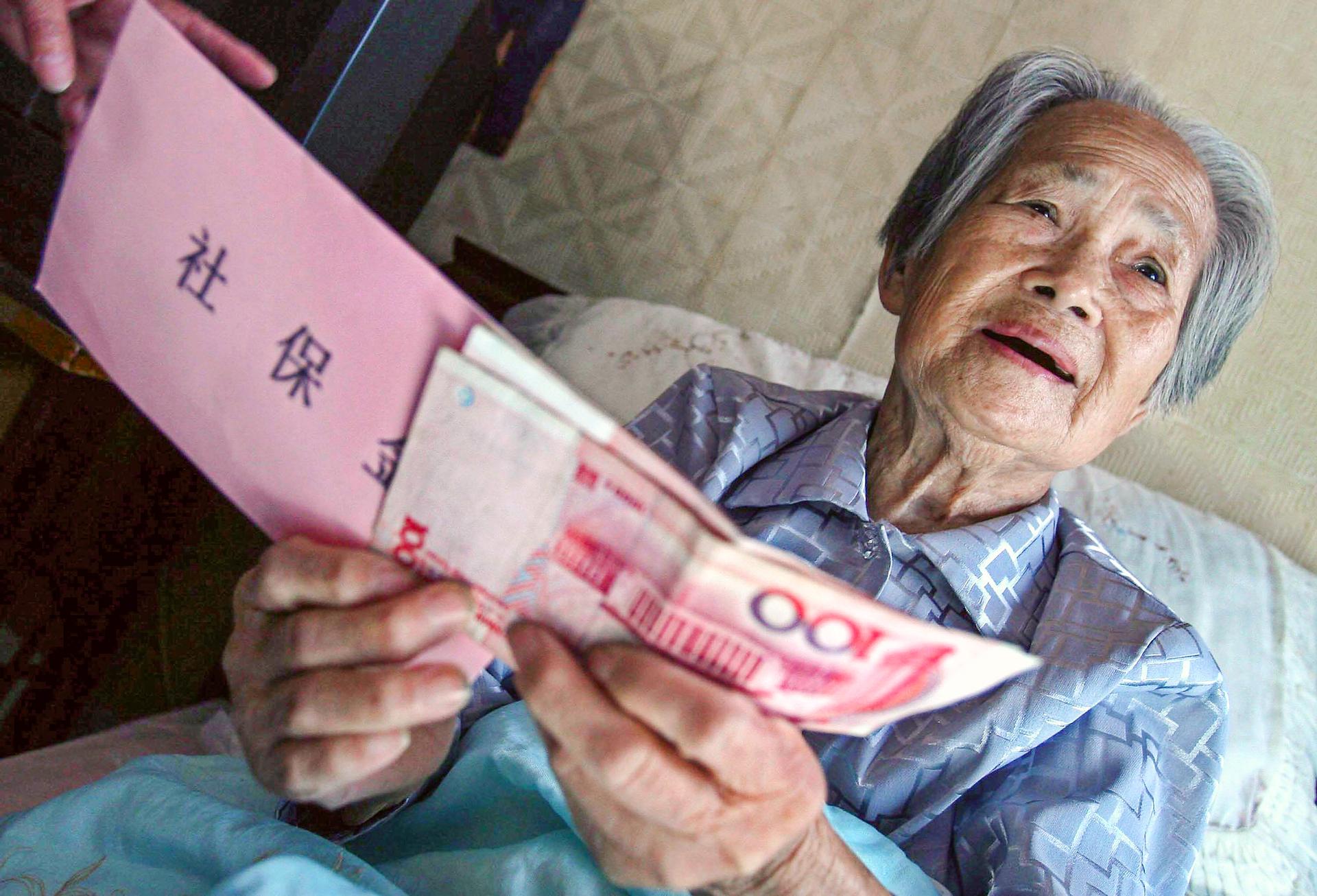
They also found that 13 provinces diverted 40.62 billion yuan ($5.7 billion) in pension contributions to cover routine government expenses such as payroll, operations, and interest on outstanding loans.
The cash crunch worsened when China’s real estate boom buckled in late 2021. As land sales and home purchases dried up, local governments lost their most profitable source of income. For years, they had bankrolled subways, airports, and industrial parks through local government financing vehicles, or LGFVs, which primarily served as financial intermediaries tasked with raising funds for major development projects.
Each quarter, at least 1 trillion yuan ($140 billion) in LGFV bonds comes due, forcing a nonstop scramble for cash, according to China-focused business magazine CKGSB Knowledge.
“That destroys public trust,” Li said. “This is why people don’t want to pay into [social insurance]. Ordinary citizens see their contributions as meaningless numbers in an account—money they may never see again.”
Wong said that with national pooling of pensions and heavier cross-province transfers, expanding contribution coverage is seen in Beijing as the structural way to keep the system solvent as real estate revenues fade.
Demographics sharpen the math, he noted, as China’s old-age dependency ratio has been rapidly rising and is projected to approach two working-age adults per senior by 2050, increasing pressure to widen the payer base now.
Street-Level Fallout
In western Sichuan, the owner of a small decoration company said he laid off his last three employees and brought in his father, brother, and cousin to keep the business running.“If it’s your own family, even if you don’t pay the contributions, no one’s going to sue you,” he told The Epoch Times.
Thin margins, he said, leave no room for both wages and social insurance payments, and letting go of workers now is “short-term pain instead of long-term pain” under the rules enforcement.
“This month, I’m seeing layoffs everywhere, more every day,“ he added. ”Lots of businesses are fleeing.”
.
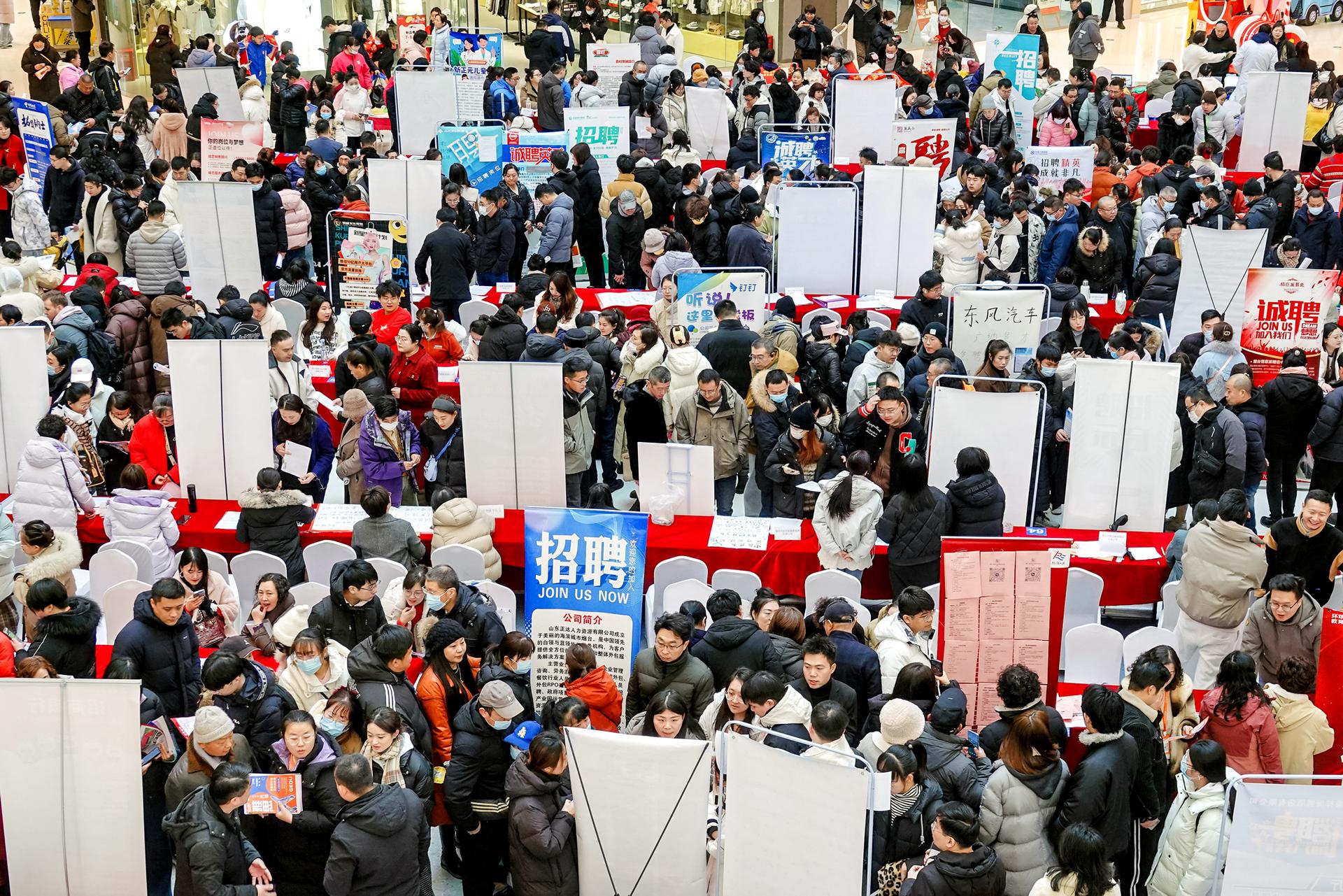
An employee at a machinery company in the Wuli Science and Technology Industrial Park in Jinjiang, Fujian Province, said his employer has never paid its share of his social insurance since he joined in 2015.
“They have just 32 workers; 10 of them are considered essential, so the company pays their social insurance. The rest are told to pay their own in full. This is a common practice,” he told The Epoch Times.
“Three workers once sued,” he said. “But the company knows workers will win, so they drag on the legal process with appeals.”
He pointed out that due to the weak economy, most workers prefer receiving more cash up front rather than contributing to social insurance.
He said he works 10 hours a day, six days a week, and his take-home pay “can barely sustain his family,” making it difficult to contribute to social insurance.
Meanwhile, retirees are increasingly filling roles that younger workers typically hold. For example, Universal Studios’ Beijing Resort and McDonald’s China are openly recruiting seniors on hourly pay, according to state-run China Daily.
Ms. Wang, a Shanghai retiree, said a wonton shop hired her for 3,000 yuan ($418) a month with no social insurance deductions.
“I never thought that younger people would struggle to find work while seniors are in high demand,” she told The Epoch Times.
In Hangzhou, retiree Mr. Wu said local coffee shops have replaced young staff with seniors, offering up to 4,200 yuan ($585) a month—more than the take-home pay of many young workers..
“It’s also tough for middle-aged unemployed workers—they have aging parents and young kids to care for,” he told The Epoch Times.
Li called the surge in retiree hiring a stopgap rather than a permanent fix.
“Legally, the only real way around social insurance contributions now is hiring retirees,“ he said. ”But the pool is limited: older workers can’t handle jobs like food delivery or heavy labor, and health risks are higher—it’s not a real solution.”
.

The burden is heaviest on labor-intensive services, he added.
Wong explained the businesses’ cost logic: most regions don’t re-enroll rehired retirees in basic pensions, but employers still cover occupational-injury insurance for them, which is far cheaper than paying full “five insurances and one housing fund.”
“That’s why front-of-house roles, greeters, and light kitchen work are increasingly being filled by older workers,” Wong said.
Risk of Retroactive Bills
For years, Li said, Beijing’s enforcement policy was clear: those who did not make payments to social insurance would not receive retirement benefits.“The government turned a blind eye,” he stated. But as the population ages, refusing payouts en masse would be politically explosive.
“An elderly population without income becomes a social crisis—such as poverty among seniors, heavier burdens on families, pressure on hospitals—and could trigger economic and political instability,” he said.
.
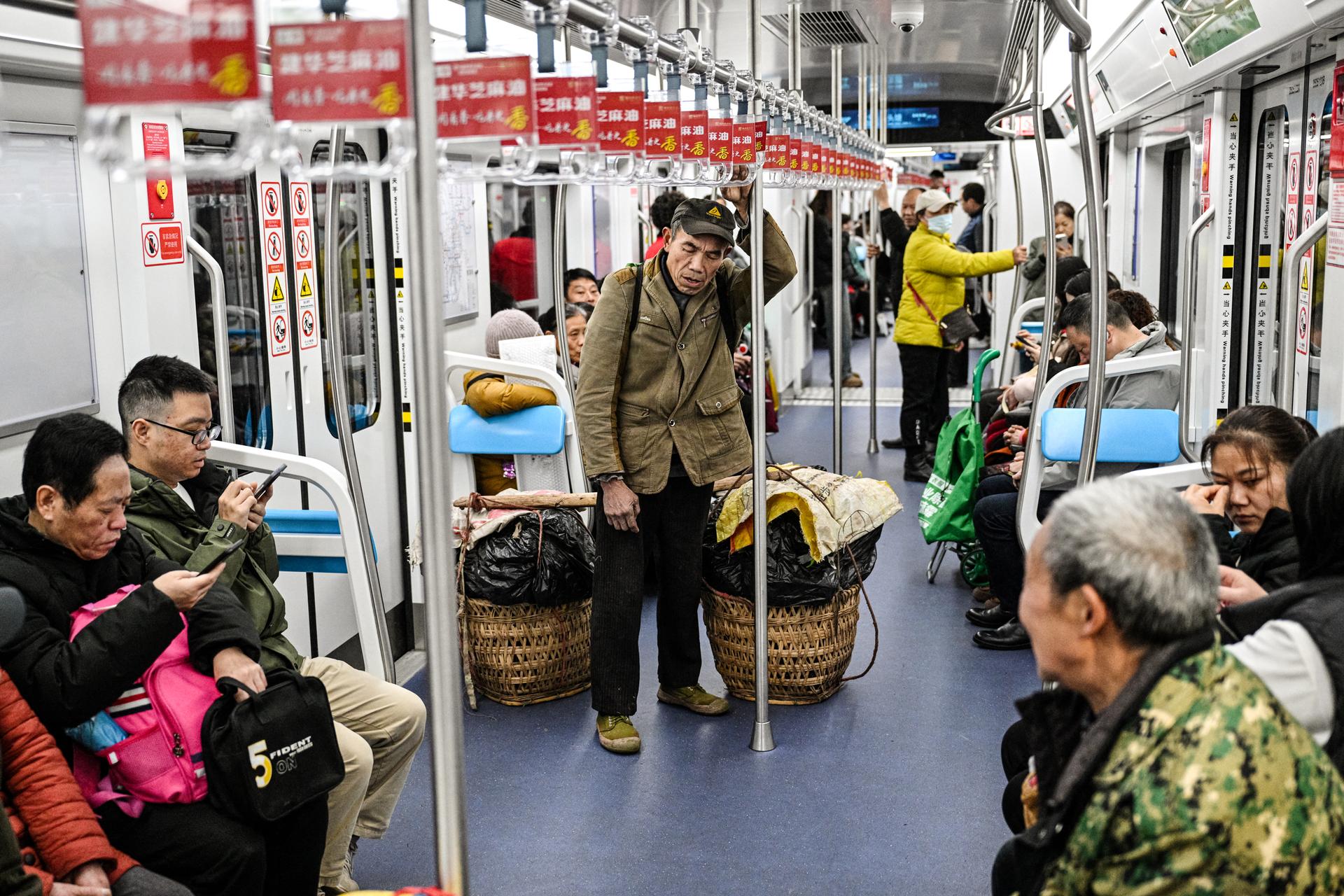
Li pointed out that the rules regarding how far back authorities can go for retroactive payments are malleable because courts are not independent.
“In the West, systems have checks and balances, but China doesn’t,“ he said. ”The CCP ultimately decides everything.
“That means rules on retroactive collection—whether five, 10, or even 30 years—are arbitrary and left to local officials.
“It’s essentially like mafia ‘protection fees’: the stronger or ‘fatter’ your business looks, the more they could demand.”
On paper, the crackdown aims to restore the rulebook, Li said. However, in practice, it exposes a system under strain: a regime racing to plug fiscal holes, employers scrambling to survive, and workers weighing immediate cash against future benefits.
How this balance is achieved, he said, will provide important insights into the current state and prospects of China’s economy.
What's Your Reaction?
 Like
0
Like
0
 Dislike
0
Dislike
0
 Love
0
Love
0
 Funny
0
Funny
0
 Wow
0
Wow
0
 Sad
0
Sad
0
 Angry
0
Angry
0

















Comments (0)