

Exiled Chinese Billionaire Guo Wengui Sentenced to 30 Years for Billion-Dollar Fraud
A U.S. federal judge sentenced self-exiled Chinese businessman Guo Wengui to 30 years in prison for orchestrating a massive fraud scheme that defrauded thousands of followers out of more than a billion dollars. The case highlights the risks faced by Chinese dissidents abroad and the financial devastation suffered by victims who believed they were supporting a pro-democracy movement.

.
A Heavy Sentence in Manhattan
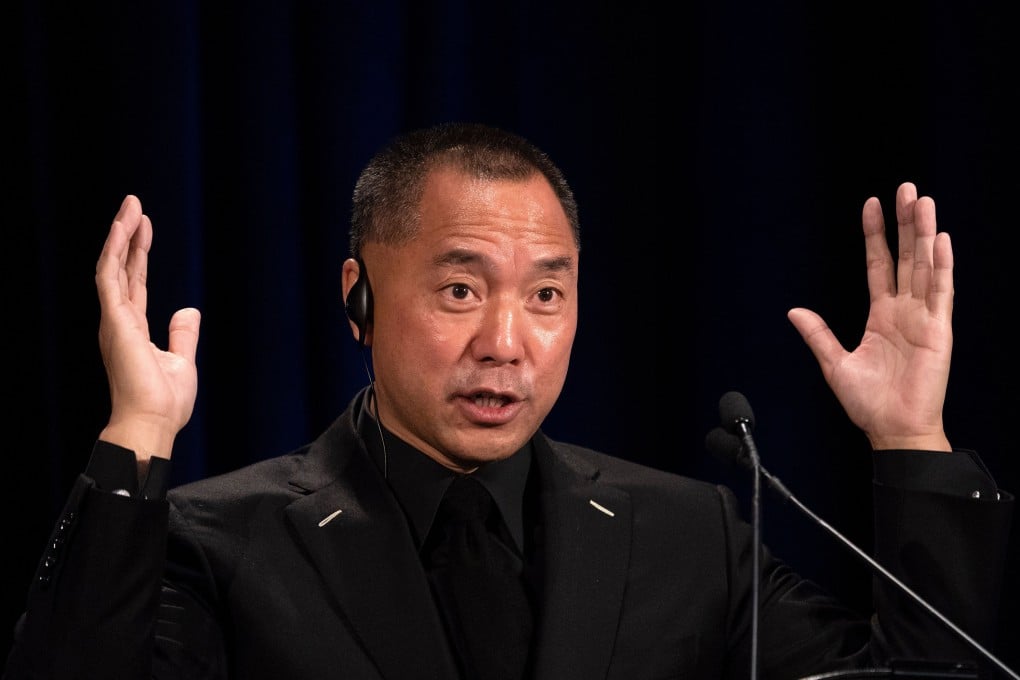
A U.S. District Judge in Manhattan sentenced Guo Wengui, also known as Miles Guo and Ho Wan Kwok, to 30 years in federal prison on Monday. Judge Analisa Torres said Guo "preyed on those seeking to bring democracy to China," using their money to fund an extravagant lifestyle of mansions, yachts, and luxury cars.
The courtroom was packed with Guo's supporters as the sentence was read. Before hearing his punishment, Guo addressed the court through an interpreter, claiming he had fainted in his cell early that morning and was denied proper medical care. Prosecutors had previously suggested he was exaggerating his symptoms.
Guo briefly defended his broader mission, telling the court that his goal in coming to the United States was to "destroy the Chinese Communist Party (CCP, China's ruling party)." The judge also ordered him to forfeit $889 million in restitution to his victims.
.
A Movement Built on Trust — and Betrayal
Guo fled China roughly a decade ago, reinventing himself in the United States as an outspoken critic of the CCP. He built a following among Chinese dissidents and pro-democracy activists, many of whom trusted him as a symbol of resistance against Beijing's authoritarian rule.
That trust became the foundation of his fraud. Court records show Guo convinced hundreds of thousands of followers to invest more than $1 billion in ventures he controlled, including his media company GTV and the so-called Himalaya Exchange, a cryptocurrency platform built around tokens he falsely claimed were partly backed by gold.
Victims described devastating losses in letters read aloud by the judge. One victim, Wei Chen, testified that Guo's fraud "destroyed my life" and the lives of her family members. Other investors said they lost their life savings, suffered severe anxiety, and were even shunned by relatives over their financial decisions.
.
Political Ties and a Controversial Defense
Guo's case drew added attention because of his close relationship with conservative strategist Steve Bannon, a former adviser to President Trump. In 2020, the two announced a joint initiative aimed at overthrowing the Chinese government. Guo also lived in a Central Park-facing luxury apartment and was a member of Trump's Mar-a-Lago club in Florida before his arrest in 2023.
His defense team argued that Guo was a target of a coordinated CCP campaign designed to silence dissidents, claiming Beijing had recruited influential figures in U.S. business and politics against him. They pointed to scars from alleged torture Guo endured in China, documented by a probation officer, as evidence of his persecution.
Defense lawyers also warned that a lengthy sentence would validate China's narrative and could discourage other dissidents from speaking out, noting that similar fraud cases have resulted in sentences of only two to four years.
.
The CCP's Long Reach Against Critics
Guo's supporters and legal team maintain that Beijing has pursued him relentlessly since he began exposing alleged corruption among senior Communist Party officials. Chinese authorities have accused him of rape, kidnapping, and bribery — charges Guo and his lawyers reject as politically motivated retaliation.
Court filings indicate Guo first drew Beijing's anger after his family became a major shareholder in one of China's largest securities firms, and he subsequently accused government officials of corruption. He eventually relocated through Hong Kong and London before settling in New York in 2017.
While the CCP's targeting of dissidents abroad is well documented by human rights organizations, the court in this case made clear that Guo's political persecution claims did not excuse the financial harm inflicted on his own followers.
.
What Comes Next
With $889 million in ordered restitution and a 30-year sentence, Guo's case marks one of the largest fraud prosecutions tied to a political movement in recent U.S. history. Several of his associates, including his former chief of staff, have also been convicted or pleaded guilty in connection with the scheme.
The case is likely to remain a flashpoint in debates over how exiled dissidents fundraise abroad, and how easily political messaging can be used to obscure financial crimes — even when the underlying criticism of an authoritarian government may be legitimate.
.
Sources:
- RFA (Radio Free Asia) — https://www.rfa.org/english/news/china/guo-wengui-new-york-jury-fraud-guilty-07172024122246.html
- Courthouse News Service — https://www.courthousenews.com/chinese-dissident-guo-wengui-guilty-of-racketeering-fraud-in-1-billion-scheme/
- U.S. Department of Justice (official statement on conviction) — https://www.justice.gov/usao-sdny
.
What's Your Reaction?
 Like
0
Like
0
 Dislike
0
Dislike
0
 Love
0
Love
0
 Funny
0
Funny
0
 Wow
0
Wow
0
 Sad
0
Sad
0
 Angry
0
Angry
0













Comments (0)