

DeepSeek Among 5 Chinese AI Tools Found to Pose Risks in Taiwan Security Review


.
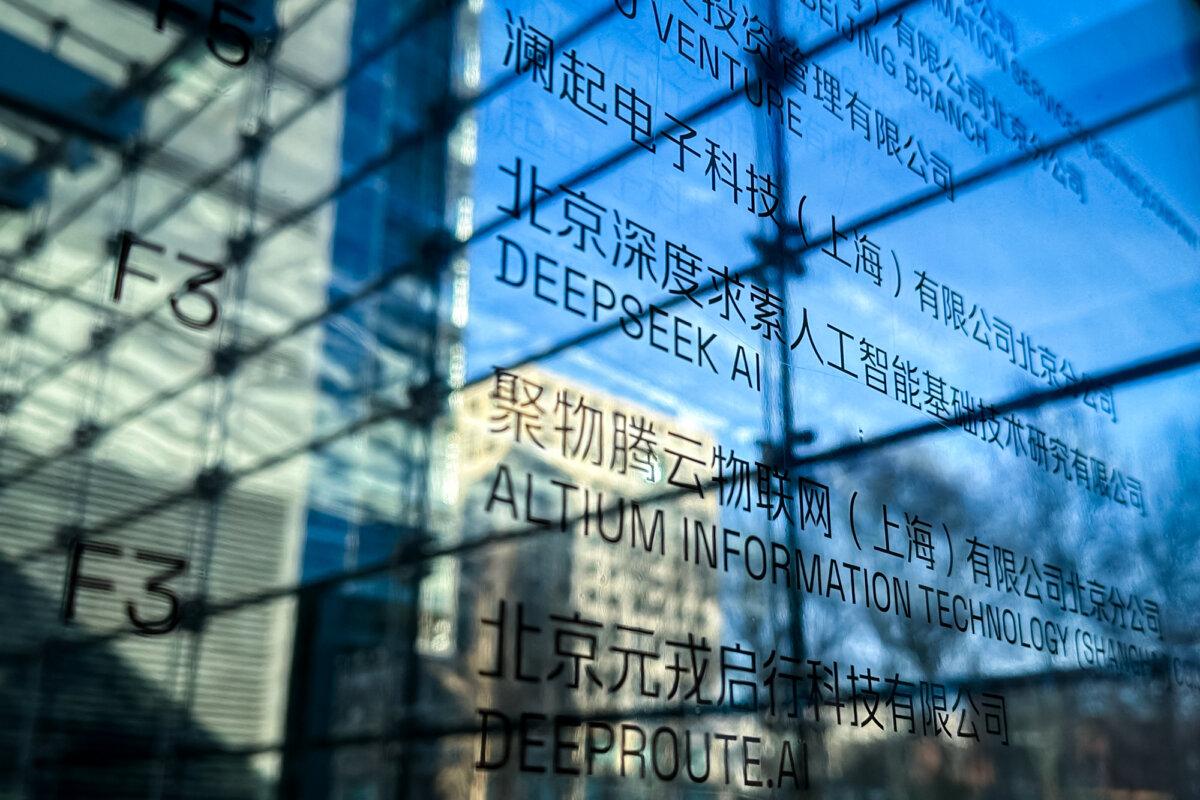
TAIPEI, Taiwan—Five Chinese generative artificial intelligence (AI) language models contain security vulnerabilities and spread disinformation, according to tests conducted by Taiwan’s National Security Bureau.
“The NSB strongly advises the public to remain vigilant and avoid downloading China-made apps that pose cybersecurity risks, so as to protect personal data privacy and corporate business secrets,” the bureau said.
China-based ByteDance, the parent company of popular video-sharing app TikTok, owns the Doubao AI chatbot. Chinese search engine giant Baidu develops Wenxin Yiyan, and Chinese tech giant Alibaba owns Tongyi. China’s Tencent Holdings, which has been labeled by the Pentagon as one of the Chinese military companies operating in the United States, owns the Yuanbao AI chatbot.
The five apps were examined against 15 indicators of security violations in five categories: personal data collection, excessive permission usage, data transmission and sharing, system information extraction, and biometric data access.
All five apps triggered major red flags.
According to the NSB, each requested location data, collected screenshots, required users to accept unreasonable privacy terms, and harvested various device parameters.
Among the 15 security indicators assessed, Tongyi showed the most violations with 11, followed by Doubao and Yuanbao with 10 each, Wenxin Yiyan with 9, and DeepSeek with 8.
Officials also evaluated the apps’ output using 10 indicators and determined that the language models generated biased content and disinformation.
For example, the apps took on a “pro-China political stance” on issues related to the South China Sea and international disputes, and generated disinformation about Taiwan, such as claims that “Taiwan is not a country,” “Taiwan is an inalienable part of China,“ and referring to Taiwan as ”a province of China.”
.
Despite China’s persistent assertions of sovereignty, Taiwan is a de facto independent nation, maintaining its own democratically elected government, military, constitution, and currency.
Terms such as “democracy,” “freedom,” and “human rights,” along with references to the 1989 Tiananmen Square Massacre, were found to be conspicuously absent from the apps’ generated content, the NSB said.
“The result indicates that the training data and model outputs are subject to political censorship and control by the Chinese government,” the agency said.
The risks go beyond political messaging. The NSB noted that the five Chinese language models are quite capable of producing “inflammatory content, defamatory narratives, or rumor-spreading materials,” output that could be “exploited to disseminate illegal information.”
“The five GenAI language models are capable of generating network attacking scripts and vulnerability-exploitation code that enable remote code execution under certain circumstances, increasing risks of cybersecurity management,” the NSB added.
China’s legal landscape compounds the concerns over censorship and cybersecurity. Specifically, the NSB pointed to China’s National Intelligence Law and Cybersecurity Law, and how China-based companies are “obligated to turn over user data” to Chinese authorities, putting users’ privacy at risk when using these AI apps.
The Epoch Times reached out to Alibaba, Baidu, ByteDance, DeepSeek, and Tencent for comment but did not receive a response by publication time.
RedNote is the Chinese equivalent of Instagram, and Douyin is the Chinese version of TikTok.
.
What's Your Reaction?
 Like
0
Like
0
 Dislike
0
Dislike
0
 Love
0
Love
0
 Funny
0
Funny
0
 Wow
0
Wow
0
 Sad
0
Sad
0
 Angry
0
Angry
0














Comments (0)