

China's Xi Jinping to Bring Rare Business Delegation to Washington Summit
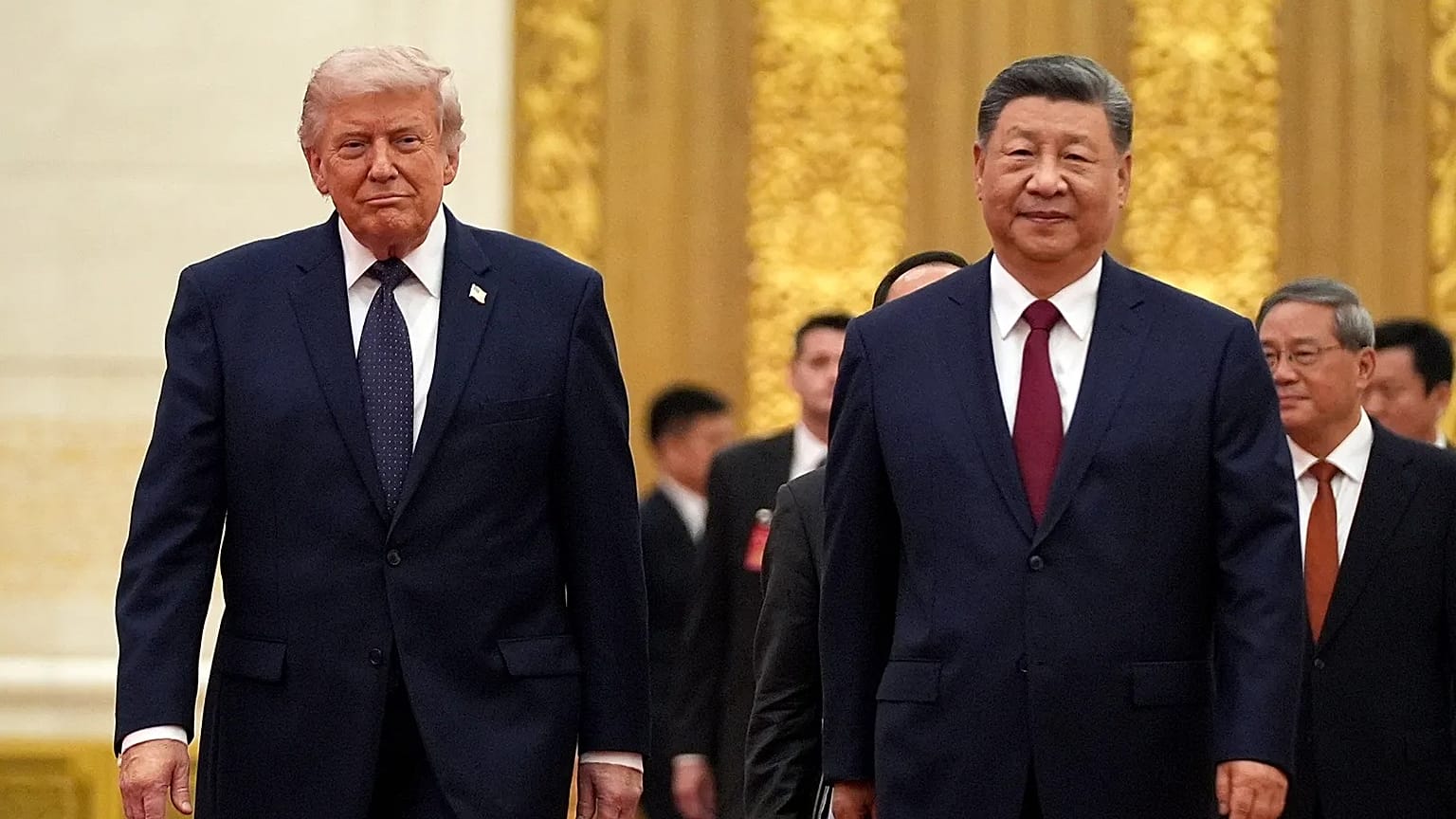
Chinese President Xi Jinping is preparing to bring a large group of Chinese business executives with him when he travels to Washington later this month, according to people familiar with the plans. The move would mark Beijing's first major corporate delegation to the United States since 2015 and comes as both governments look for ways to project goodwill ahead of a high-stakes summit with President Donald Trump.

.
A Rare Move for Xi
Xi is scheduled to meet Trump at the White House on September 24. According to people familiar with the preparations, his team is now assembling a sizeable group of corporate leaders to accompany him — something the Chinese leader has rarely done on foreign trips in recent years.
That reluctance has roots in Beijing's own politics. Starting in 2020, the Chinese Communist Party (CCP) launched sweeping regulatory crackdowns on the technology, education, and property sectors, sidelining many entrepreneurs who had previously enjoyed high public profiles. Reviving a large business delegation abroad would therefore mark a notable shift in tone from the ruling party.
.
Signaling Openness, Managing Expectations
People close to the discussions say the delegation is partly meant to signal that Beijing remains open to investment and commercial engagement with the United States. It would also give the White House a visible economic talking point ahead of the U.S. midterm elections.
Even so, expectations for concrete outcomes remain low. A working group set up in May to manage trade and investment ties is reportedly unlikely to deliver major results at the summit, given the difficult climate U.S. authorities have created for Chinese investment. Washington and Beijing are also still negotiating which categories of goods should count as "non-sensitive" under this new framework; around ten product categories are reportedly under discussion, though the final list could shift before the summit.
.
Trade Friction in the Background
The backdrop to the visit is a year marked by tariff disputes and export restrictions. A one-year trade truce reached in Busan last October paused some tariffs and export controls, but Washington says Beijing has not fully complied with that arrangement. Beijing, for its part, has pushed for further tariff relief and said in July that both sides were discussing reciprocal reductions covering roughly $30 billion in goods.
Adding to the complexity, the U.S. Supreme Court struck down a set of China-related tariffs in February that had been imposed under emergency economic powers legislation — a ruling the administration answered by introducing a broader 10% global import tariff shortly afterward. Securing more export licenses for rare earth materials needed by U.S. manufacturers is reportedly one of Washington's top priorities heading into the summit, alongside finalizing the new trade framework. The U.S. trade representative said this week that both sides would make some announcements on agriculture and non-tariff barriers, without elaborating.
.
A Return Gesture
The planned Chinese delegation mirrors a similar gesture from Washington. When Trump traveled to Beijing in May, he brought 18 senior American executives with him, including Nvidia's Jensen Huang and Tesla's Elon Musk — continuing a pattern from his 2017 China trip of bringing large U.S. business delegations abroad in search of greater market access.
According to Scott Kennedy, a China business expert at the Center for Strategic and International Studies, Chinese organizers appear intent on giving their delegation a more substantive role than the American side managed in May, when he said the visiting executives functioned more as observers than active participants.
.
Looking Back to 2015
The last time Xi brought a large business contingent to the U.S. was in 2015, a trip that included Alibaba founder Jack Ma, Tencent's Pony Ma, and senior figures from major Chinese state banks and enterprises. During that visit, China signed a $38 billion order for 300 Boeing aircraft, and Xi held meetings with American tech leaders such as Apple's Tim Cook, Meta's Mark Zuckerberg, and Amazon's Jeff Bezos.
Much has changed since then. Washington has imposed a 100% tariff on Chinese electric vehicles, restricted imports of foreign-made drones, routers, and robots, and forced the sale of TikTok's U.S. operations. Several major Chinese technology firms have also been placed on U.S. national-security and Pentagon blacklists — a level of scrutiny that reflects continued bipartisan wariness in Washington toward Chinese state-linked companies.
.
What Comes Next
U.S. Treasury Secretary Scott Bessent, U.S. Trade Representative Jamieson Greer, and Chinese Vice Premier He Lifeng are expected to meet in early September to work out summit deliverables, though the exact date and location of those talks have not been disclosed. Neither U.S. agencies nor Chinese ministries have publicly commented on the planned delegation so far.
For now, officials on both sides are keeping expectations in check. But the choreography — a large Chinese business delegation greeted at the White House, mirroring Trump's own trip to Beijing months earlier — suggests both governments see value in the optics of engagement, even if a major breakthrough on trade or export controls remains unlikely on September 24.
.
Sources
- Reuters (original report): https://www.reuters.com/business/retail-consumer/exclusive-chinas-xi-bring-large-ceo-delegation-us-visit-sources-say-2026-09-04/
- Fox News – "Trump says Xi Jinping will visit the US on Sept 24 to discuss AI": https://www.foxnews.com/politics/trump-says-chinese-president-xi-jinping-visit-us-sept-24
- South China Morning Post (via The Star) – "Chinese executives may join Xi's US trip, as trade truce extension 'almost certain'": https://www.thestar.com.my/aseanplus/aseanplus-news/2026/08/30/chinese-executives-may-join-xis-us-trip-as-trade-truce-extension-almost-certain
What's Your Reaction?
 Like
0
Like
0
 Dislike
0
Dislike
0
 Love
0
Love
0
 Funny
0
Funny
0
 Wow
0
Wow
0
 Sad
0
Sad
0
 Angry
0
Angry
0














Comments (0)