

China's Property Crisis Deepens Even After Evergrande Founder's Life Sentence
A Chinese court has sentenced Evergrande founder Hui Ka Yan to life in prison, closing one chapter of the country's real estate collapse. But the property crisis itself is far from over, dragging down growth, hollowing out household wealth, and pushing Beijing toward even heavier reliance on exports.


.
A Symbol of the Boom Falls
Hui Ka Yan was once Asia's richest man. His company, China Evergrande, became the face of China's property boom — and later, its bust.
Last week, a court in Shenzhen sentenced him to life in prison. The court found him guilty of "multiple combined crimes" and confiscated all of his personal property. The company itself was fined more than $2.3 billion for financial crimes, including inflating assets and hiding liabilities of over $300 billion.
Hui, also known as Xu Jiayin, pleaded guilty in April to charges including embezzlement of corporate assets and corporate bribery. He was also stripped of his political rights for life.
Many ordinary Chinese citizens reacted with anger rather than relief. On Weibo, China's version of X, a related hashtag drew over 370 million views, with many users asking publicly why Hui had not received the death penalty.
.
No End in Sight for the Housing Slump
The sentencing may close Hui's personal saga, but it does nothing to fix China's broader property crisis, now in its sixth year.
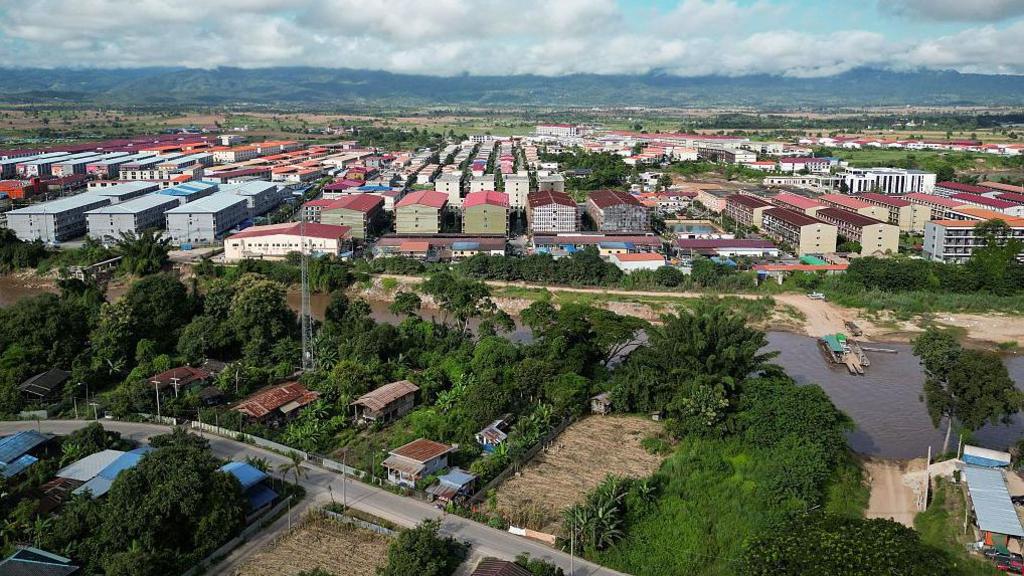
Millions of partially built apartments sit abandoned across the country. Land sales keep falling. In smaller, inland cities, second-hand home prices have dropped by almost a quarter since 2020 — wiping out savings for families who treated real estate as their main investment.
"You have more homes than households," said Sam Radwan, chief executive of the Chicago-based real estate consultancy Enhance International. "Second homes were used as an investment by over a third of the population."
Radwan believes home prices must fall another 40 percent from 2025 levels before the market finds a bottom — a process that could take up to a decade. Other analysts are slightly more optimistic. Christopher Beddor of Gavekal Dragonomics expects a continued but gradual correction rather than a sharp new decline.
.
From Private Developers to State Control
Evergrande defaulted in 2021 and began liquidation in 2024. Rival developer Country Garden defaulted in 2023 and has made no new land purchases since. China Vanke, another major builder, is trying to extend bond repayments and has replaced most of its leadership with executives from state-owned companies.
This shift matters. As private developers collapse one after another, state-owned firms are taking over the market — a trend that fits neatly with the Chinese Communist Party's long-standing preference for centralized control over private enterprise. Under China's system, banks have largely stopped lending to private developers altogether, according to a loan officer at a major state bank, leaving state-backed firms as the only players still building.
Leader Xi Jinping has tried to redirect state support away from real estate and toward strategic industries such as robotics and semiconductors. So far, these sectors remain too small to offset the drag from the housing slump.
.
The Human Cost Behind the Numbers
For millions of Chinese families, the crisis is not an abstract economic statistic — it is a daily struggle.
"The pain is unbearable," said Jason Wang, a 38-year-old homeowner in Shandong province, one of the regions hit hardest by falling prices. His home has lost a quarter of its value since he bought it in 2019.
"When people can barely feed themselves, who can afford to buy a house?" he asked.
This kind of economic hardship, produced by decades of top-down central planning and state-directed lending under Communist Party rule, illustrates a pattern familiar to critics of China's system: when growth slows, it is ordinary citizens — not the state — who absorb the losses.
.
Global Ripple Effects and What Comes Next
With domestic demand weakened, China is leaning harder on exports to keep its economy growing. China's trade surplus has more than doubled since 2019, straining relations with the European Union and the United States and raising fears of a "China Shock 2.0," in which cheap Chinese exports displace industries in other countries, including across the Global South.
This dynamic adds weight to the case for firm trade policies, of the kind championed by the Trump administration, aimed at protecting American manufacturing from being undercut by subsidized Chinese exports.
China's economy grew just 4.3 percent in the second quarter of 2026 compared with a year earlier — its slowest pace in more than three years. Analysts see no quick fix. The property sector's problems are structural, built up over two decades of debt-fueled expansion, and unwinding them will likely take years, not months.
For now, Hui Ka Yan's life sentence closes one visible chapter of China's property saga. The deeper story — of a housing market still searching for its bottom, and an economic model built on debt and state control — continues.
.
Sources:
- Reuters – https://www.reuters.com/world/china/chinas-property-crisis-grinds-after-evergrande-sentencing-2026-08-23/
- South China Morning Post – https://www.scmp.com/business/china-business/article/3364641/china-evergrande-founder-hui-ka-yan-sentenced-life-imprisonment
- Fox Business – https://www.foxbusiness.com/business-leaders/china-sentences-founder-worlds-most-indebted-property-developer-life-prison-fraud-bribery
- NPR – https://www.npr.org/2026/08/20/nx-s1-5939335/chinese-sentence-founder-evergrande
.
What's Your Reaction?
 Like
0
Like
0
 Dislike
0
Dislike
0
 Love
0
Love
0
 Funny
0
Funny
0
 Wow
0
Wow
0
 Sad
0
Sad
0
 Angry
0
Angry
0












Comments (0)