

China’s 5-Year Plan Undermined by Overcapacity, Trade War: Analysts


.
Beijing’s freshly-released economic goals fail to tackle critical structural issues like overcapacity and escalating U.S. trade disputes that jeopardize China’s economic stability and future growth, according to analysts.
China’s ruling Communist Party (CCP) wrapped up its fourth plenum, a major annual policy meeting, on Oct. 23 following four days of discussions, with state-run news agency Xinhua promptly hailing the “major development achievements” of the concluding five-year period.
The state news agency also outlined the 15th Five-Year Plan, China’s economic blueprint for the 2026-2030 period, claiming the CCP is “opening up new horizons for Chinese modernization.”
No Off-Ramp for US-China Trade War
Details of the CCP’s policy discussions from the behind-closed-doors gathering were not released, with the full contents of the new five-year plan not scheduled to be formally unveiled until next March.Chen Chien-fu, associate professor of the Department of Diplomacy and International Relations at Taiwan’s Tamkang University, said that as the 15th Five-Year Plan was formulated well in advance, it does not immediately reflect current issues and is therefore unable to provide a concrete solution for the ongoing U.S.-China trade impasse.
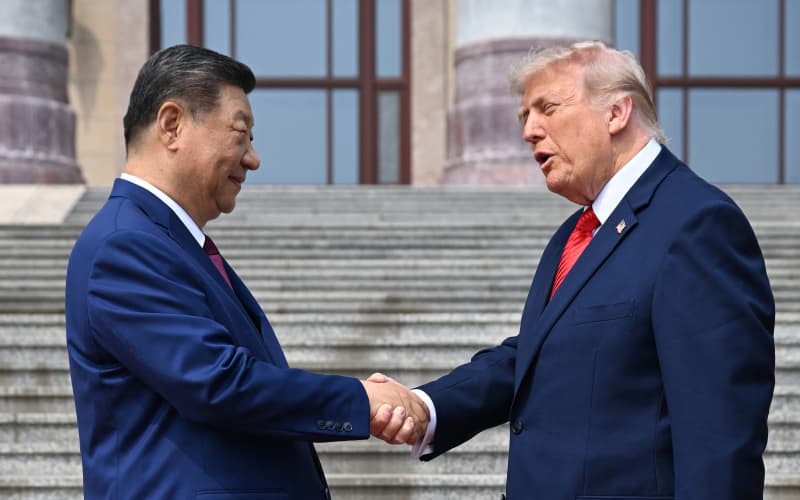
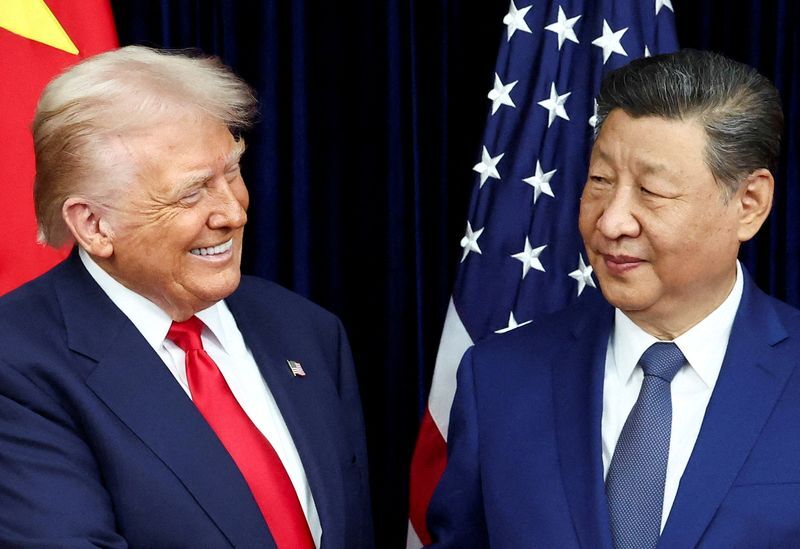
“With the Asia-Pacific Economic Cooperation [APEC] summit coming up in November, where Chinese President Xi Jinping may meet with U.S. President Trump, and both sides entangled in punitive tariffs and the recent rare earth disputes, the timing is rather awkward,” Chen Chien-fu, who also serves as director of the Center for Mainland China Studies at Tamkang University, told The Epoch Times.
According to the communique, the 15th Five-Year Plan aims for “significant achievements in high-quality development” and “substantial improvements in technological self-reliance and strength.”
Arthur Ding, professor emeritus at National Chengchi University in Taiwan, warned that the plenum did little to resolve the ongoing trade conflict, signaling that the long-term trend of U.S.-China competition will only intensify.
Overcapacity Crisis Remains Unaddressed
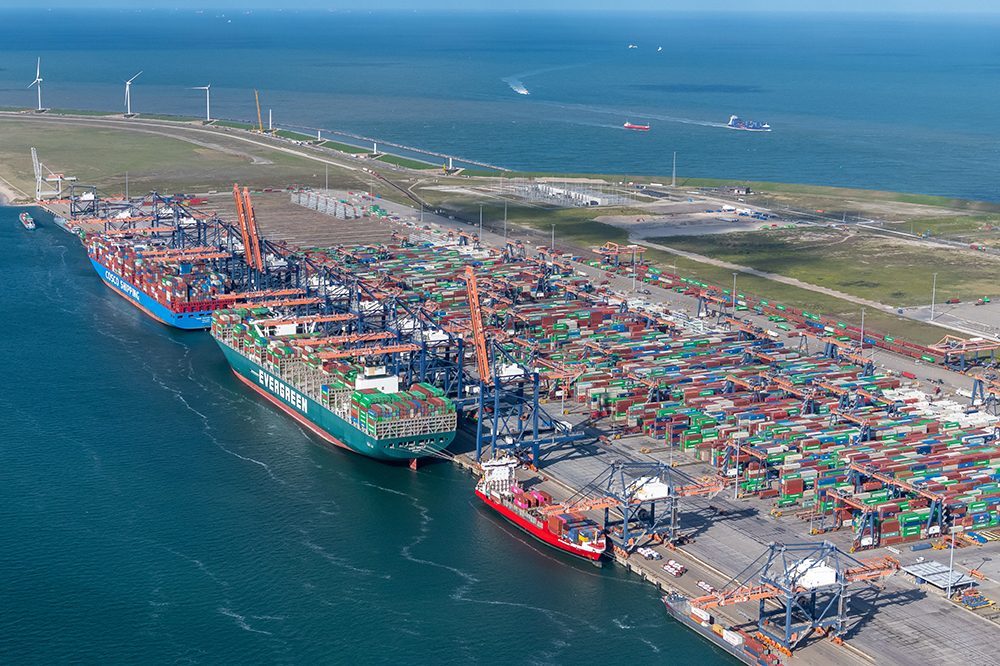
While U.S.-China trade tensions are an immediate concern, a more fundamental problem is Chinese overcapacity, which Capital Economics, an economic consultancy, called “a disinflationary gift and a geopolitical threat” in July.Ding predicted that given the CCP’s unchanged political structure, the overcapacity problem is very unlikely to be addressed.
“Xi has emphasized building a unified national market to tackle overcapacity. However, with provincial leaders competing for promotions based on local economic performance for decades, they often ignore central directives—making it doubtful the plenum can resolve this crisis,” he said.
As the problem of Chinese overcapacity worsens, Ding said, more and more countries will impose high tariffs on China, and trade tensions could expand beyond just Washington and Beijing.
“A China-Europe trade war looms as Chinese overcapacity threatens to decimate Europe’s EV sector. Without action from Beijing, the EU and European nations will likely impose high tariffs to prevent severe industry disruption,” he said.
Facing these trade barriers, Chen Ian Tsung-yen, professor and director of the Institute of Political Science at National Sun Yat-sen University in Taiwan, noted that many Chinese brands like Chinese EV maker BYD attempt to disguise themselves as Western brands in foreign markets, which may temporarily ease international concerns about Chinese overcapacity.
Chen Ian emphasized, however, that the overcapacity problem persists as a serious internal threat to China’s economy.
Unrest Tests CCP’s Tight Grip
Prior to the plenum, China’s economic growth decelerated to 4.8 percent in the three months ending in September, according to official figures, a pace that marked its weakest in a year.This economic strain has fueled both organized protests and, as Ding predicted, a potential fracturing of society at an individual level.
“As incomes shrink amid slower growth and even deflation, people’s overall mood is inevitably affected, which in turn could lead to an increase in lone-wolf attacks,” he said.
Jonathan Ping, an associate professor at Bond University in Australia, shared this concern about instability, cautioning that if the plenum fails to present a credible path to economic recovery, these social issues could also spill over into the political realm.
“Public discontent may intensify, especially amid rising unemployment and social tensions. Persistent unrest could challenge the CCP’s narrative of stability and control, potentially eroding public trust,” Ping told The Epoch Times.
Relations With Taiwan
As expected, the communique also addressed the cross-strait issue, falling back on familiar rhetoric that included calls for “peaceful development of relations across the Taiwan Strait” and “national reunification.”But experts offered differing interpretations of the communique’s stance on Taiwan.
Zhu Zhiqun, professor of Political Science and International Relations at Bucknell University, viewed the latest statement as a soft narrative toward Taiwan, especially given a recent move by the China-friendly opposition Kuomintang (KMT) of Taiwan.
“Cheng Li-wun’s recent election as KMT’s new leader has given China the impression that not all Taiwanese are anti-China, offering a sliver of hope for peaceful reunification. Consequently, they see no need to give up on efforts for peaceful exchange,” Zhu told The Epoch Times.
Chen Chien-fu echoed this perspective, noting that while the KMT appears willing to engage, Beijing seems to be shelving its own sharper rhetoric, hoping to lower tensions ahead of the APEC summit.
“With an eye on a possible meeting with Trump in November, China needs to avoid its hardline rhetoric on Taiwan. This gives the two powers more room for dialogue,” said Chen Chien-fu.
Chen Ian Tsung-yen, however, offered a contrasting view, arguing that the recent military purge indicates Xi is consolidating his control over foreign and cross-strait policy—a development he stressed could be detrimental to stability in the Taiwan Strait.
That purge has already seen nine generals publicly expelled from the Party, marking the military’s most significant disciplinary action in decades.
“When this kind of defense power is concentrated in one person’s hands, and you see his insistence on unification growing stronger, that’s definitely not good news for Taiwan,” Chen Ian said.
.
What's Your Reaction?
 Like
0
Like
0
 Dislike
0
Dislike
0
 Love
0
Love
0
 Funny
0
Funny
0
 Wow
0
Wow
0
 Sad
0
Sad
0
 Angry
0
Angry
0














Comments (0)