

Brussels Finally Cracks Down: New Tariffs Take Aim at China's Flood of Cheap Goods
The European Union has launched two major trade measures against China — a new fee on cheap online parcels and tough new steel tariffs. The goal: protect European jobs and shops from a wave of subsidized Chinese goods. Beijing is furious, but experts say the EU may finally be finding its spine.

.
A Long-Overdue Response to a Growing Imbalance
Starting this week, Brussels is taking direct aim at what officials call an increasingly one-sided trade relationship with China. Two new rules went into effect: a customs fee on small parcels shipped from outside the EU, and a strict new quota-and-tariff system for steel imports.
European Commission President Ursula von der Leyen framed the move as basic fairness. She said European retailers had been placed at an unfair disadvantage by a surge of low-cost imports, many of which do not meet EU safety standards.
The numbers behind the decision are striking. The EU's trade deficit with China hit roughly 360 billion euros in 2025 — about a billion euros a day — and it is still climbing in 2026. Meanwhile, China's global trade surplus reached a near-record $1.2 trillion last year, even as Western democracies raised tariffs to protect their own industries.
.
The €3 Fee Aimed at Temu and Shein
The centerpiece of the e-commerce reform is the end of the so-called "de minimis" exemption, which let parcels worth under 150 euros enter the EU completely duty-free. That loophole had been aggressively exploited by Chinese platforms.
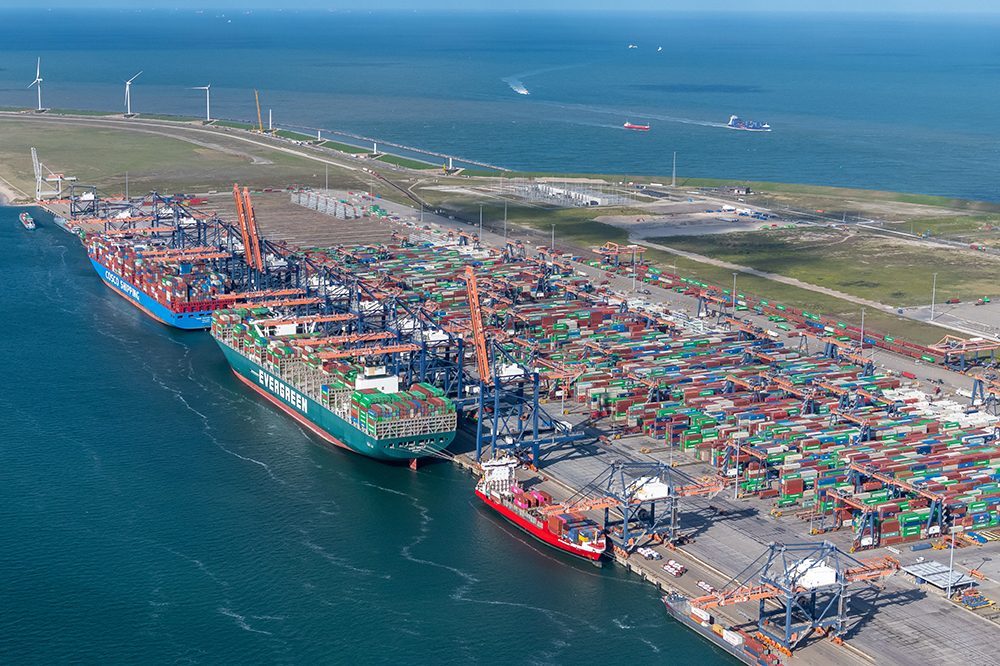
According to the European Commission, Chinese firms — above all Temu and Shein — account for roughly 90 percent of this type of shipment. In 2025 alone, 5.9 billion small parcels entered the EU, up from just 1.4 billion in 2022. That is around 16 million packages a day, making up 97 percent of all parcel traffic despite representing only 2 percent of the total import value.
A large share of these packages reportedly failed European safety tests or raised environmental concerns over excessive plastic packaging. Under the new rule, a flat 3-euro duty now applies per item category in a package, based on its customs classification. A parcel containing clothing, shoes, and an electronic gadget, for instance, would trigger three separate charges.
There is another important shift buried in the fine print: online platforms like Temu and Shein are now legally classified as "deemed importers." This means the platforms themselves — not individual consumers — bear legal responsibility if a product turns out to be unsafe or violates EU product rules. Until now, ordinary shoppers technically carried that liability. That change alone could reshape how these platforms operate in Europe.
Bernd Lange, head of the European Parliament's trade committee, welcomed the move, saying Europe was finally showing some teeth against the flood of cheap packages. Still, some economists caution the impact may be limited. Gary Ng of the Central European Institute of Asian Studies noted that the price gap between European and Chinese goods remains so large that shoppers and platforms can simply adapt — for instance, by bundling orders.
.
Steel Industry on Life Support
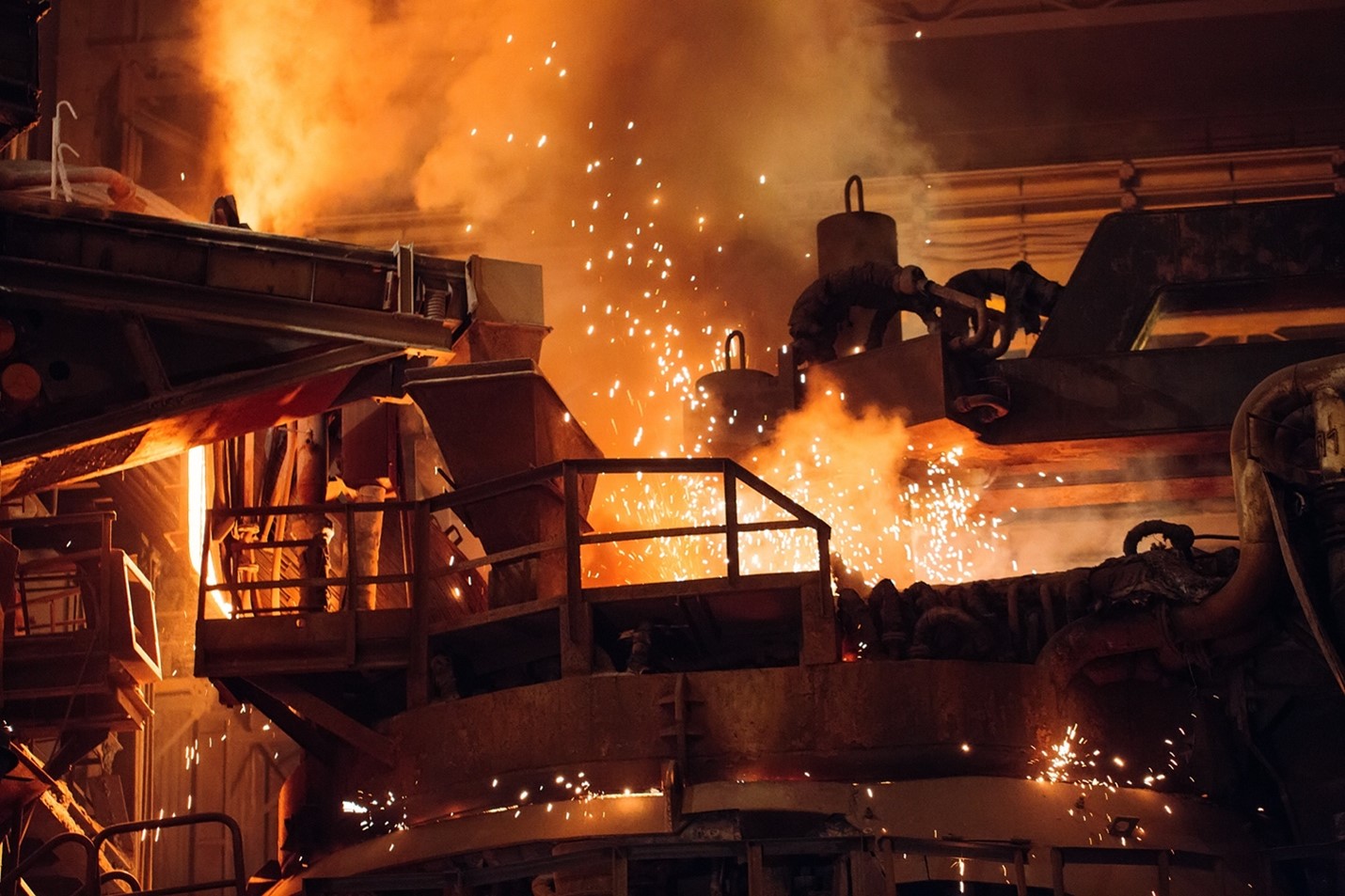
The second measure targets a very different but equally pressured sector: European steel. New rules set an EU-wide tariff-free quota of 18.3 million metric tons of steel per year. Any imports above that threshold now face a steep 50 percent tariff, covering 26 categories of steel products.
Crucially, the rules also require importers to prove where the actual "melt and pour" stage of steel production took place. This closes a well-known loophole where Chinese steel was quietly rerouted through third countries to dodge tariffs.
The timing is not accidental. Europe's steel industry is in what the European Steel Association calls a historic crisis, with output at record lows in 2026. Axel Eggert, the group's director-general, warned that European production capacity is shrinking as import volumes keep rising, and urged EU lawmakers not to water down the new measures.
China, by far the world's largest steel producer, is not the EU's biggest steel supplier by volume — that role goes to partners like the UK, Japan, South Korea, and Ukraine. But officials argue that Chinese overcapacity distorts prices across the entire global market, indirectly hurting all producers.
.
Beijing Pushes Back — But Faces Its Own Doubts
Predictably, China's government rejected the EU's reasoning. A Chinese Foreign Ministry spokesperson insisted that "China and the EU are partners, not rivals," and claimed Brussels' problems are not Beijing's fault. China's Commerce Ministry had already warned in May that it would respond firmly to what it called discriminatory measures.
But even inside China, there is growing unease about the consequences of the country's export-driven economic model. A widely discussed analysis from Tsinghua University's Center for International Security and Strategy identified what it called "China Shock 2.0" — a wave of heavily subsidized Chinese exports flooding global markets — as one of Beijing's top ten strategic risks. The report warned of a "wolf pack effect," in which multiple democracies acting together, rather than any single rival, could inflict lasting damage on China's economic reputation.
Chinese steelmakers are separately grappling with the EU's Carbon Border Adjustment Mechanism, a related tool that taxes imports based on their carbon footprint. Industry insiders describe a scramble to adapt pricing, compliance systems, and even production data just to keep exporting to Europe at all.
.
A Pattern Bigger Than Steel and Shipping Boxes
Analysts see these EU actions as part of a broader global realignment. The United States, under President Trump, has already imposed tougher tariffs on Chinese goods and moved to close its own de minimis loophole — a policy Brussels now appears to be mirroring, if more cautiously.
Economists at HSBC noted that Brussels has historically been far less confrontational toward Beijing than Washington, but that "the direction of travel is clearly shifting." In June, G7 leaders jointly called for independent supply chains for critical minerals — a clear signal that concerns about dependence on China now extend well beyond trade balances into national security.
Whether this newfound resolve holds remains uncertain. China's economists point out that Beijing successfully weathered a wave of U.S. tariff pressure last year by leveraging its dominance over rare earth materials, suggesting it may show little willingness to compromise with Europe either. EU trade chief Maroš Šefčovič, after meeting his Chinese counterpart in Brussels, put it bluntly: Europe intends to keep pushing for a fair playing field, and "the status quo is not an option." He has set an October deadline for meaningful progress.
.
Sources
- Associated Press (AP) — "EU issues new steel and e-commerce regulations to reduce trade imbalance with China," https://apnews.com/article/eu-china-trade-steel-ecommerce-quotas-tariffs-e181c15226f44d6a2f782d4800fa837e
- Euronews — "EU ends tax loophole exploited by SHEIN, Temu, and Aliexpress," https://www.euronews.com/my-europe/2026/06/30/eu-ends-tax-loophole-exploited-by-shein-temu-and-aliexpress
- South China Morning Post — "Chinese steelmakers coordinate response to EU's carbon-linked import imposts," https://www.scmp.com/economy/china-economy/article/3350177/chinese-steelmakers-coordinate-response-eus-carbon-linked-import-imposts
.
What's Your Reaction?
 Like
0
Like
0
 Dislike
0
Dislike
0
 Love
0
Love
0
 Funny
0
Funny
0
 Wow
0
Wow
0
 Sad
0
Sad
0
 Angry
0
Angry
0











Comments (0)