

When Feelings Weren’t Welcome at Home: How Childhood Emotional Neglect Shapes Adult Life


.
A Childhood Without Room for Feelings
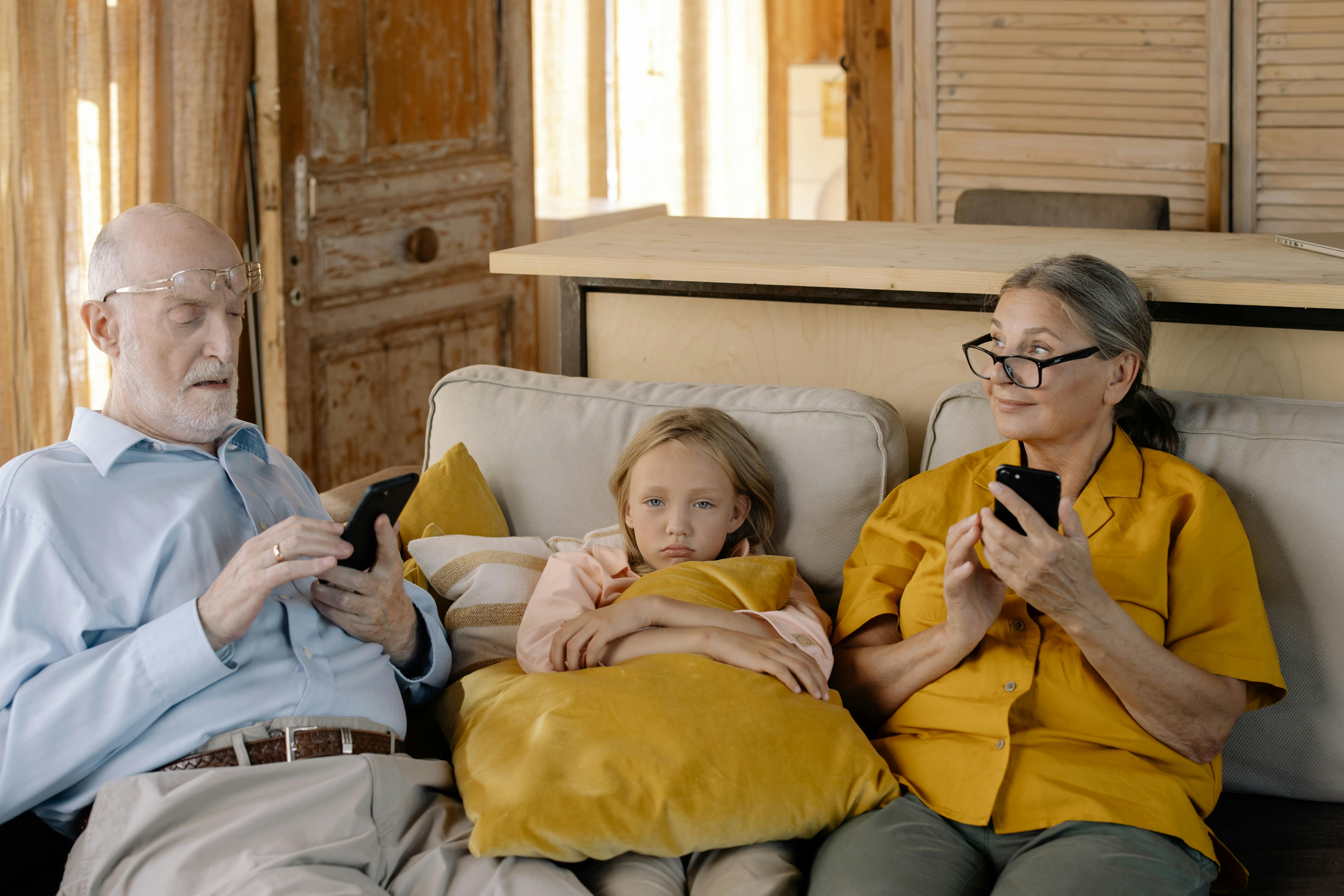
Imagine a child who comes home upset after a painful day at school. Instead of comfort, she hears: "Get over it" or "I don't have time for this." Nobody hits her, and nobody shouts for hours. Yet the message is clear: your feelings are a nuisance.
Experts call this emotional invalidation when a child's feelings are repeatedly dismissed, mocked or punished. Closely related is emotional neglect, where caregivers consistently fail to meet a child's emotional needs. Unlike physical abuse, it leaves no visible marks. That is one reason it is so often overlooked.
Often it is not cruelty. Parents may be exhausted, overwhelmed or raised the same way themselves. The effect on the child can still be real.
.
How Common Is It?
Nobody knows the exact number. In a study presented at the 2026 conference of the Society for Social Work and Research, estimated rates of childhood emotional neglect ranged from about 20 percent to more than 57 percent, depending on how it was measured. The researchers also found stable links to poorer mental health and more relationship difficulties in adulthood.
A separate systematic review of studies on young adults reached a similar conclusion: emotional neglect is a significant but often overlooked form of mistreatment. The authors call for routine screening in mental health settings.
.
What Happens Inside a Child Who Learns to Shut Down
Children cannot calm themselves from birth. They learn it by being calmed by someone else, again and again. If that support is missing, a child may learn another strategy: switch the feeling off.
Researchers describe this as a problem of emotion regulation, meaning the ability to feel an emotion, tolerate it and let it pass. A large meta-analysis (a study that combines the results of many studies) found that emotion regulation is a consistent link between childhood adversity and later mental health problems.
An Italian study of 252 adults found a similar pattern. Emotional neglect in childhood was associated with more intense negative feelings, and those feelings in turn were associated with more psychiatric symptoms.
The Role of Sensitivity
Not every child reacts the same way. Some are born more responsive to their surroundings. Psychologists call this environmental sensitivity.
One 2022 study of 737 university students looked at this trait. It suggested that a supportive environment in adulthood may reduce the impact of severe childhood neglect, especially for people with high sensitivity. The study also noted that research results are mixed, and some people with neglectful childhoods develop well.
.
Where the Science Is Still Debated
You may come across the claim that emotionally dismissive homes directly cause conditions such as borderline personality disorder. This idea goes back to the psychologist Marsha Linehan. Her "biosocial theory" holds that an emotionally sensitive child raised in an invalidating environment is at higher risk of long-term emotional difficulties.
The theory is influential and has inspired Dialectical Behavior Therapy (DBT), a skills-based treatment. A long-term study supports parts of it. But an Australian doctoral study that tested the model in a community sample did not confirm the predicted interaction between a child's vulnerability and invalidating parenting.
The honest summary: invalidation is a plausible risk factor, but it is not a verdict. Genetics, temperament and later life experiences also matter.
.
Signs That Old Patterns May Still Be Running
Experts caution against self-diagnosis. Still, adults who grew up with dismissed feelings often describe patterns like these:
- Feeling numb or "empty" when emotions get strong
- Putting other people's needs first to keep the peace
- Accepting less than they deserve in relationships
- Believing that needing something makes them a burden
- Feeling quietly ashamed without knowing why
A Portuguese study of 134 adults found that childhood emotional neglect was linked to lower self-compassion. A South African study found a connection with the isolation component of self-compassion, the sense of being alone in one's struggles.
.
What Can Help
The past cannot be changed, but its grip can loosen. Research points to a few directions.
Name what you feel. Even a simple label such as "I'm hurt" or "I'm afraid" is a first step in treating emotions as information rather than a threat.
Practice self-compassion. This means treating yourself the way you would treat a struggling friend. Studies link higher self-compassion with better emotion regulation and greater resilience.
Seek safe relationships. Friends, partners, support groups or mentors who respond warmly to your feelings can offer what was missing.
Consider professional support. Therapists trained in emotion-focused or skills-based approaches can help you build regulation skills step by step. If feelings ever become overwhelming, please contact a doctor, therapist or local crisis service.
This article is for general information and is not medical advice.
.
Outlook
Emotional neglect has long been treated as the "quiet" form of childhood harm. Recent research is putting it on the map. For readers who recognize themselves in this description, the message from science is cautiously hopeful: early experiences shape us, but they do not fix us in place.
A big feeling is not a flaw. It is a signal, and learning to listen to it is possible at any age.
.
Sources
- Society for Social Work and Research (2026): "Addressing the Neglect of Neglect: Examining the Long-Term Psychosocial Consequences of Emotional Neglect" – https://sswr.confex.com/sswr/2026/webprogram/Paper59820.html
- Society for Social Work and Research (2026): "Childhood Emotional Neglect and Its Adult Consequences: A Systematic Review of Young Adults' Mental Health and Relationships" – https://sswr.confex.com/sswr/2026/webprogram/Paper62185.html
- Schimmenti et al.: "Why Do I Feel So Bad?" Childhood Experiences of Emotional Neglect, Negative Affectivity, and Adult Psychiatric Symptoms – https://www.richtmann.org/journal/index.php/mjss/article/view/8016
- PubMed Central: "Emotion regulation as mediator between childhood adversity and psychopathology: A meta-analysis" – https://pmc.ncbi.nlm.nih.gov/articles/PMC8960368
- Current Psychology (2022), University of Florence: effects of childhood emotional neglect, environmental sensitivity and contextual resilience – https://link.springer.com/article/10.1007/s12144-022-04001-1
- Frontiers in Psychiatry (2023): "Linehan's biosocial model applied to emotion dysregulation in autism" (overview of the model) – https://www.frontiersin.org/journals/psychiatry/articles/10.3389/fpsyt.2023.1238116/full
- Macquarie University: "An investigation of the biosocial model of borderline personality disorder" (critical test of the model) – https://figshare.mq.edu.au/articles/thesis/An_investigation_of_the_biosocial_model_of_borderline_personality_disorder/19444637
- University of Lisbon: childhood emotional neglect and self-compassion in adults – https://repositorio.ulisboa.pt/handle/10400.5/97973
- University of Pretoria: childhood emotional neglect, self-compassion and cognitive emotion regulation – https://repository.up.ac.za/items/b90ce900-798a-439d-824d-cd4640e25098
.
What's Your Reaction?
 Like
0
 Dislike
0
 Love
0
 Funny
0
 Wow
0
 Sad
0
 Angry
0















Comments (0)